For faster browsing, click on the underlined text legend below any of the thumbnail images in the galleries. Use your browser BACK button to return you to the gallery. If you find a picture you like, you can download the image at full original resolution (mostly between 24-45 Mpixels; with some panoramas >100 Mpix) by clicking on the thumbnail itself. To save a downloaded image, right click on it and scroll to 'save picture as...'. To use an image as your desktop background, right click and scroll to 'set as background...'. Visitors are welcome to download images for personal use (e.g. as computer desktop wallpaper). Click HERE to order prints online. Please contact Ian Parker at evanescentlightphotography@gmail.com regarding possible commercial use.Details of copyright, image use and licensing are HERE.
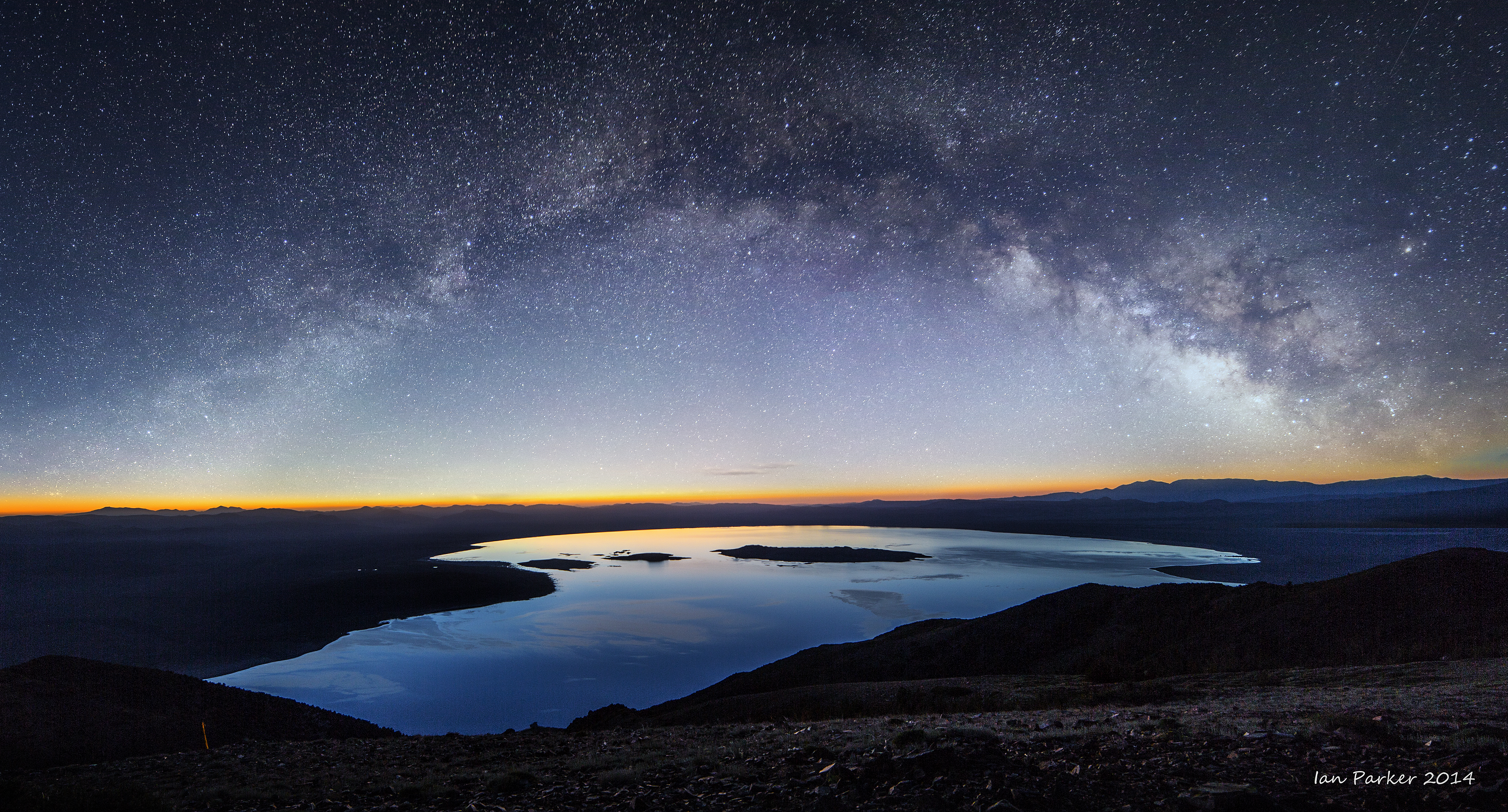
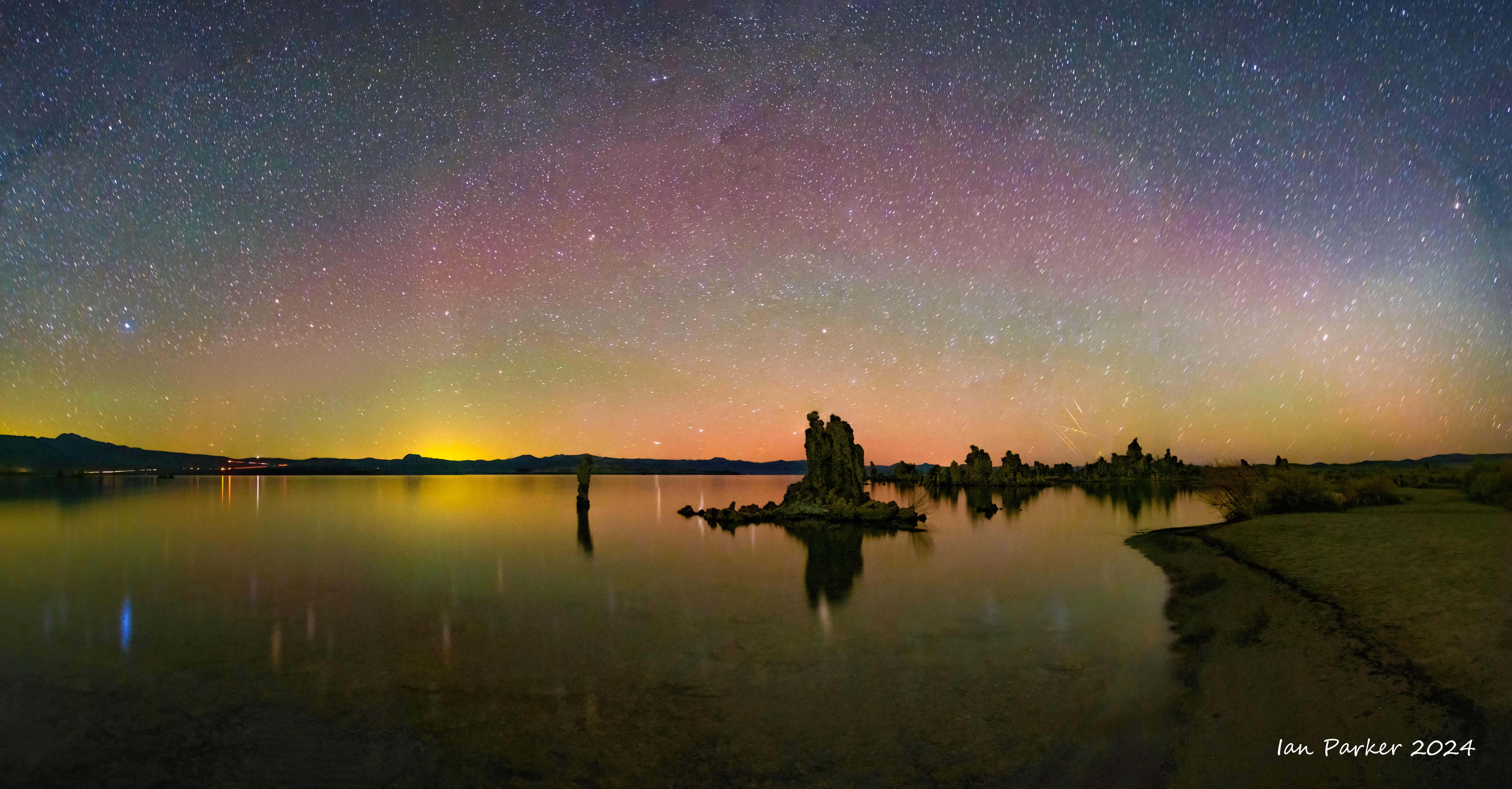
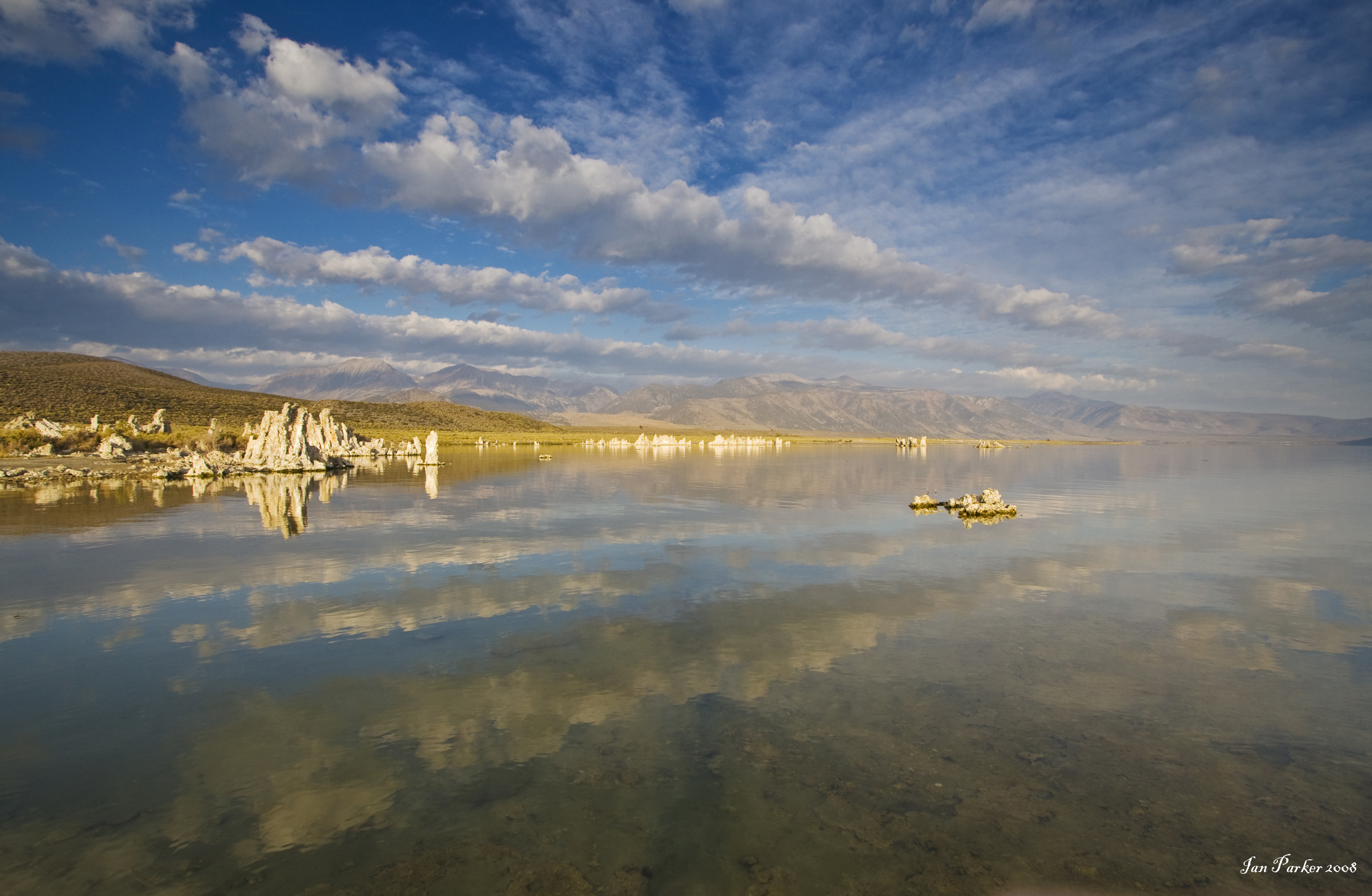
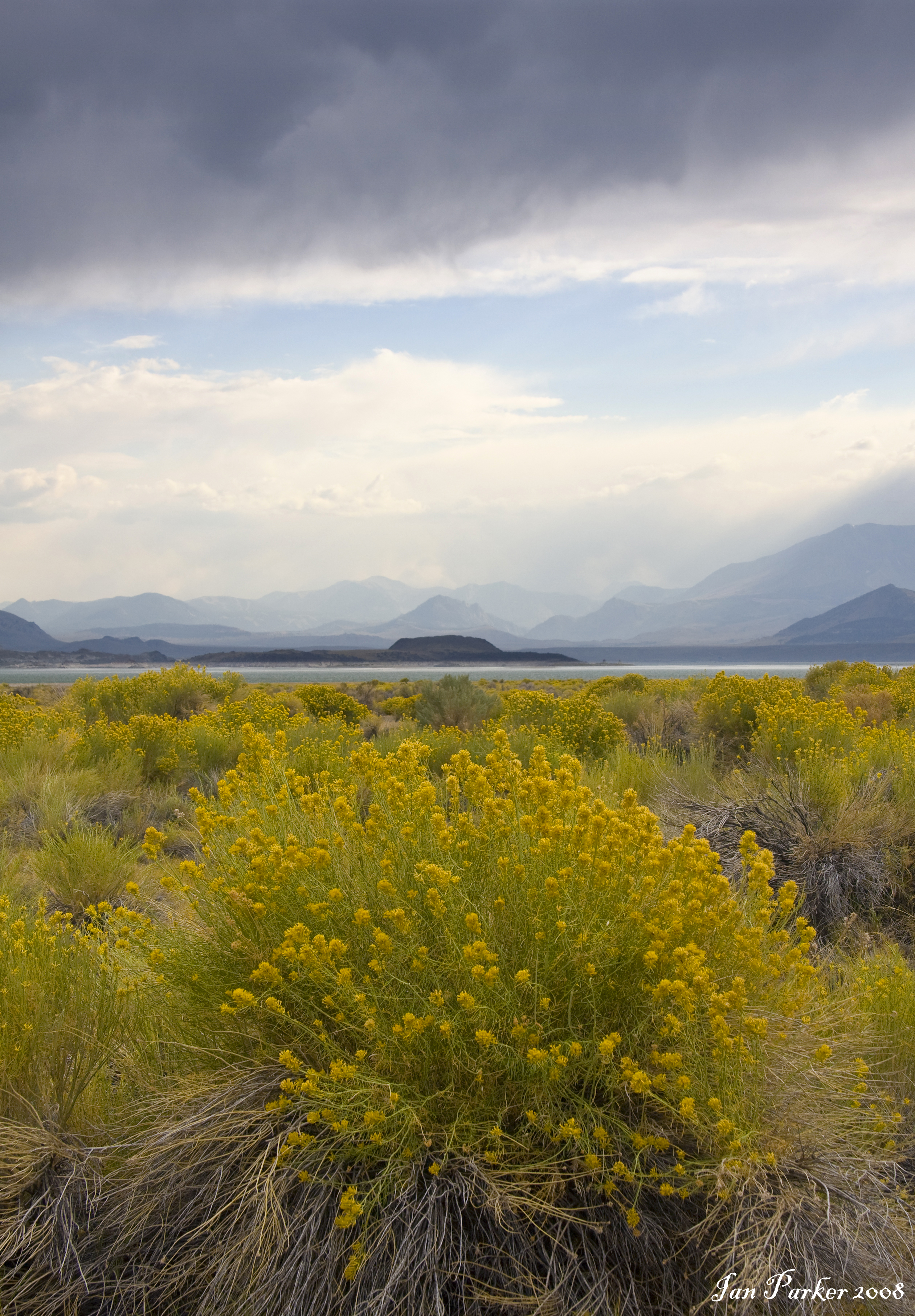
Mono Lake is a majestic body of water covering about 65 square miles. It is an ancient lake, over 1 million years old -- one of the oldest in North America. It has no outlet.
Throughout its long existence, salts and minerals have washed into the lake from Eastern Sierra streams. Freshwater evaporating from the lake each year has left the salts and minerals behind so that the lake is now about 2 1/2 times as salty and 80 times as alkaline as the ocean.
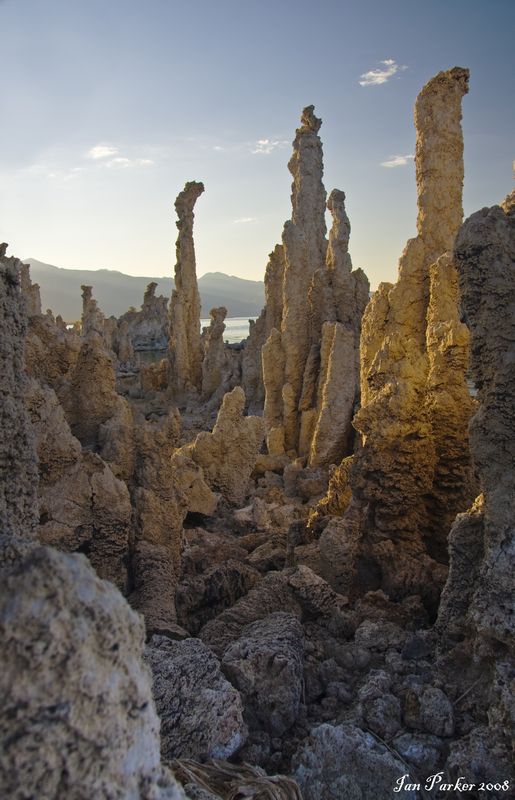
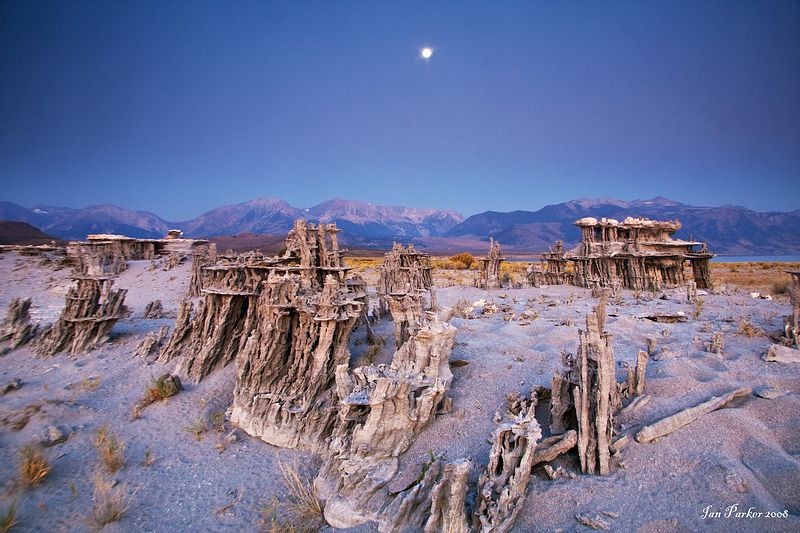
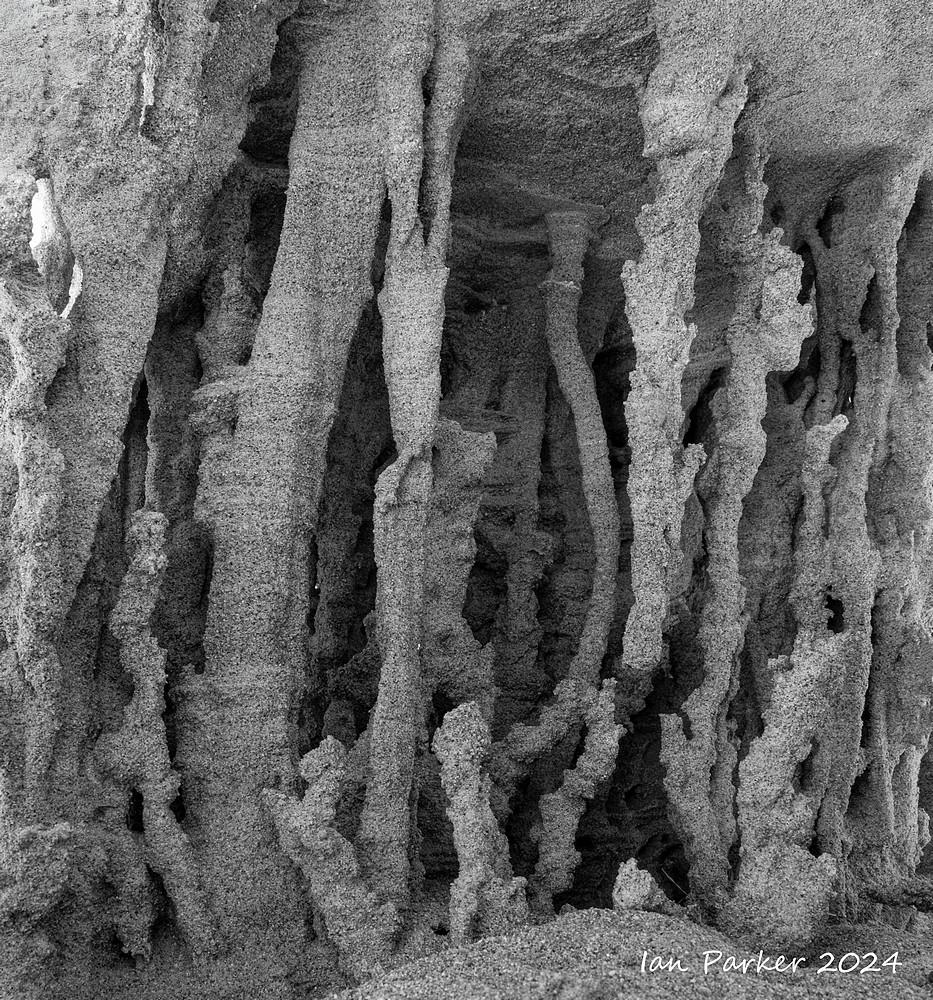
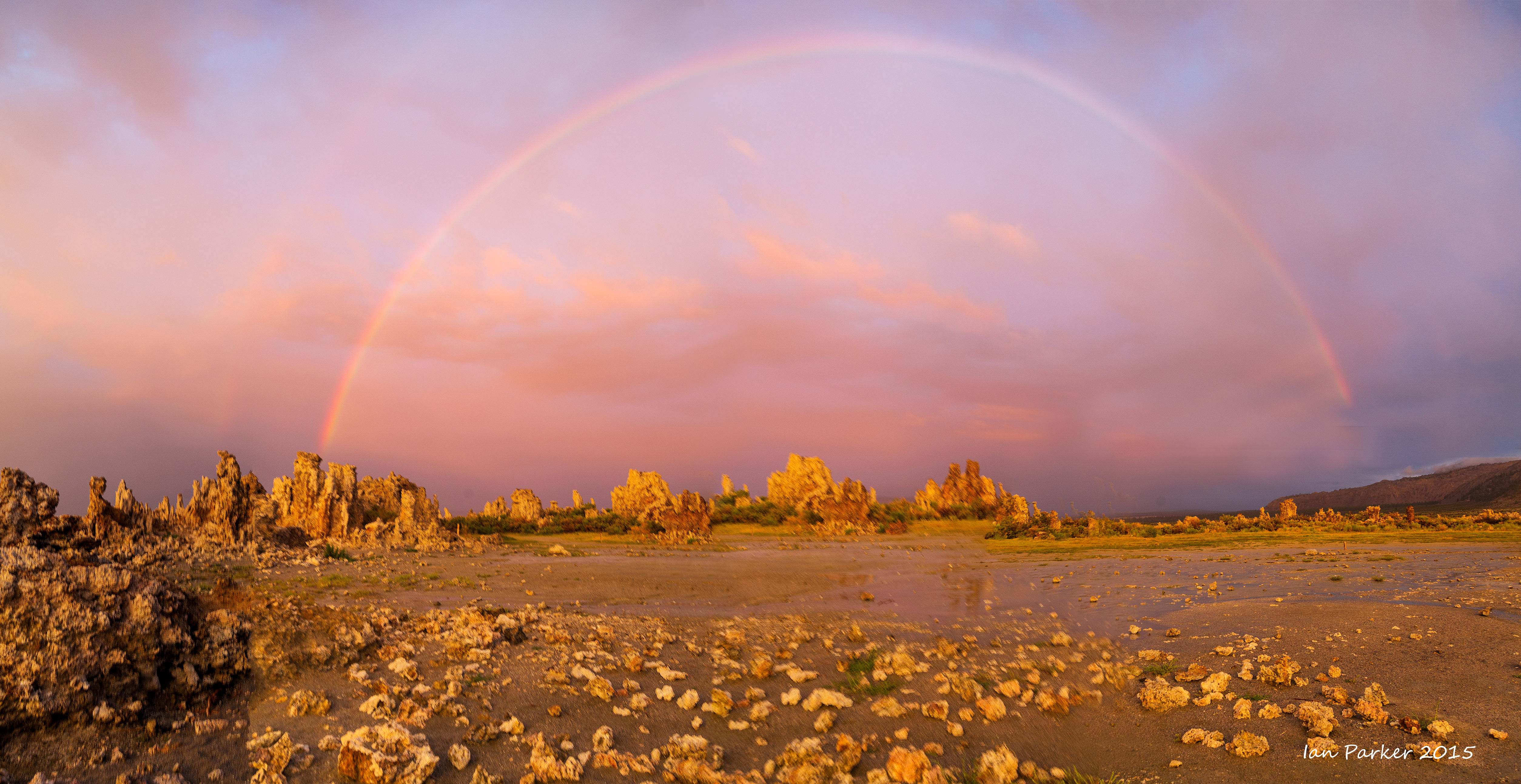
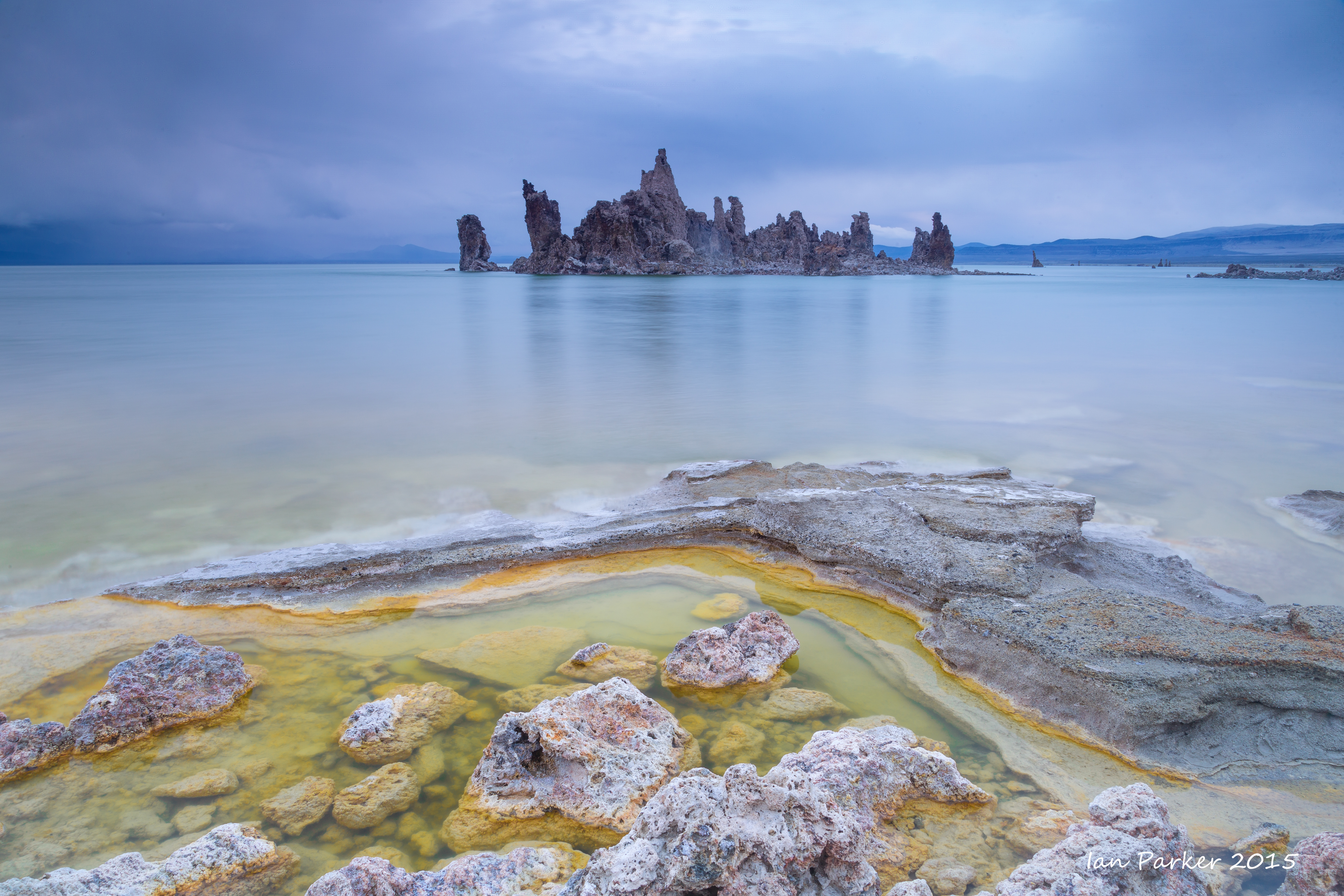
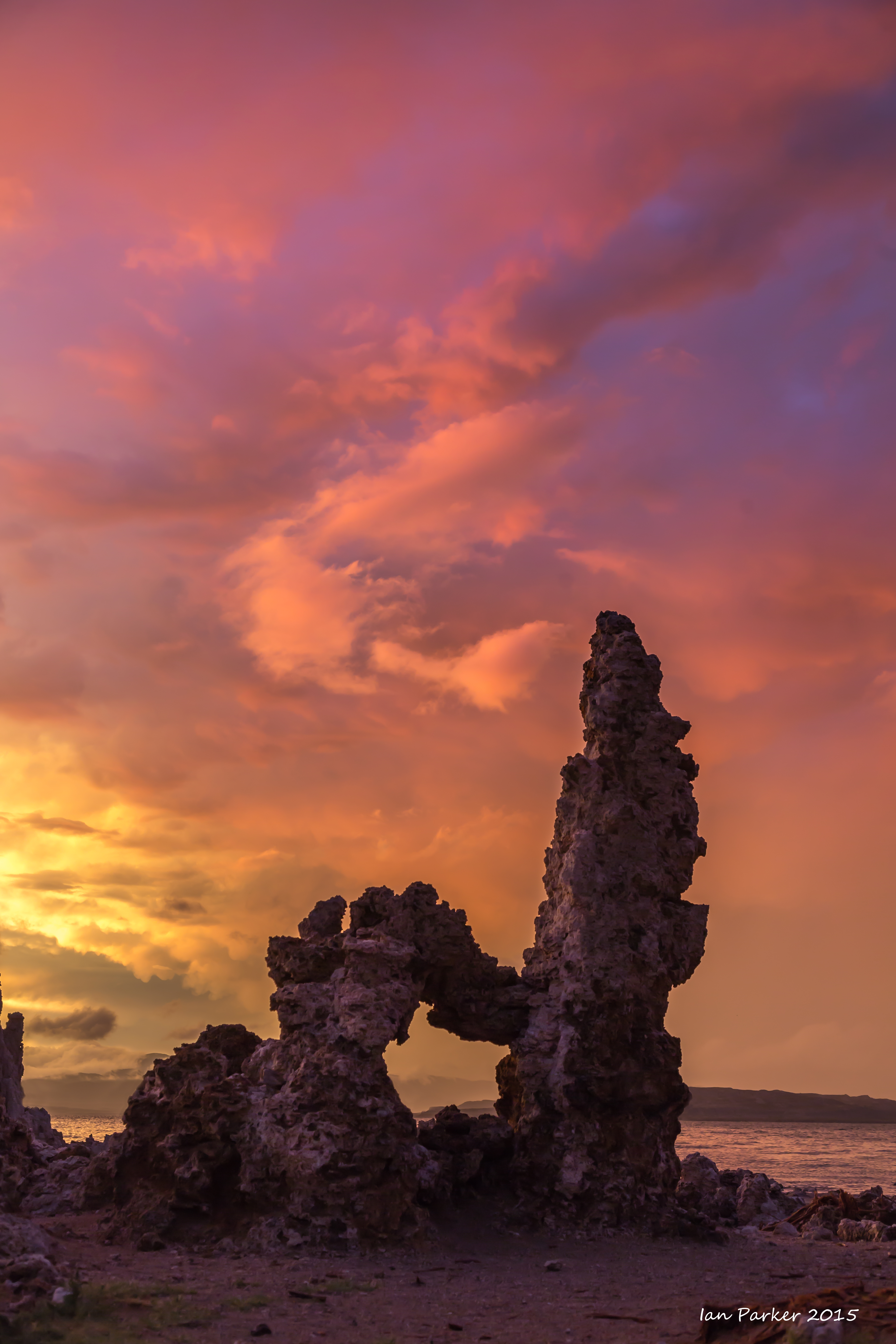
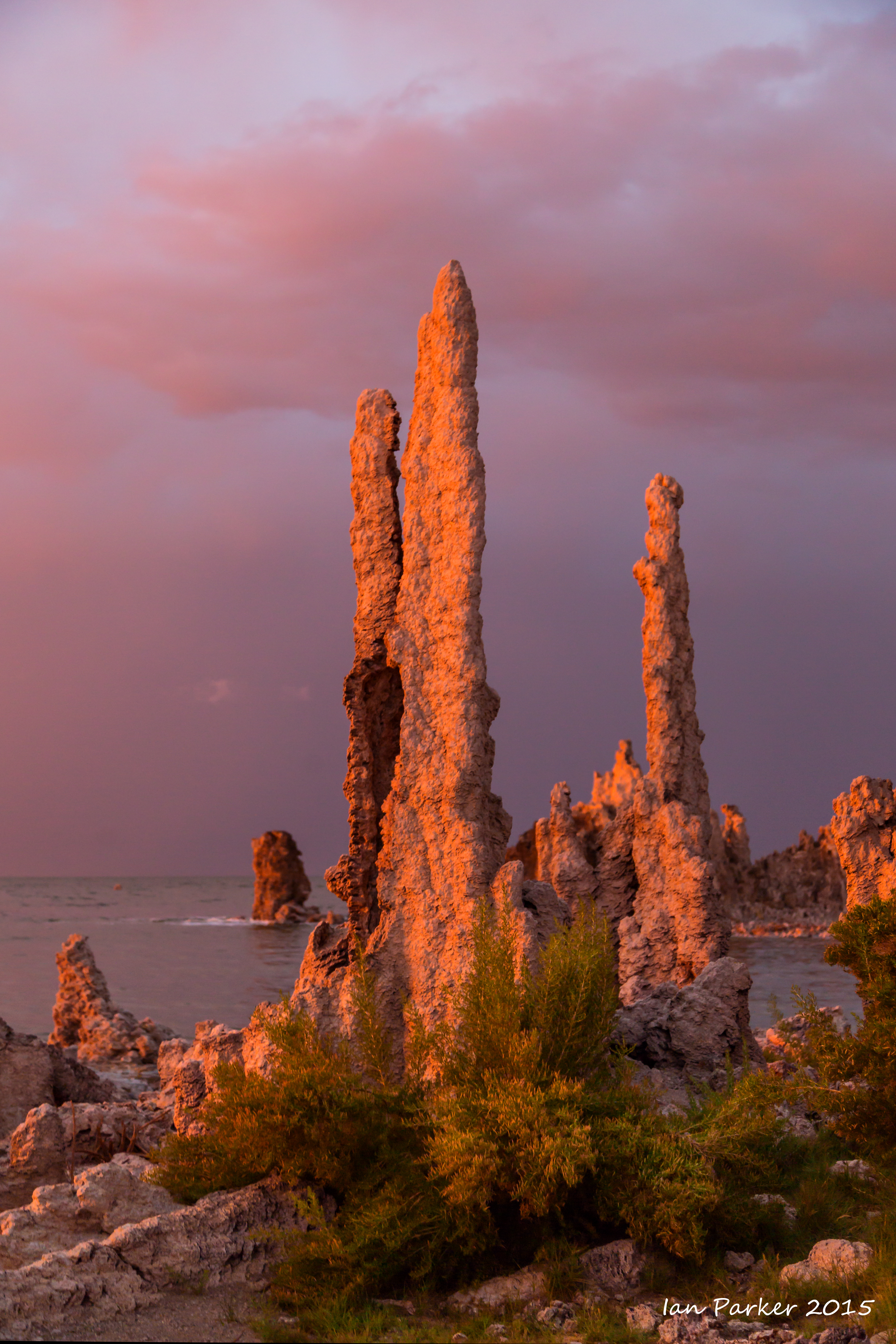
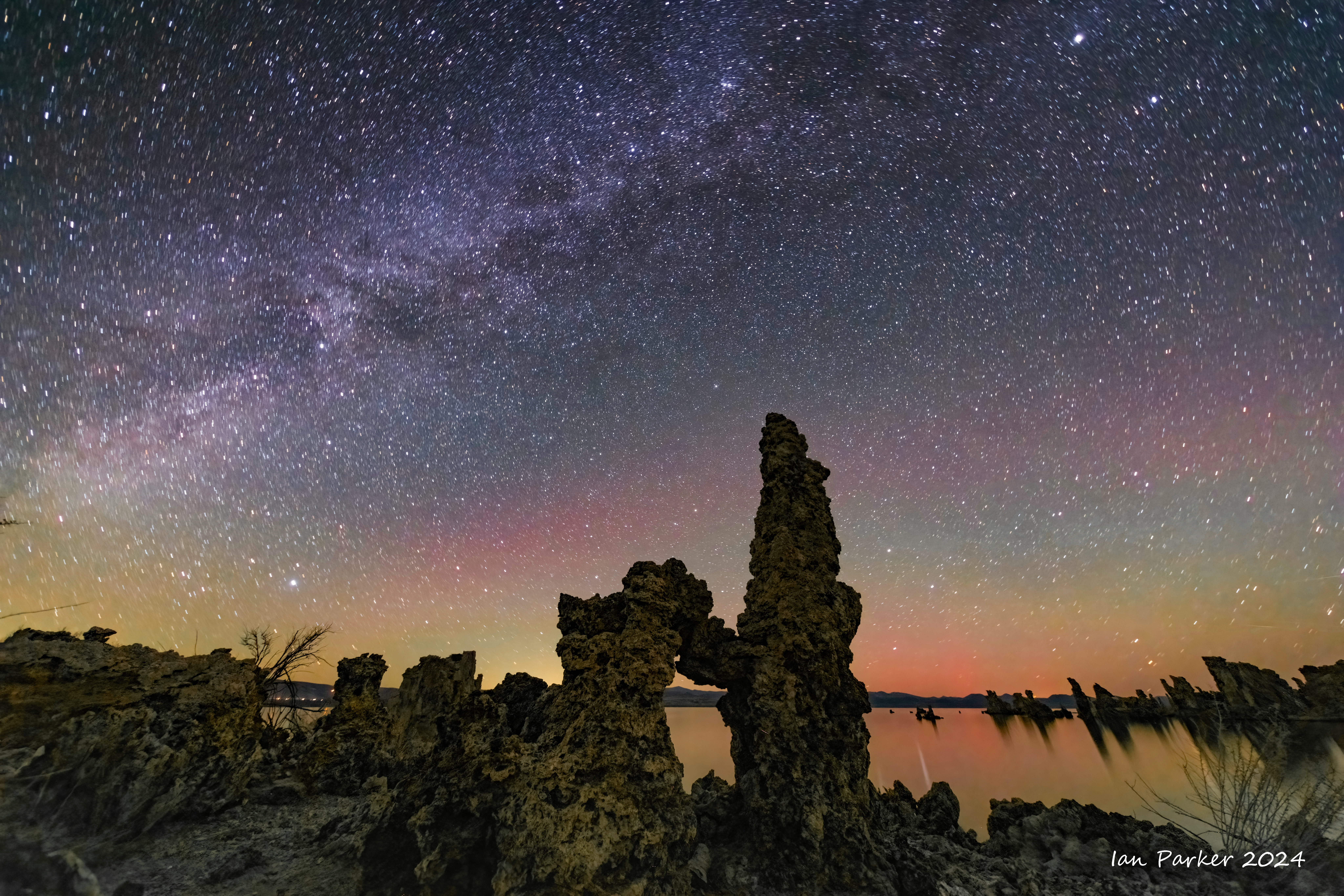
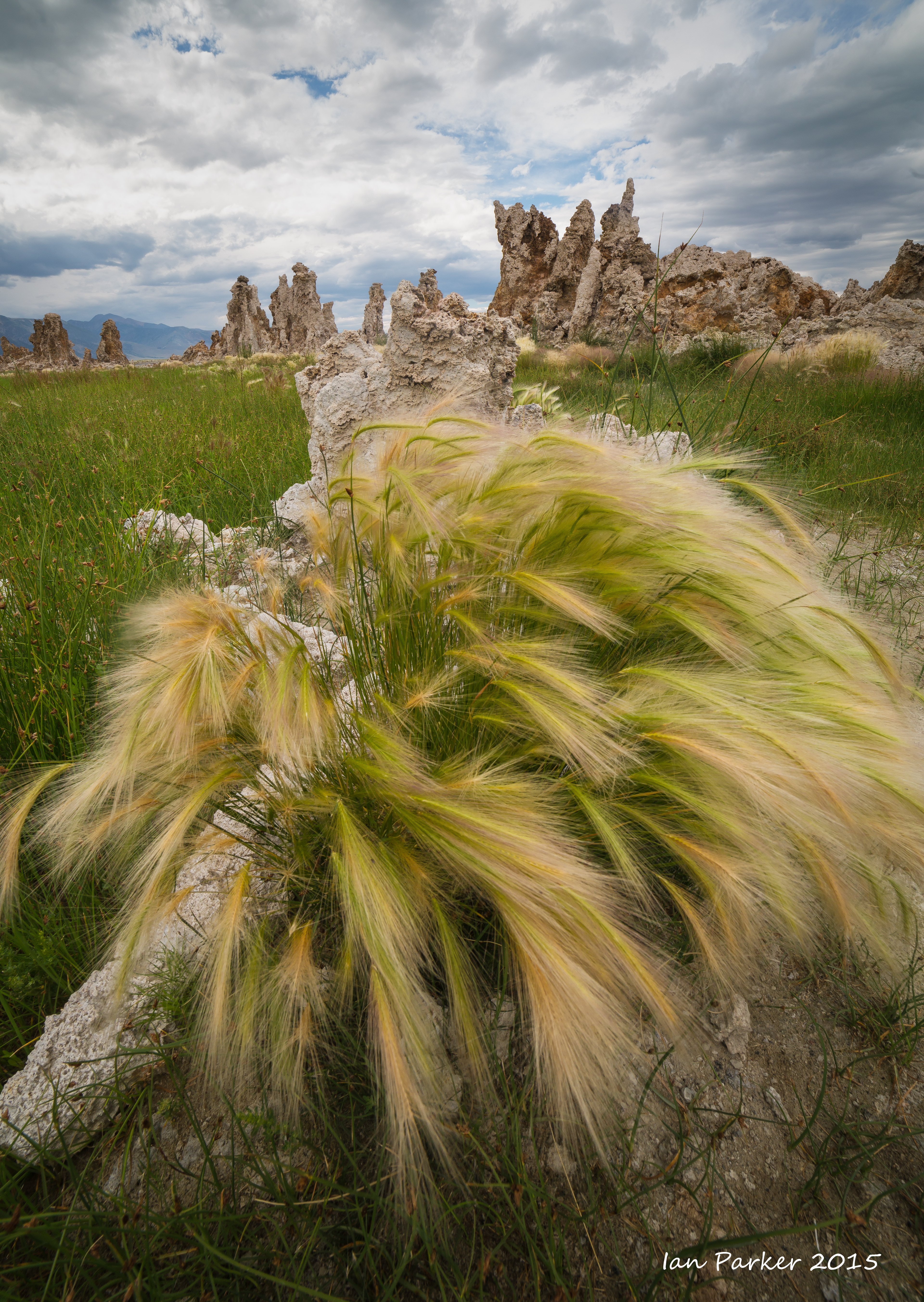
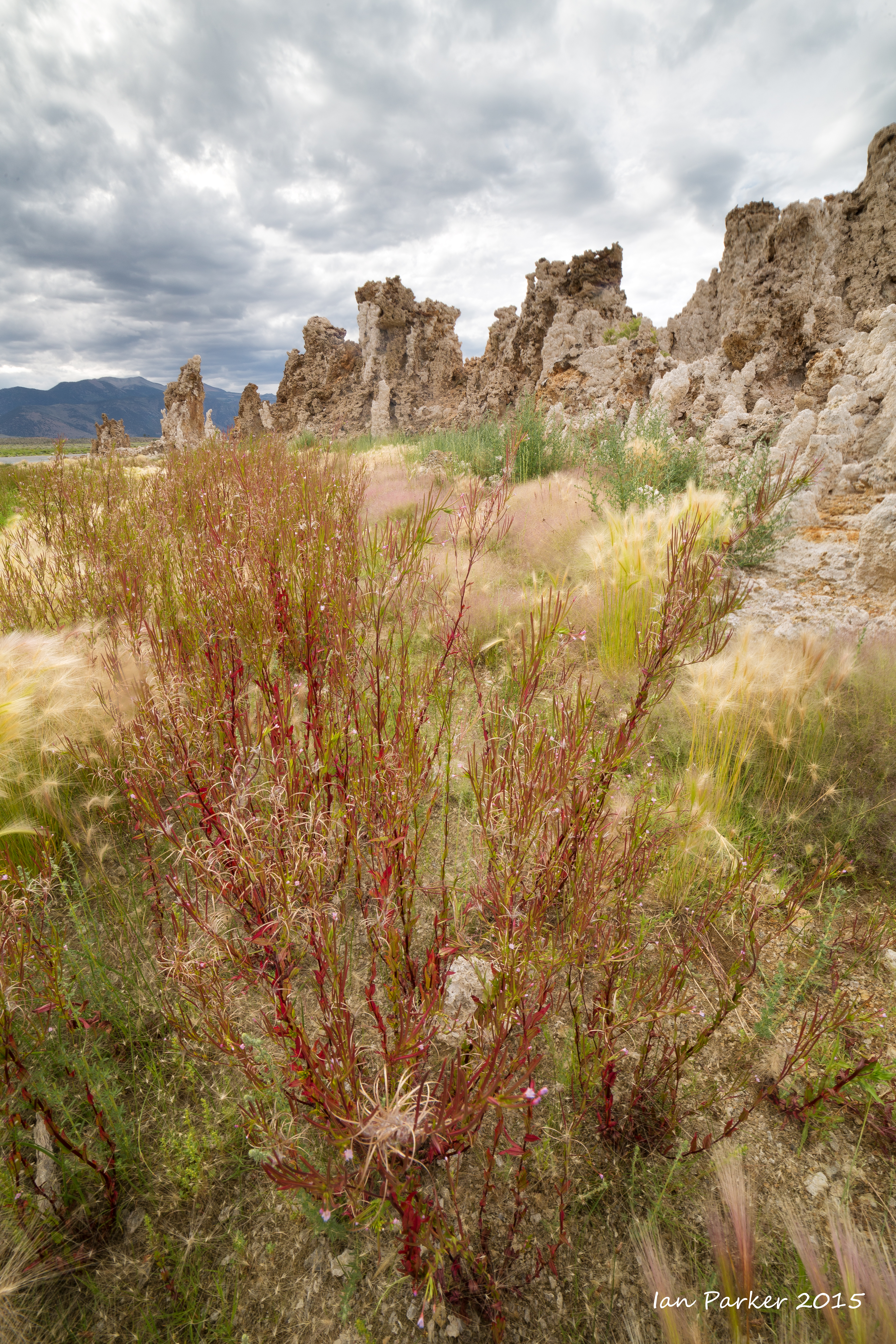
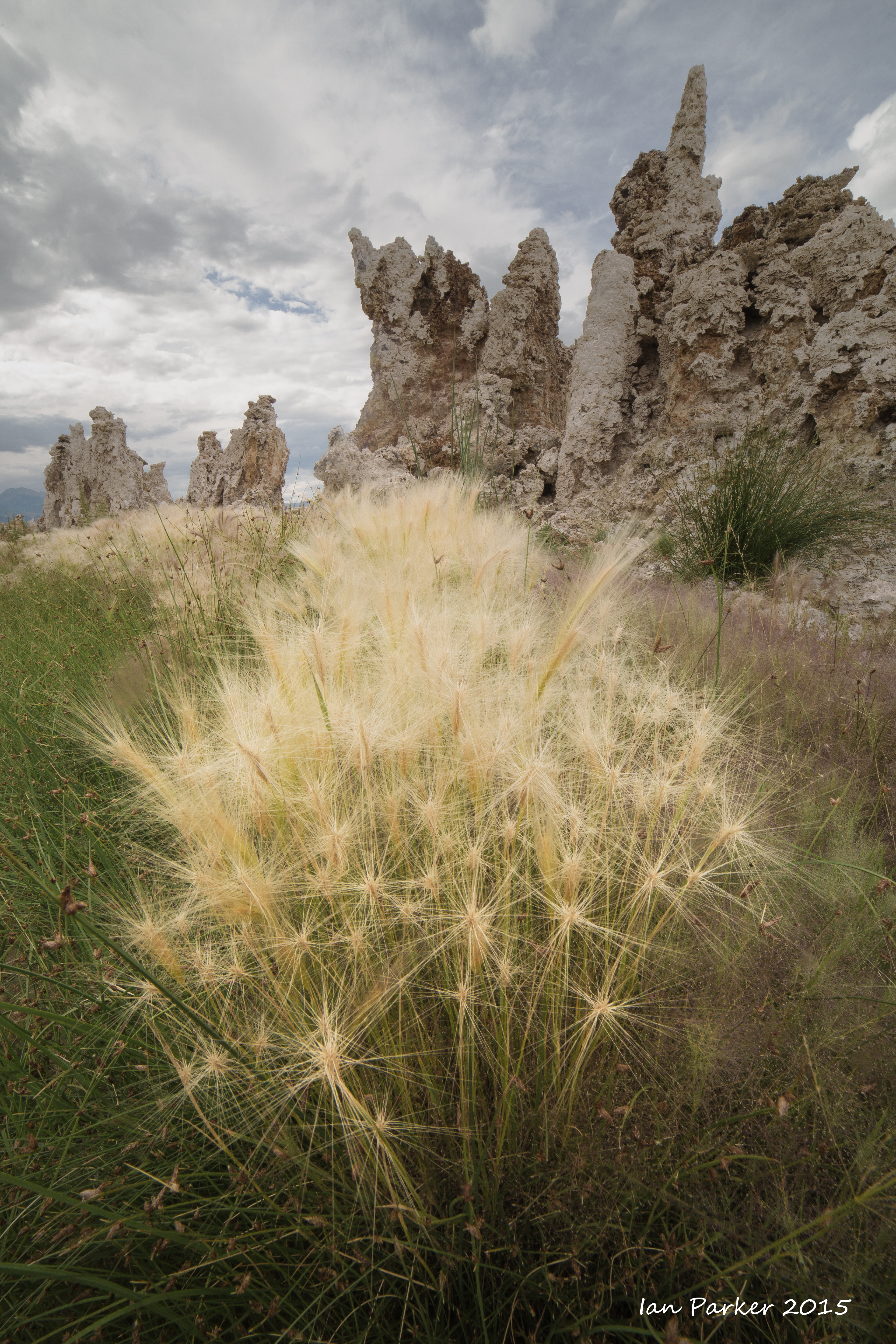
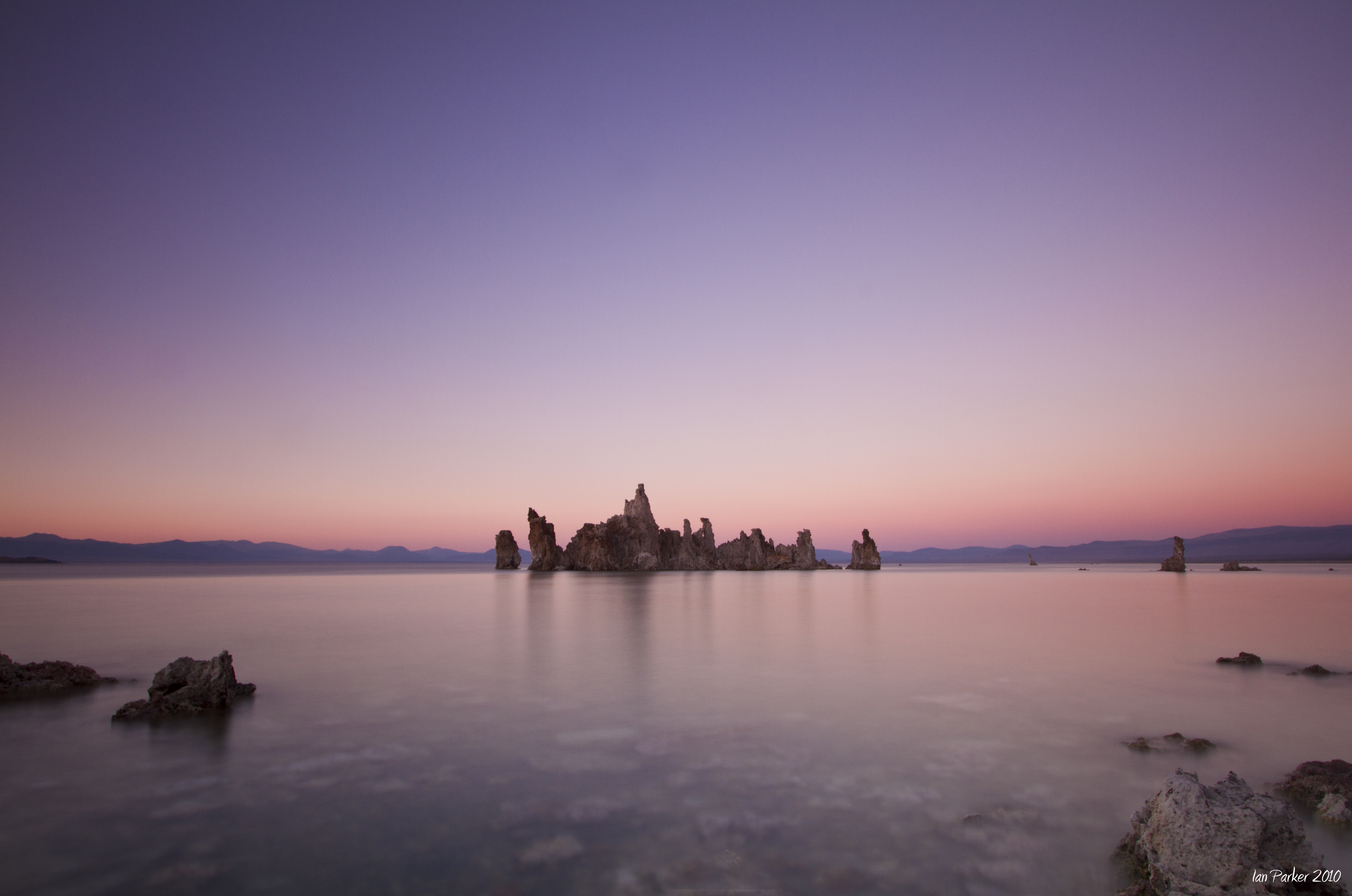
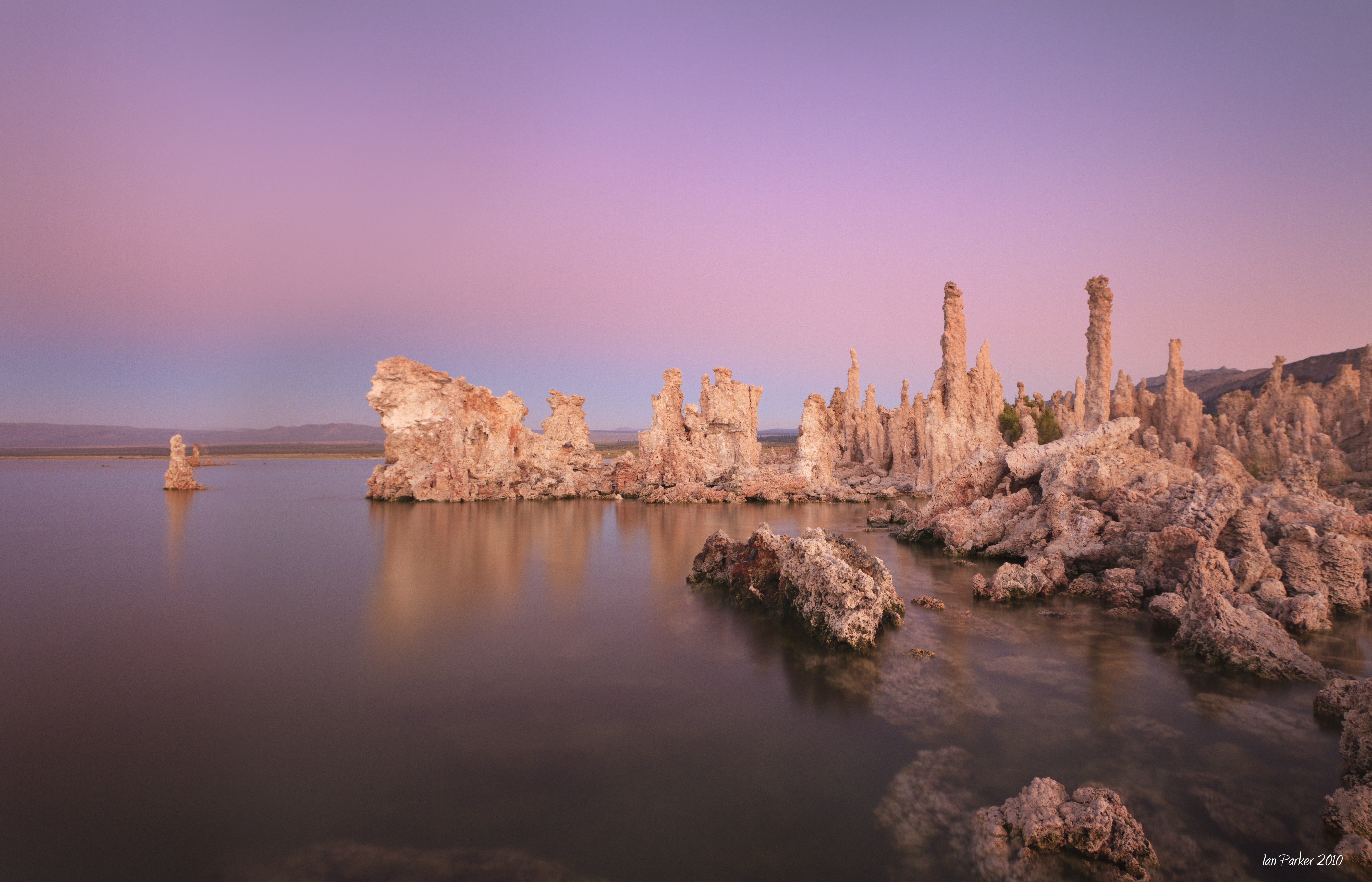
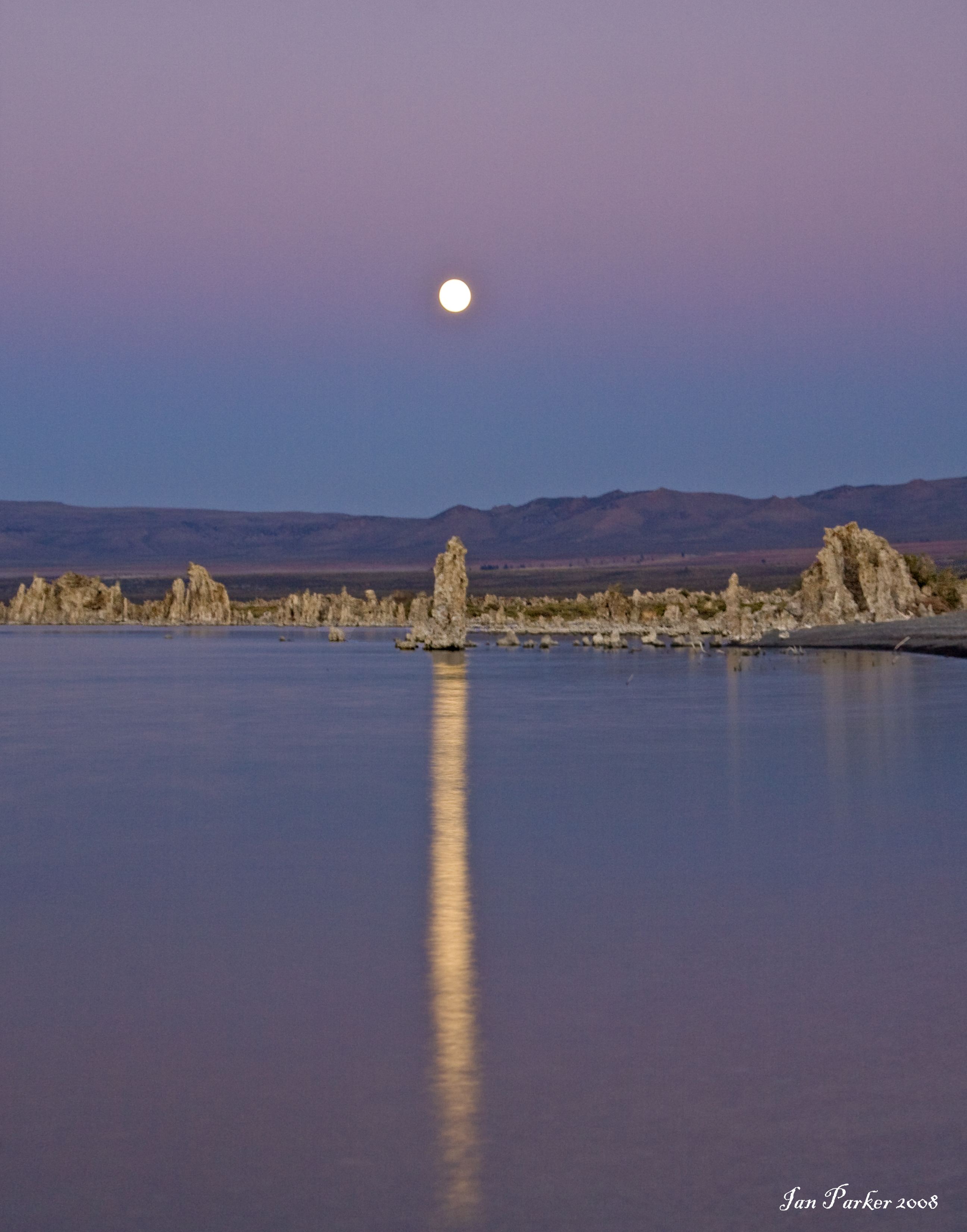
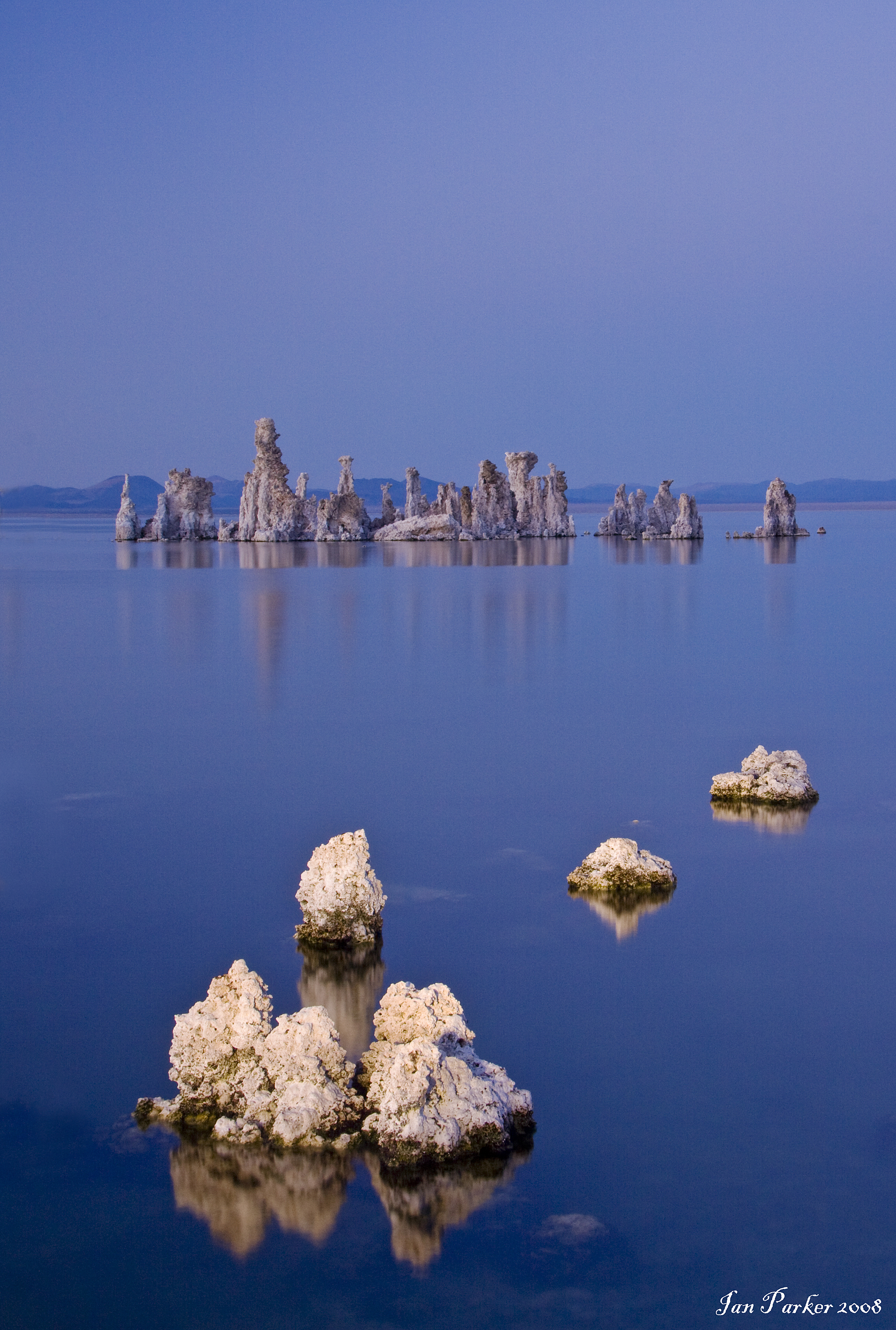
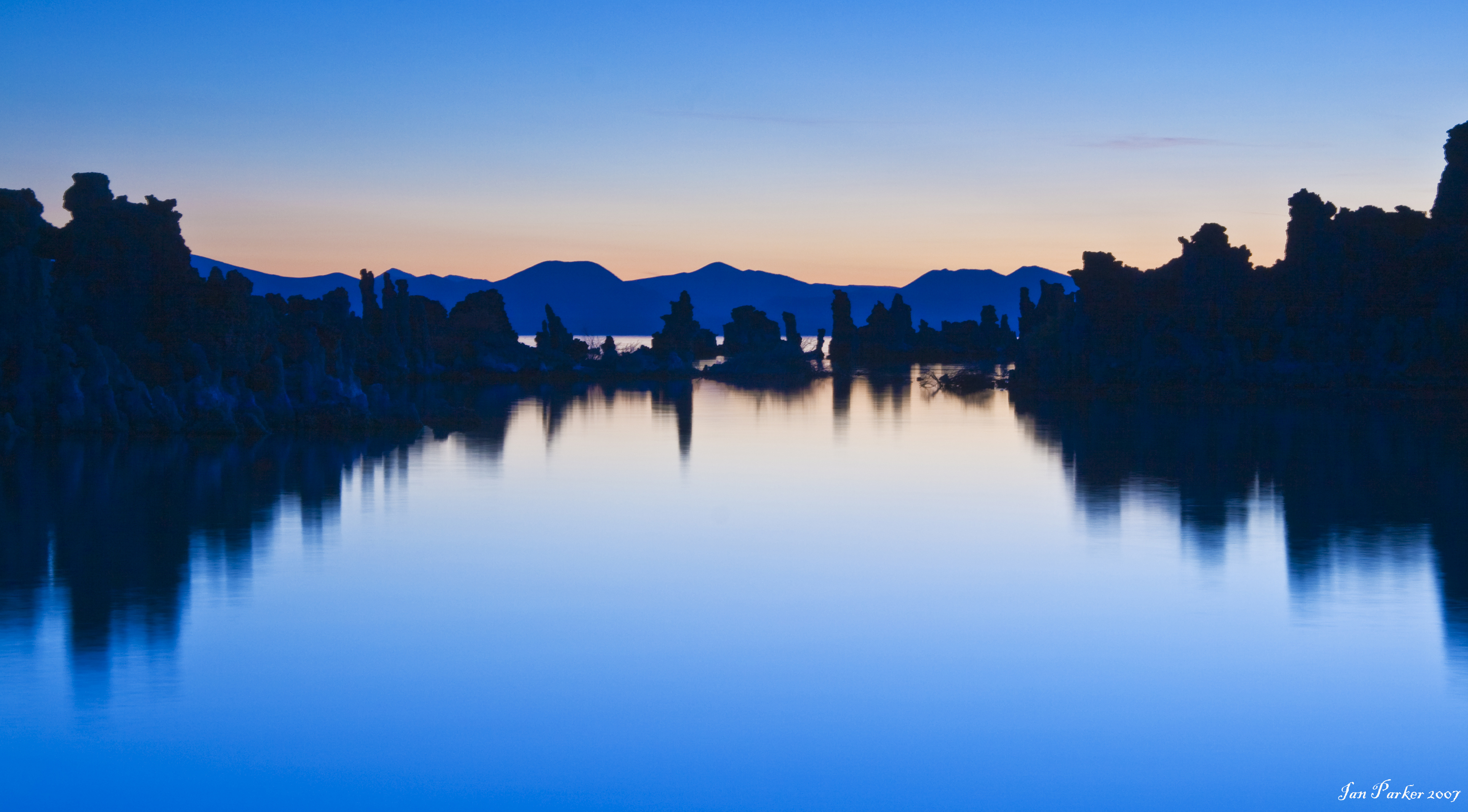
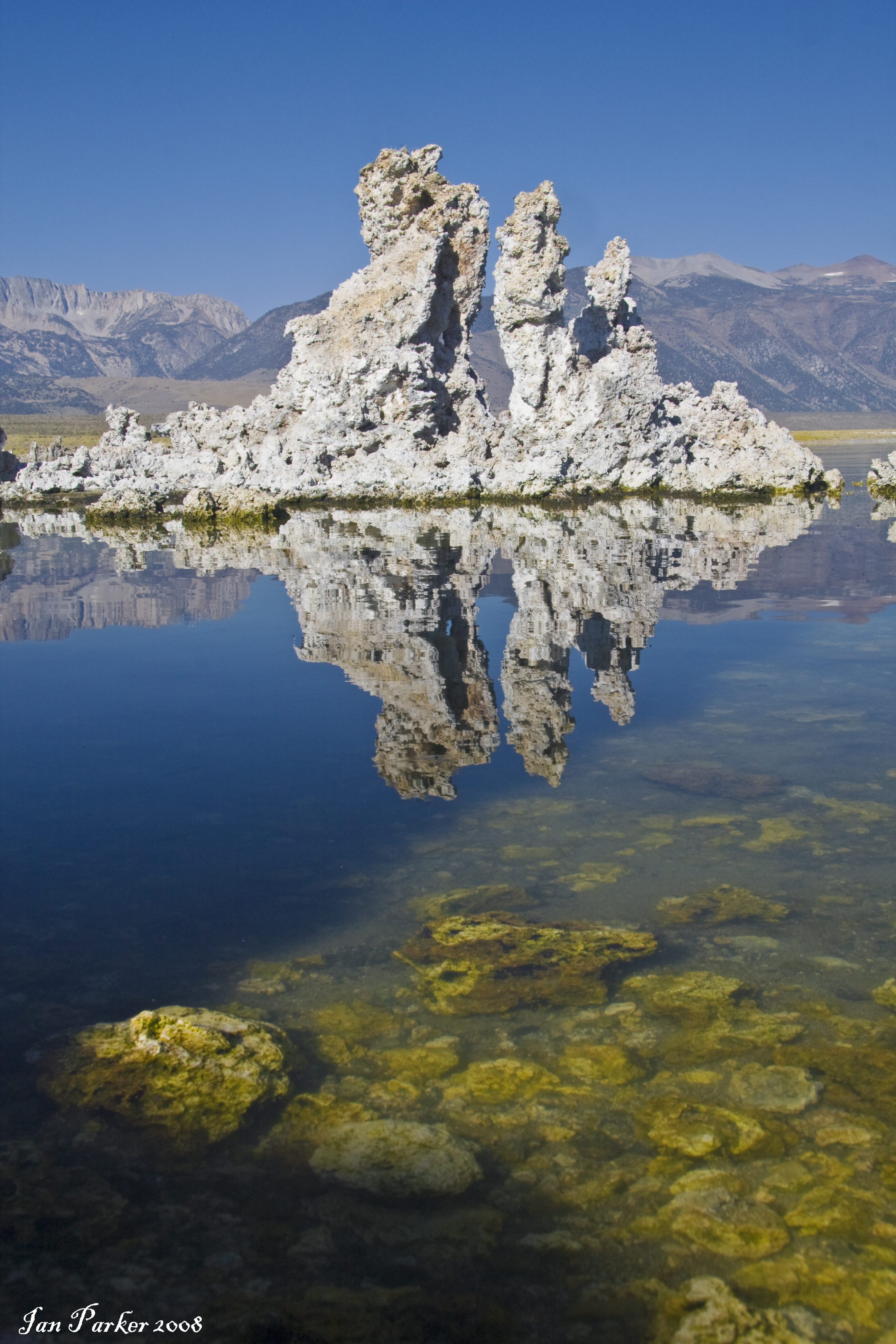
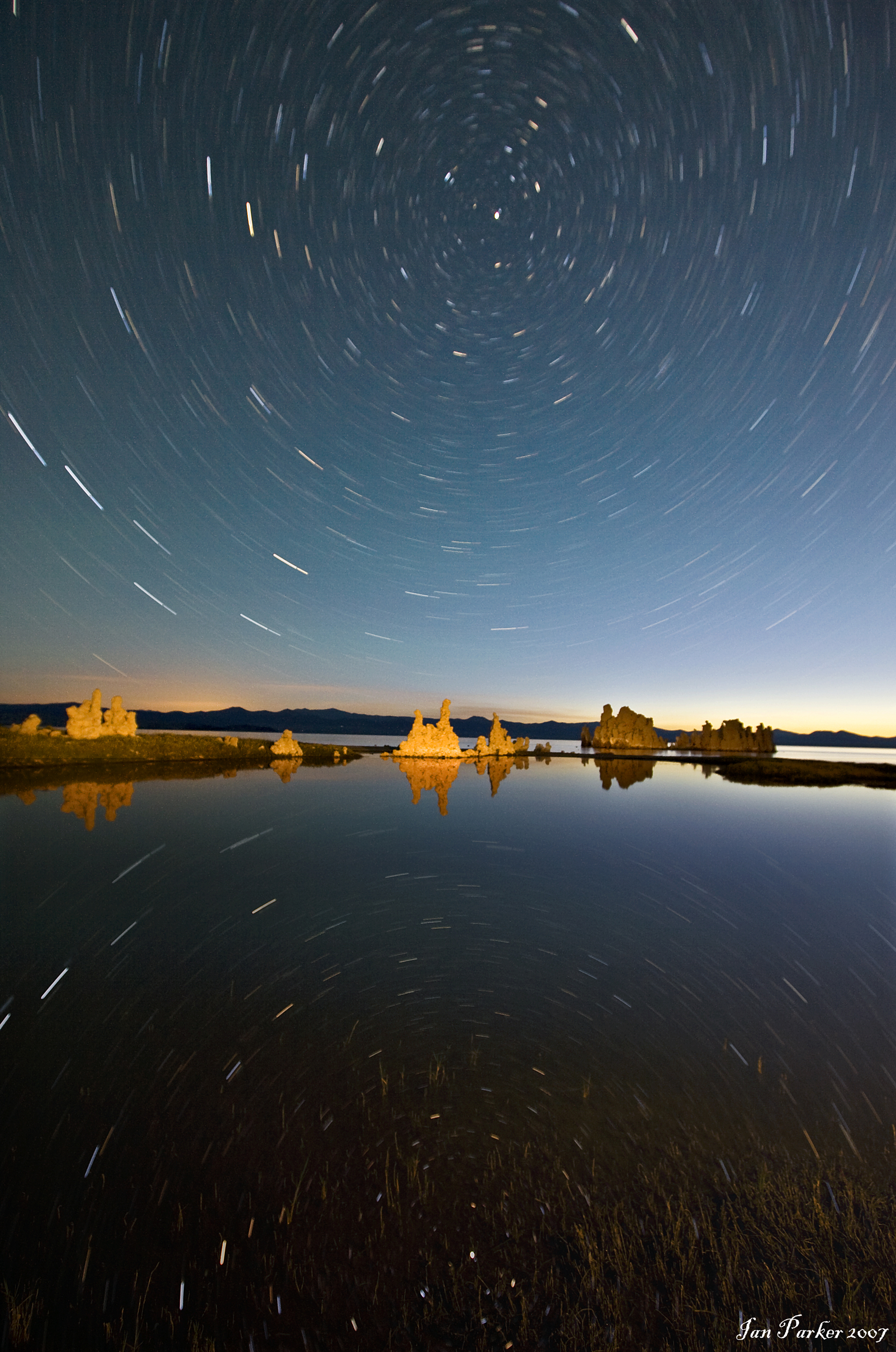
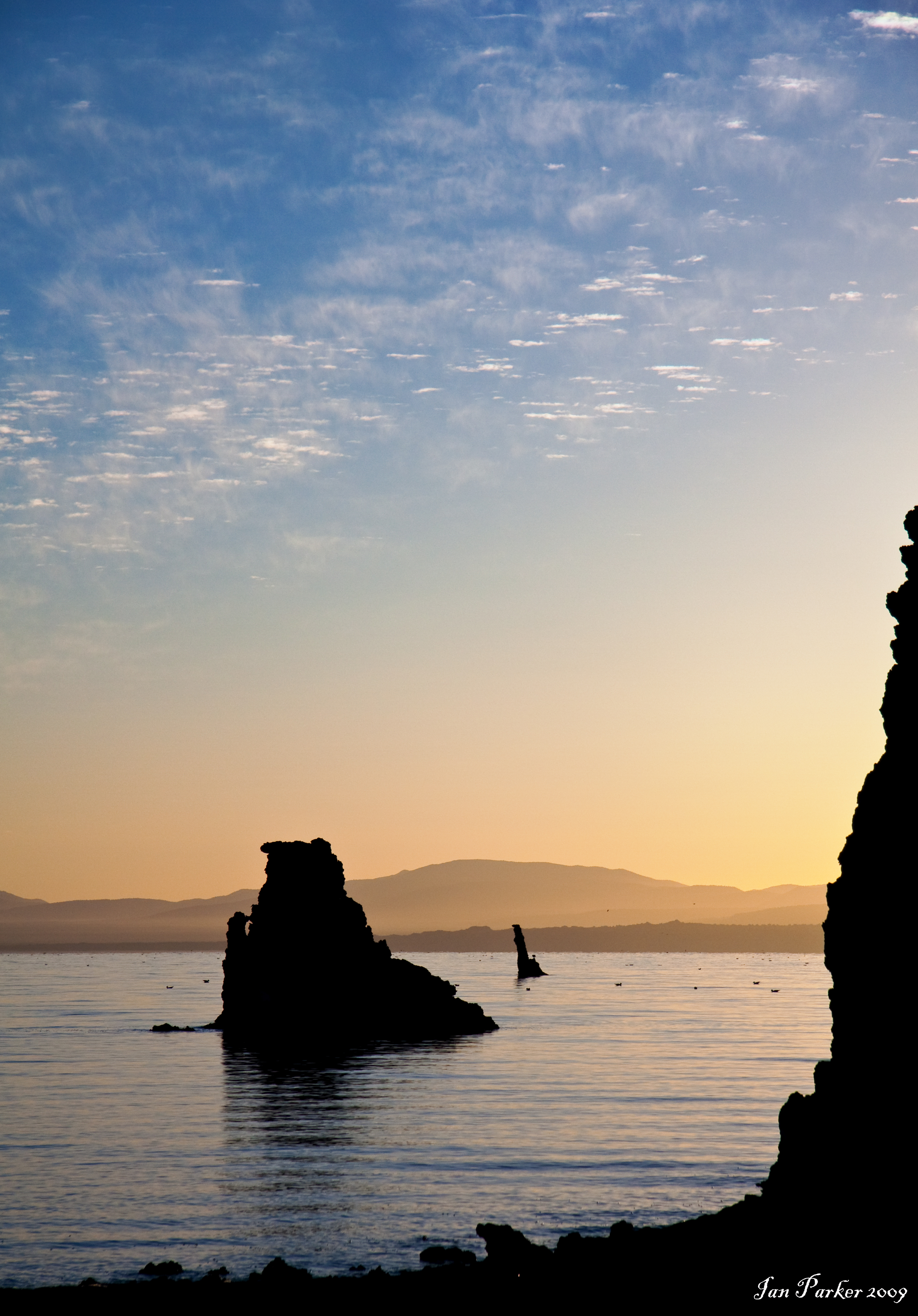
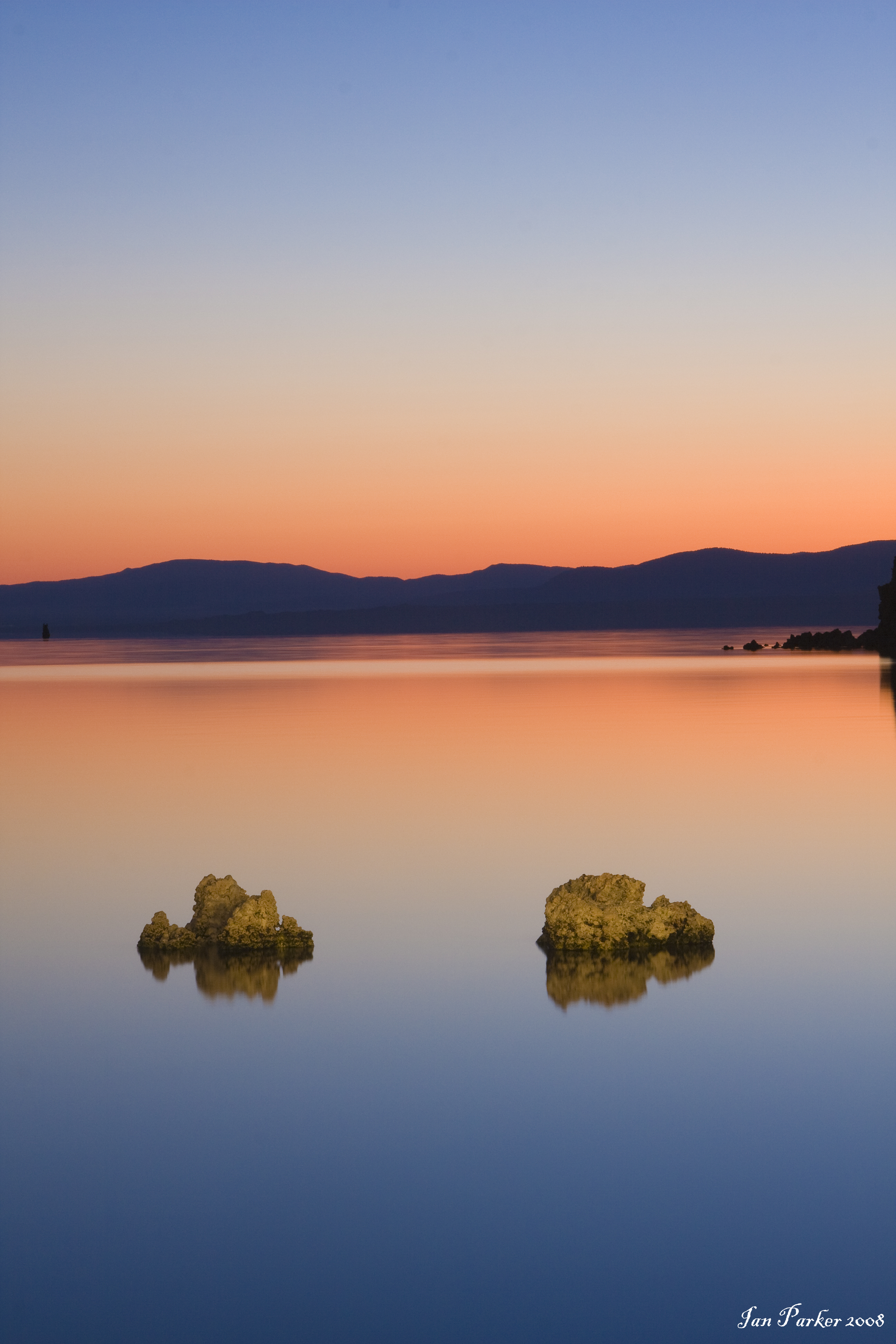
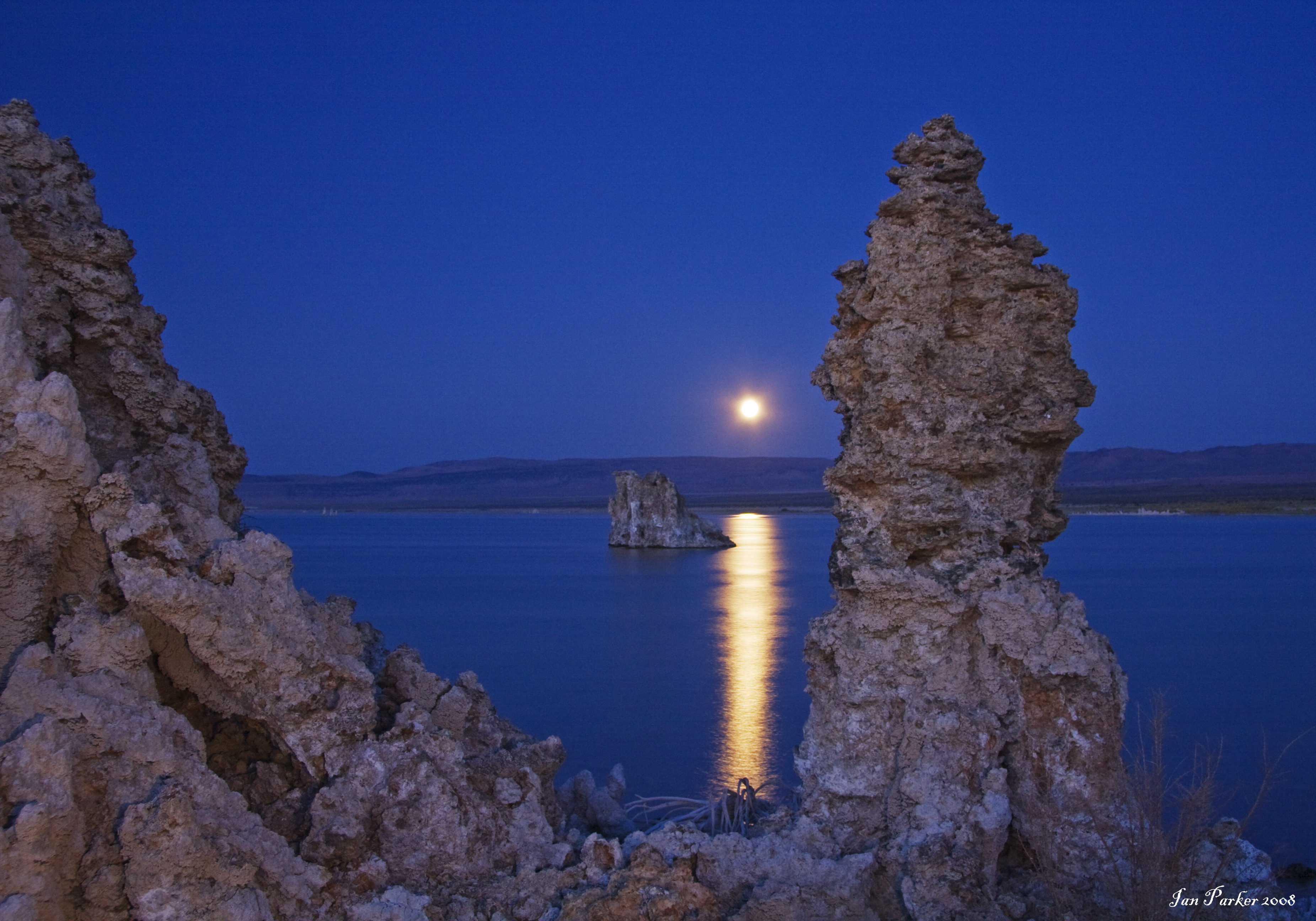
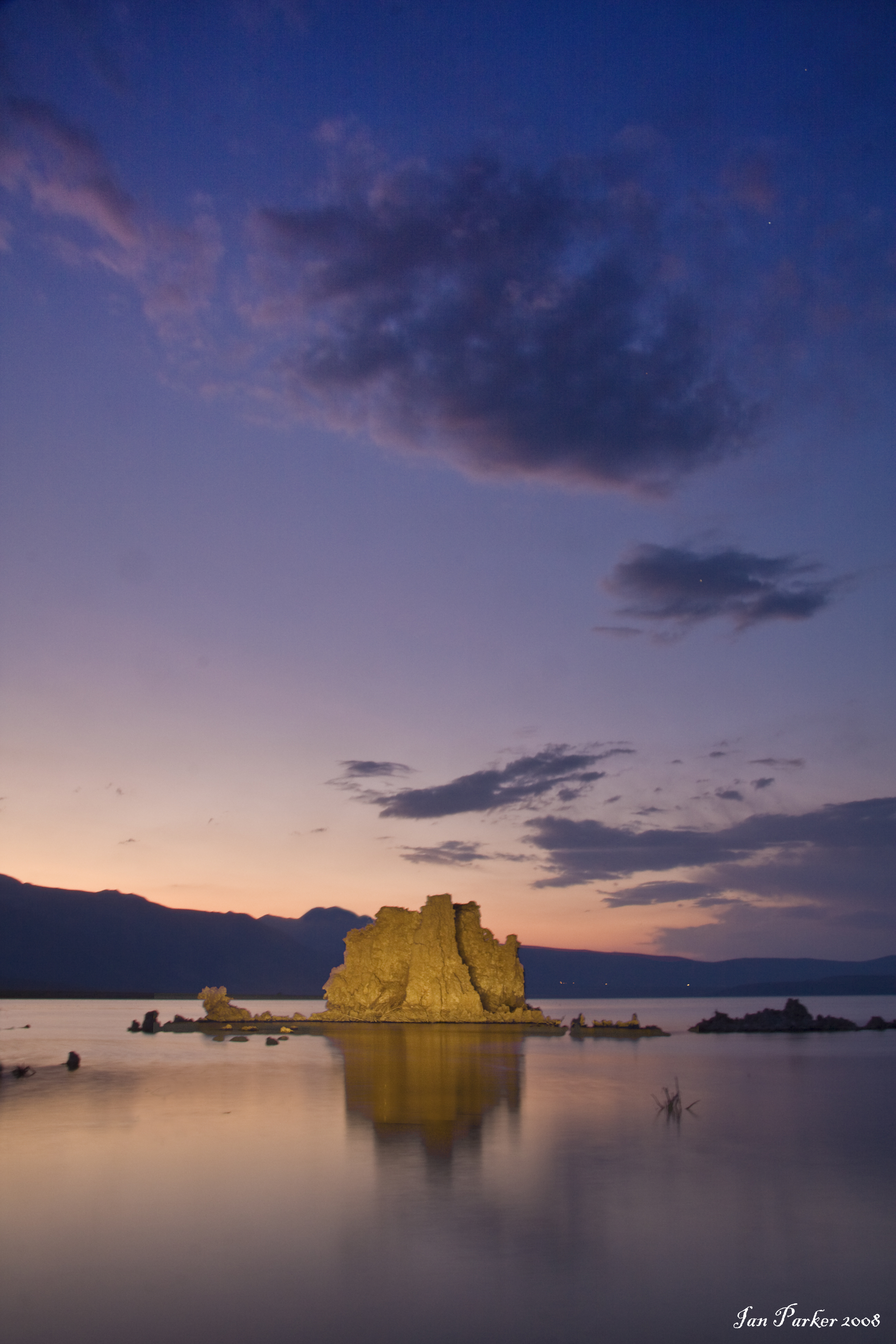
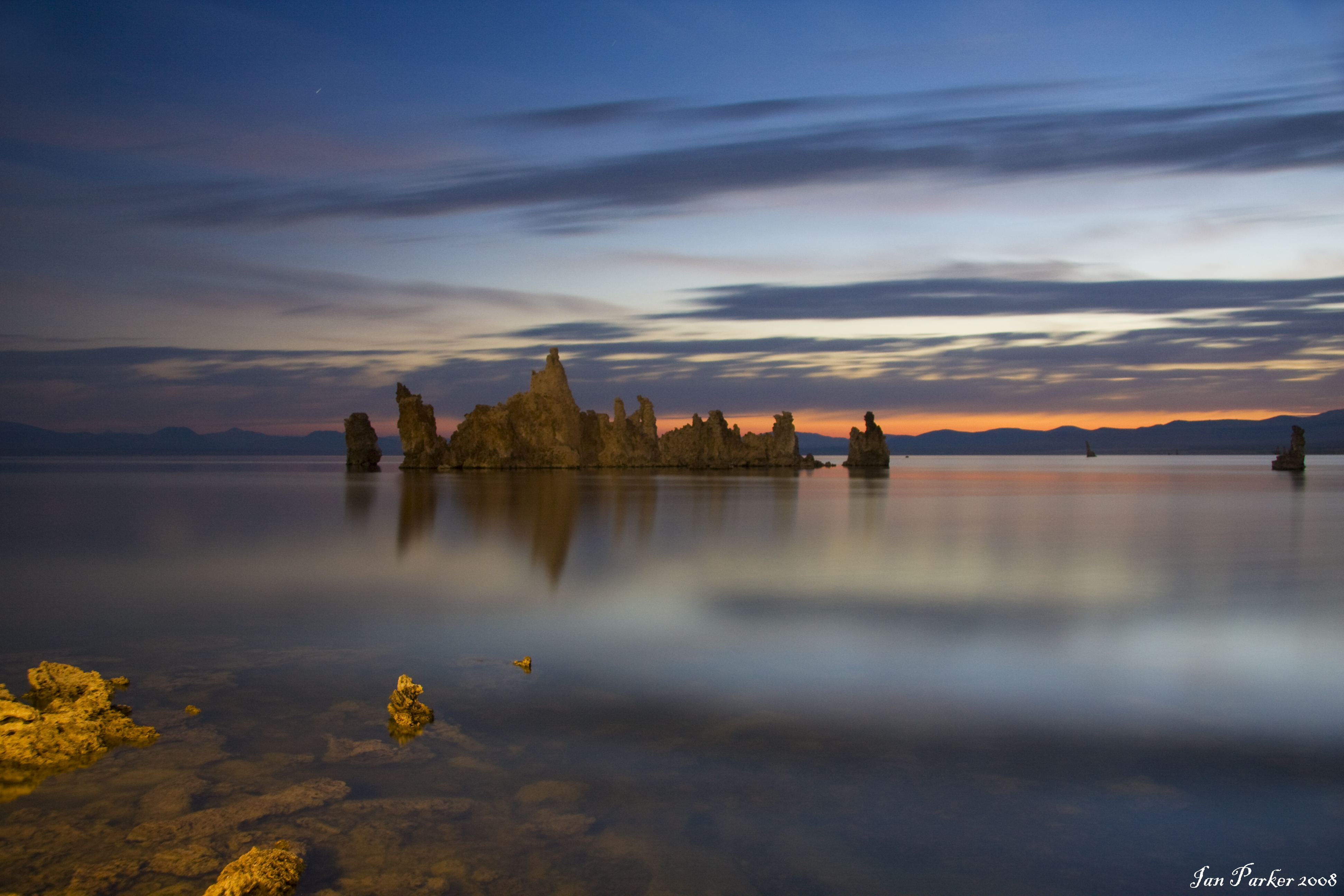
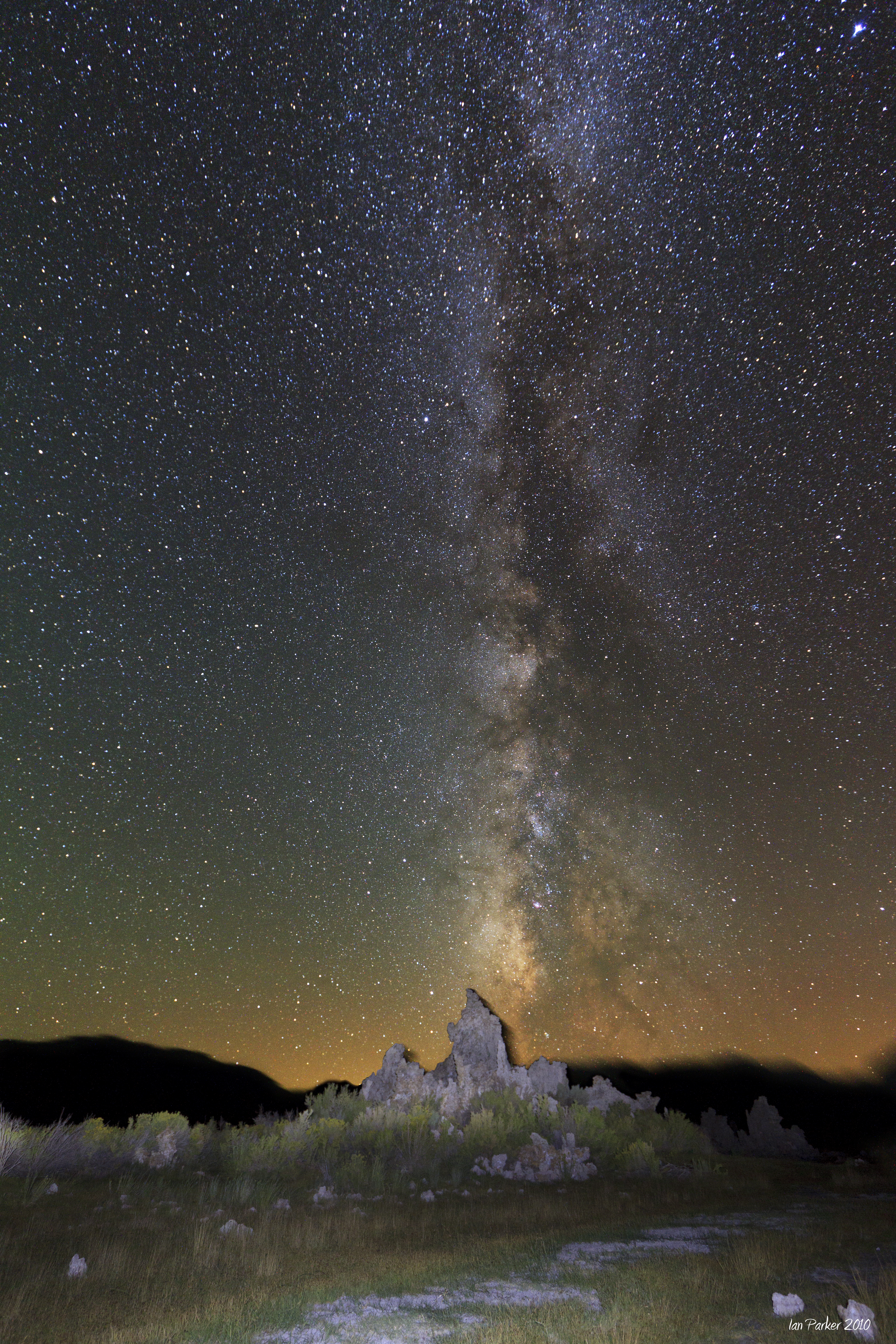
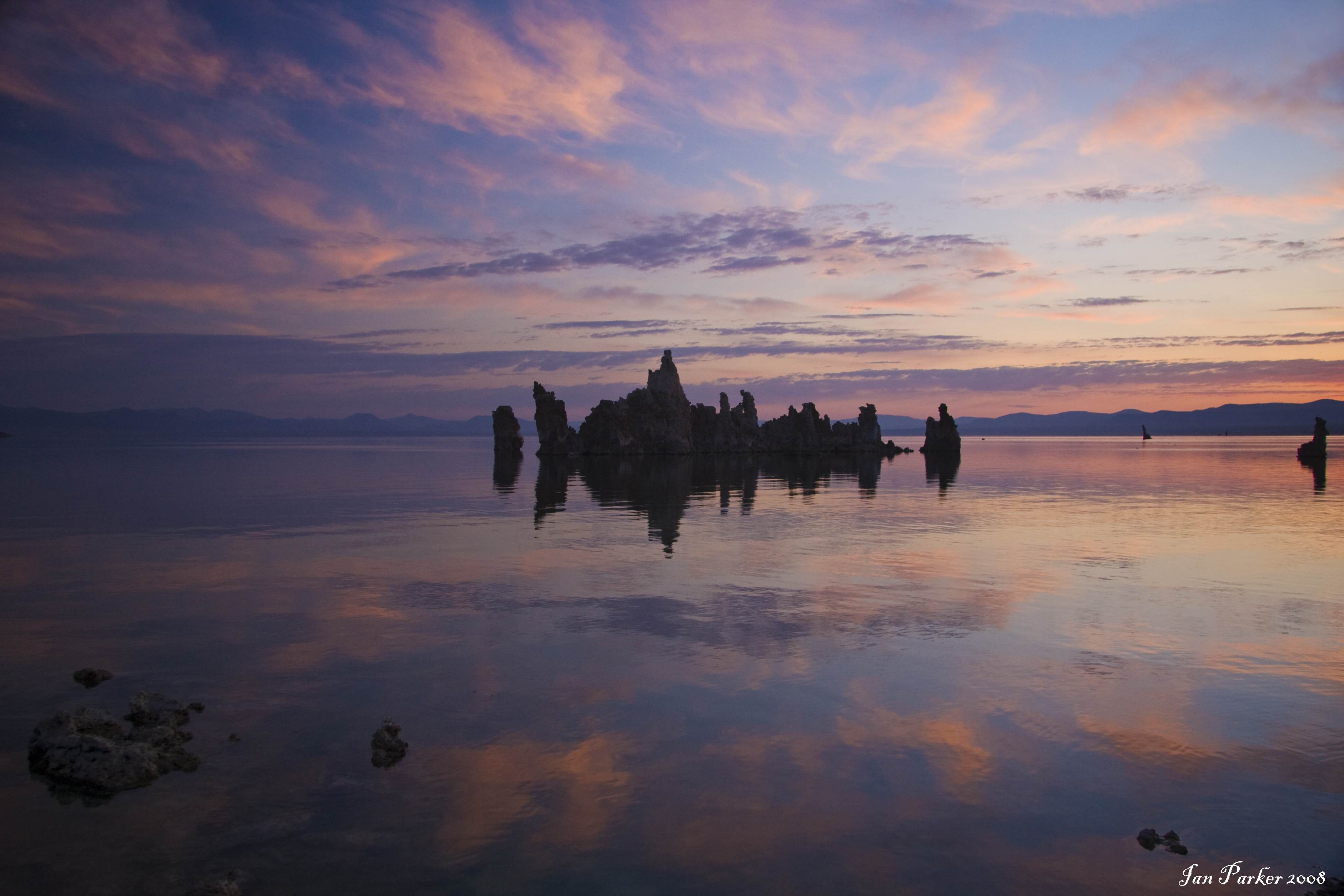
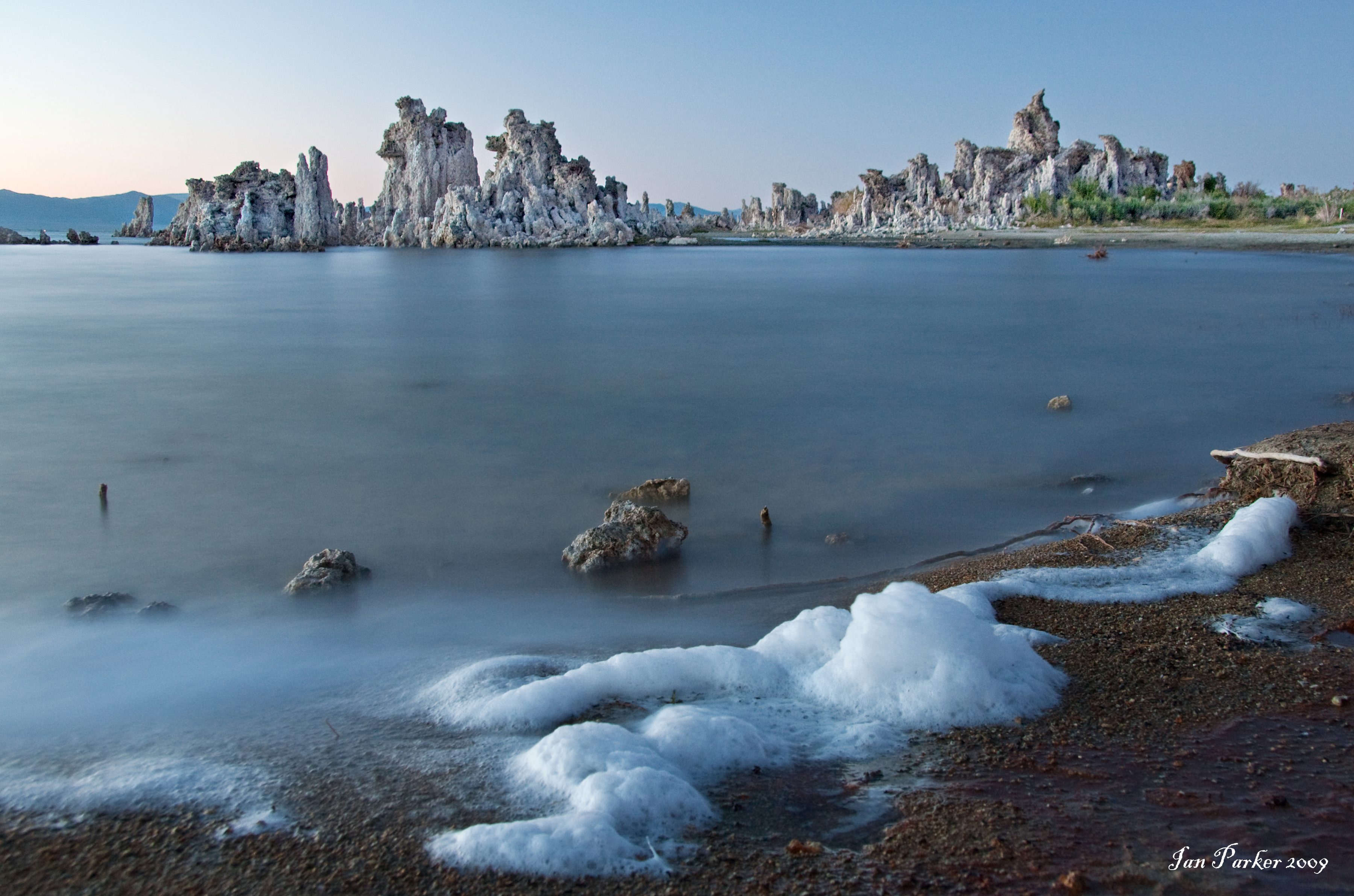
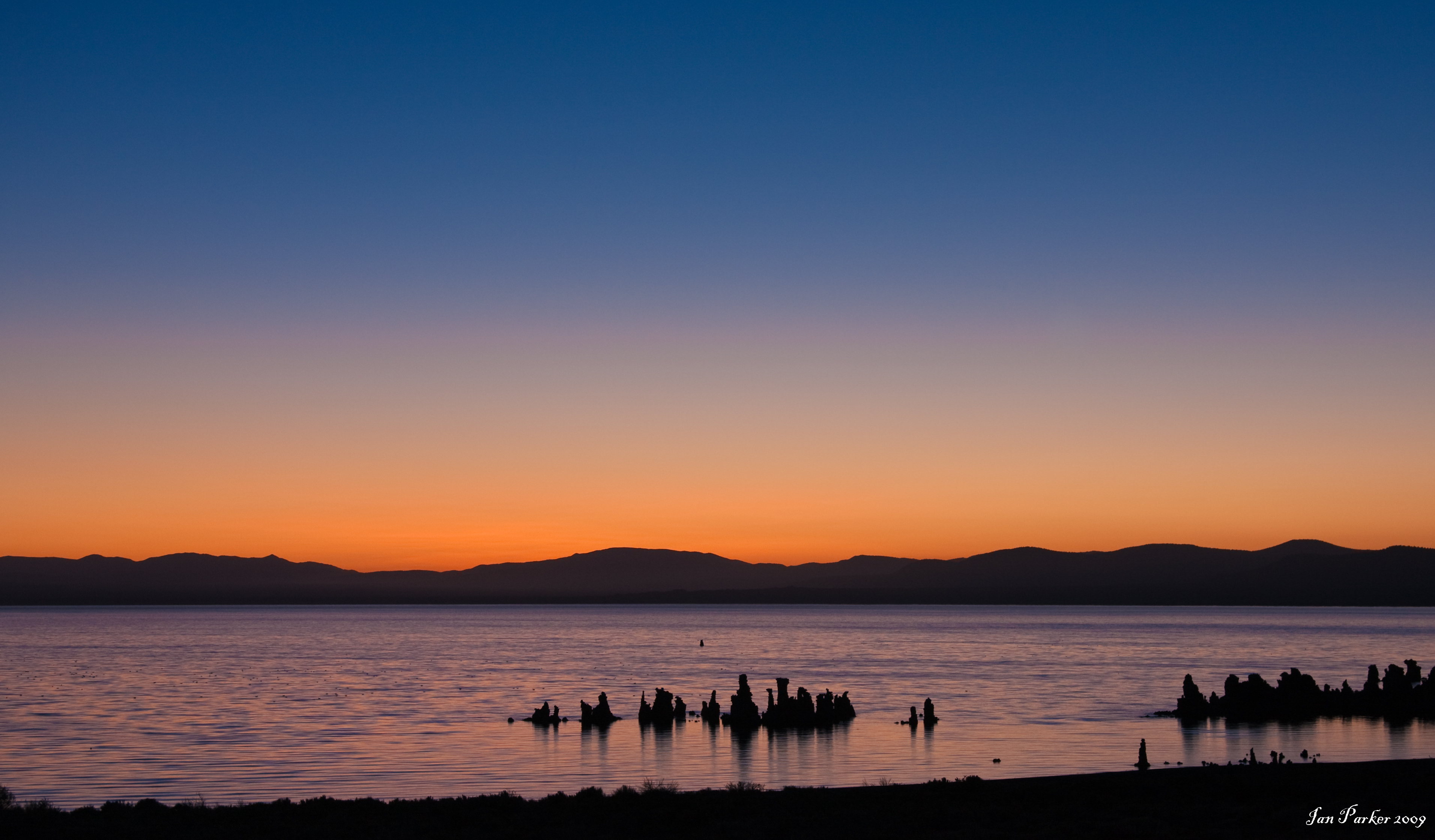
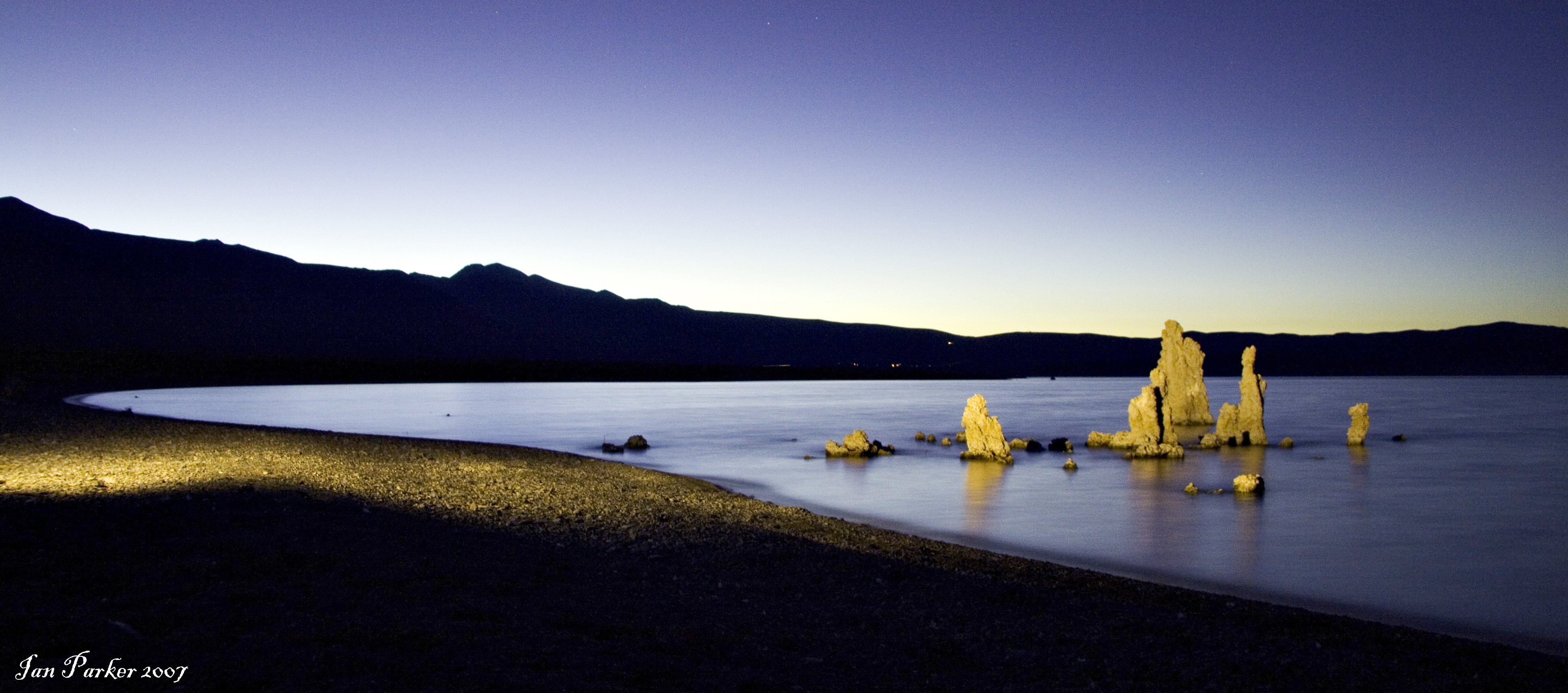
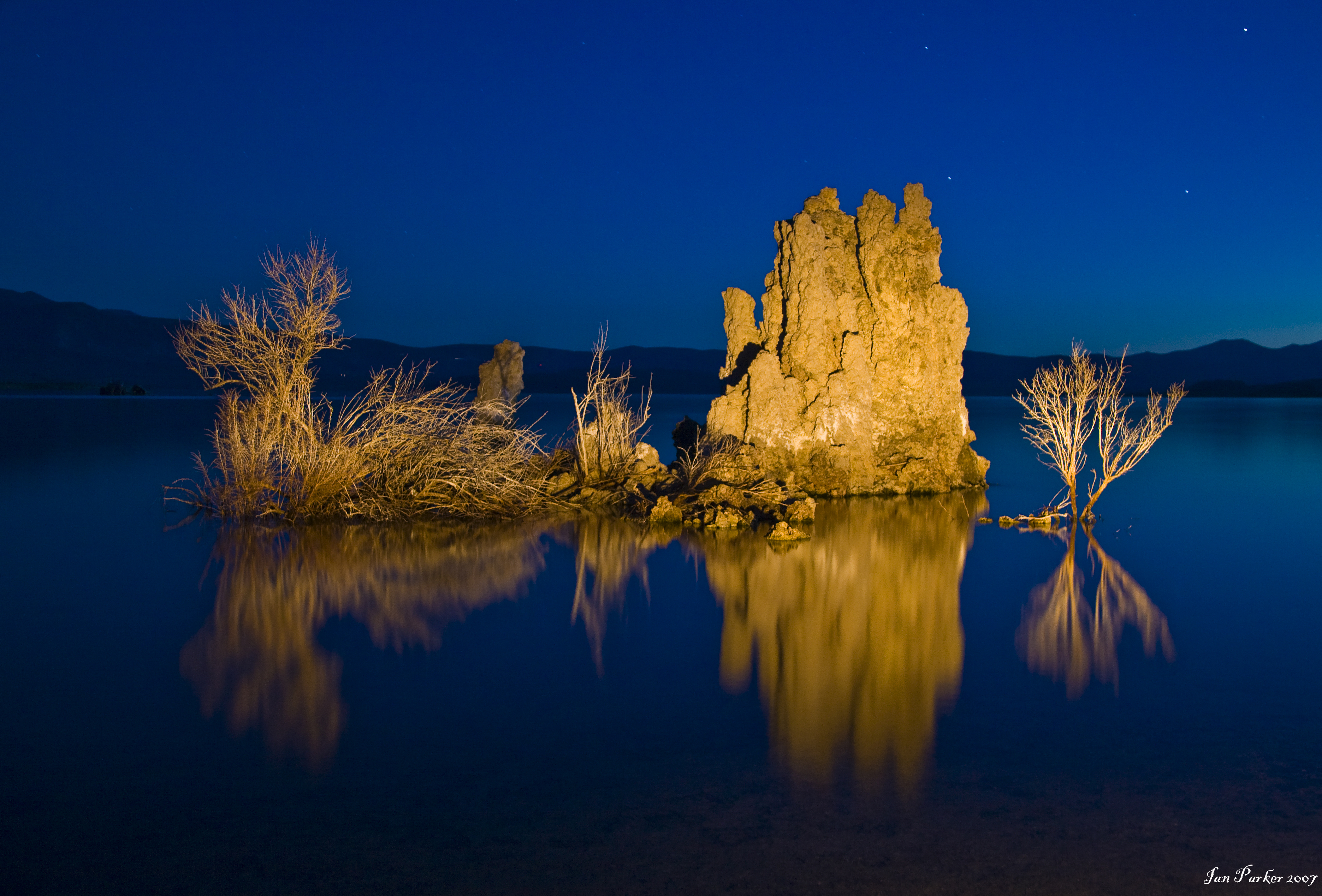
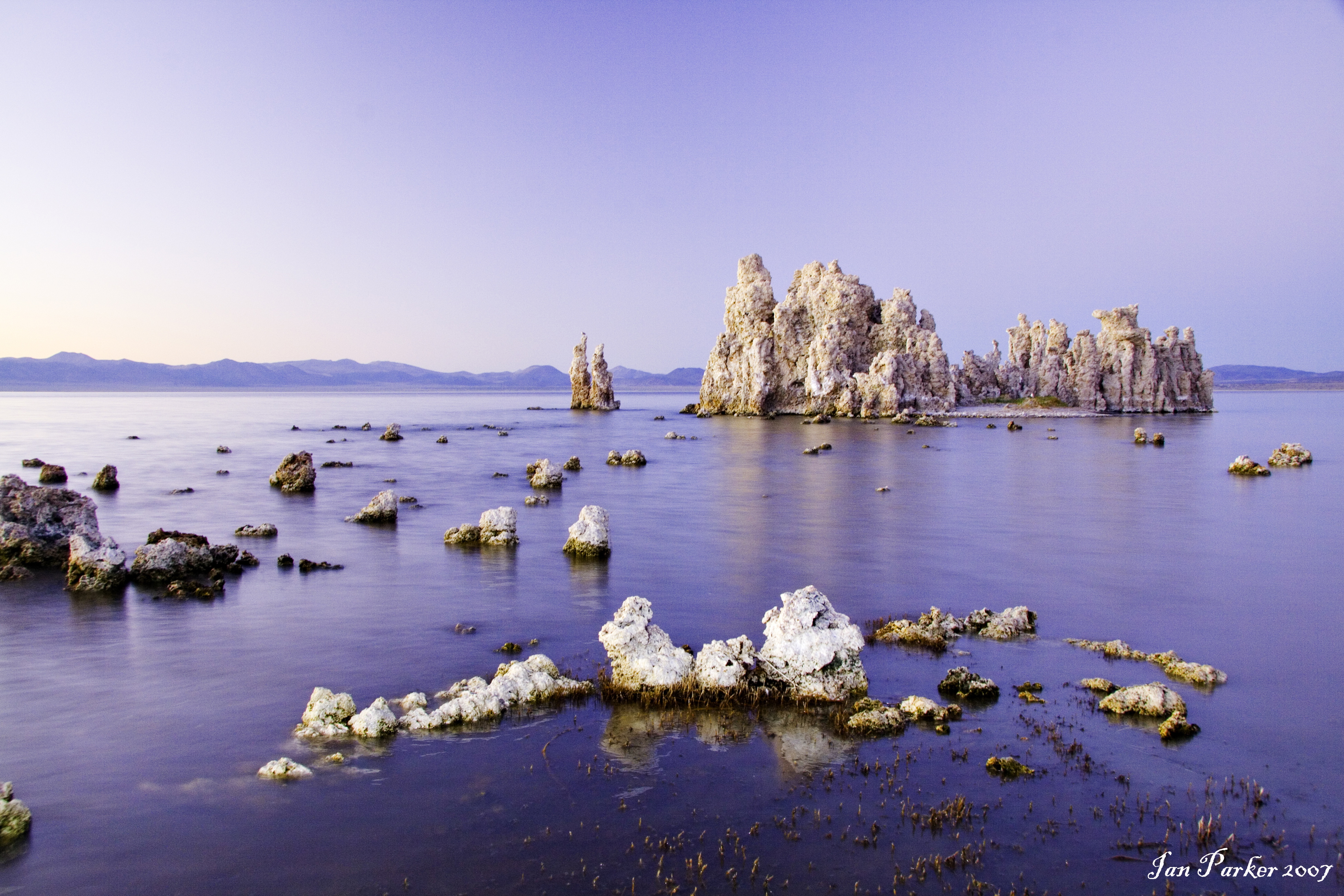
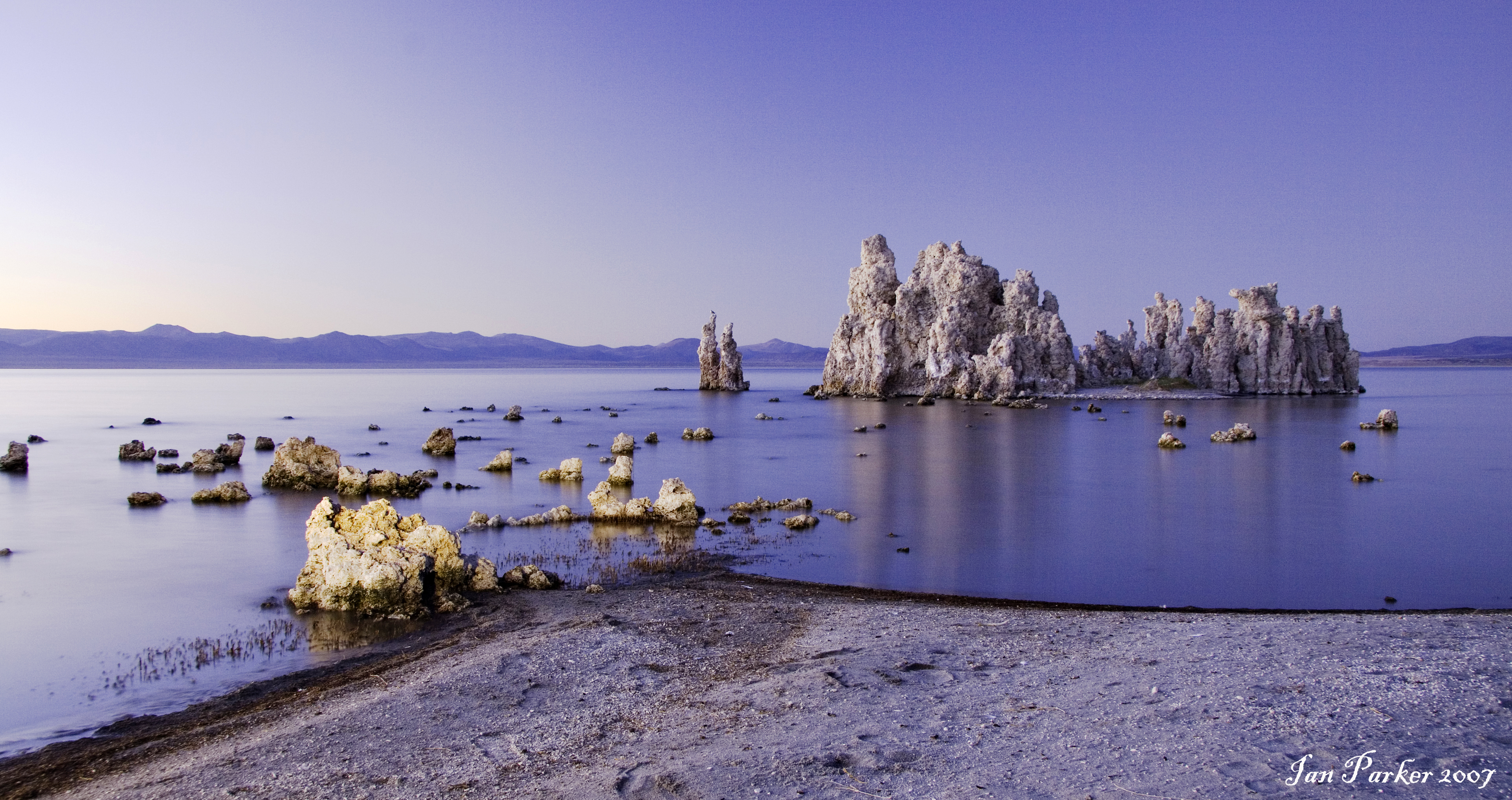
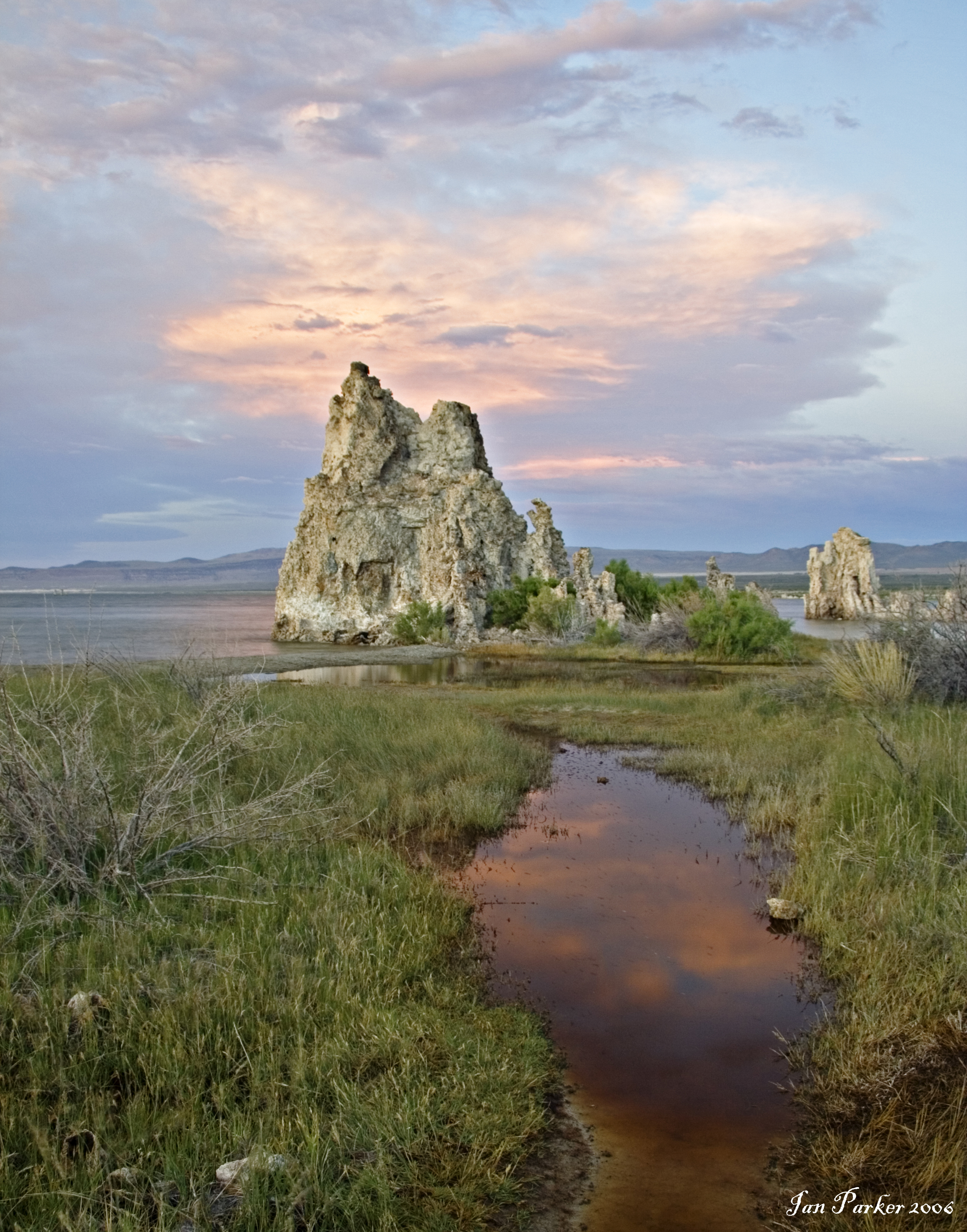
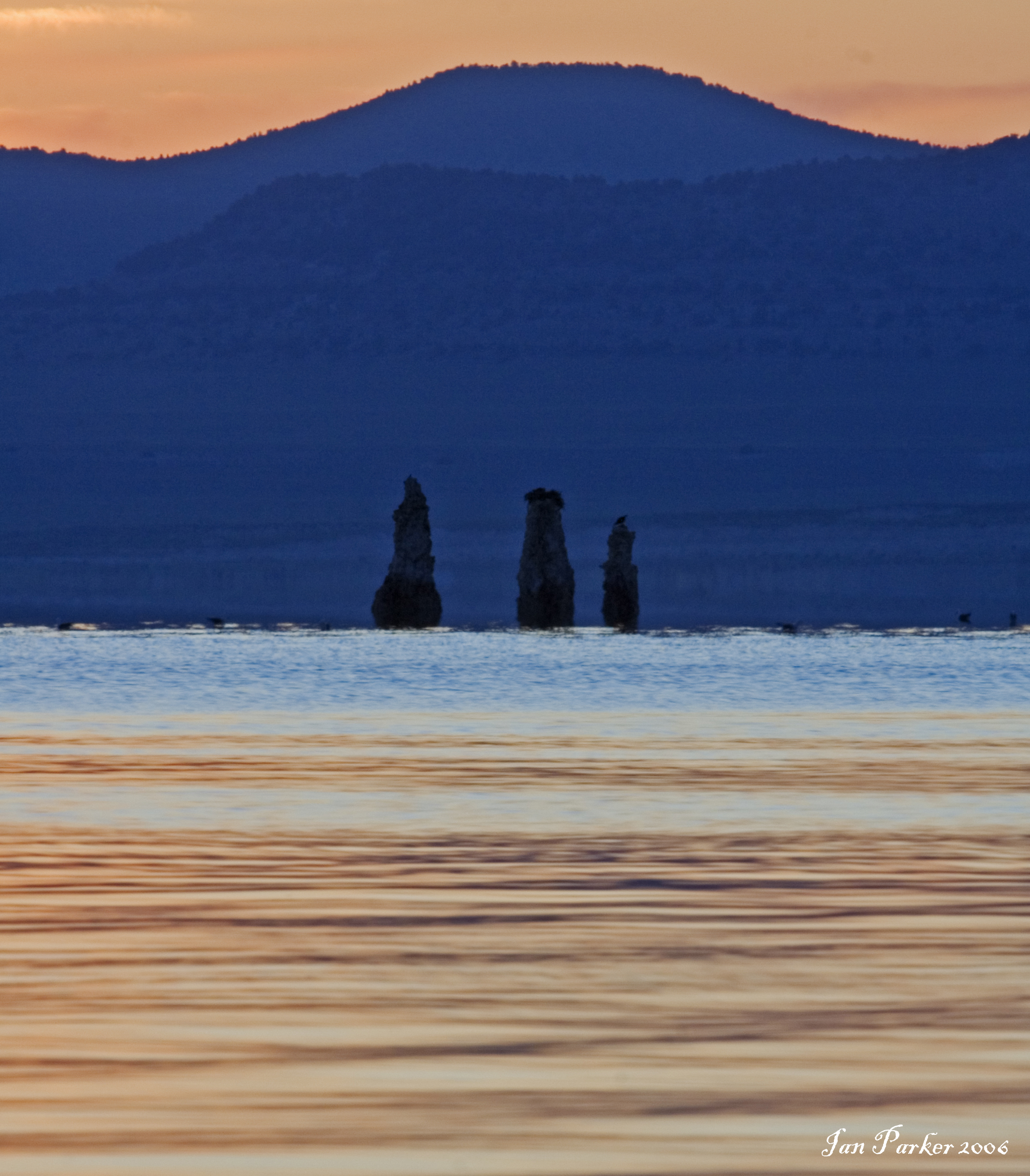
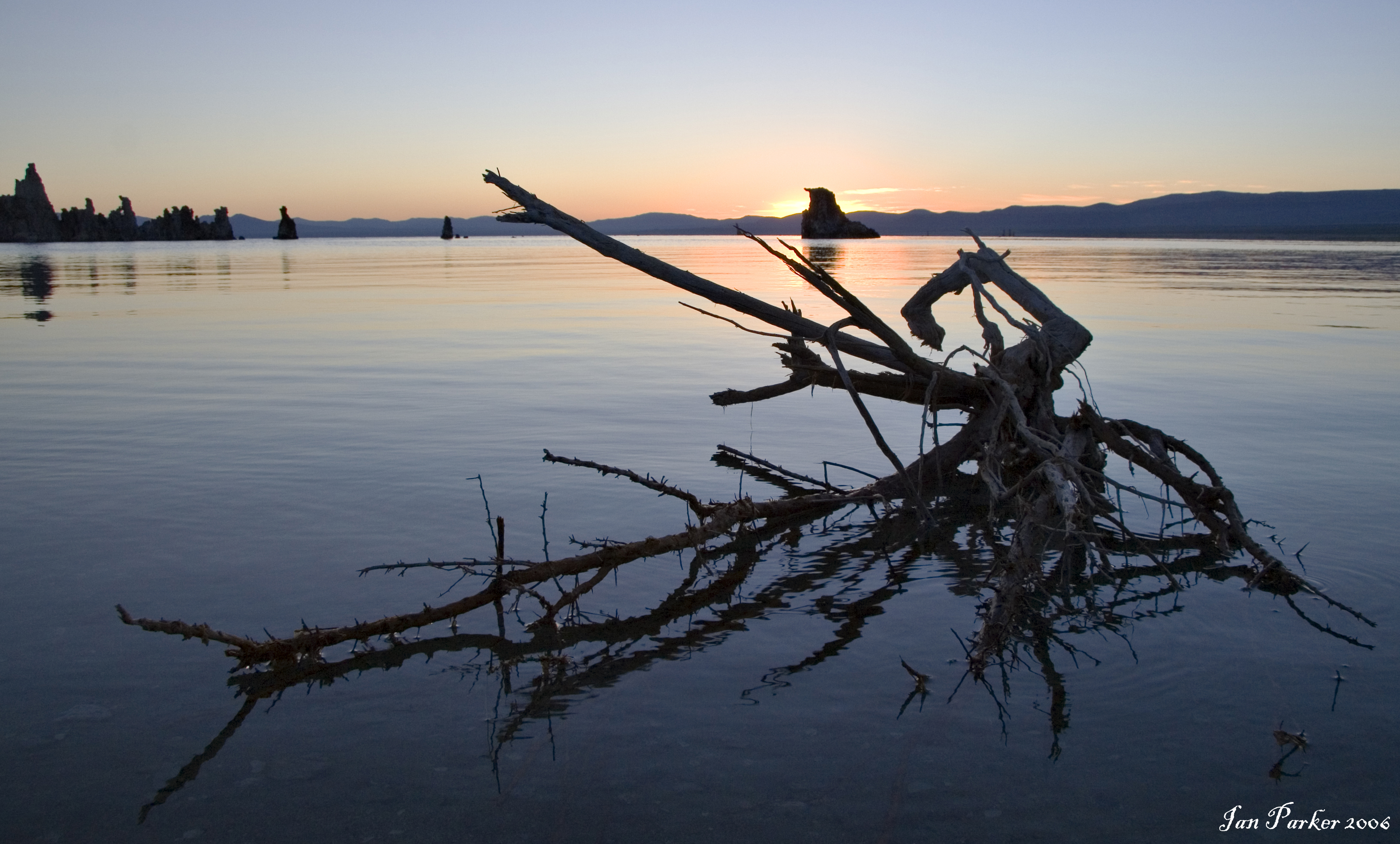
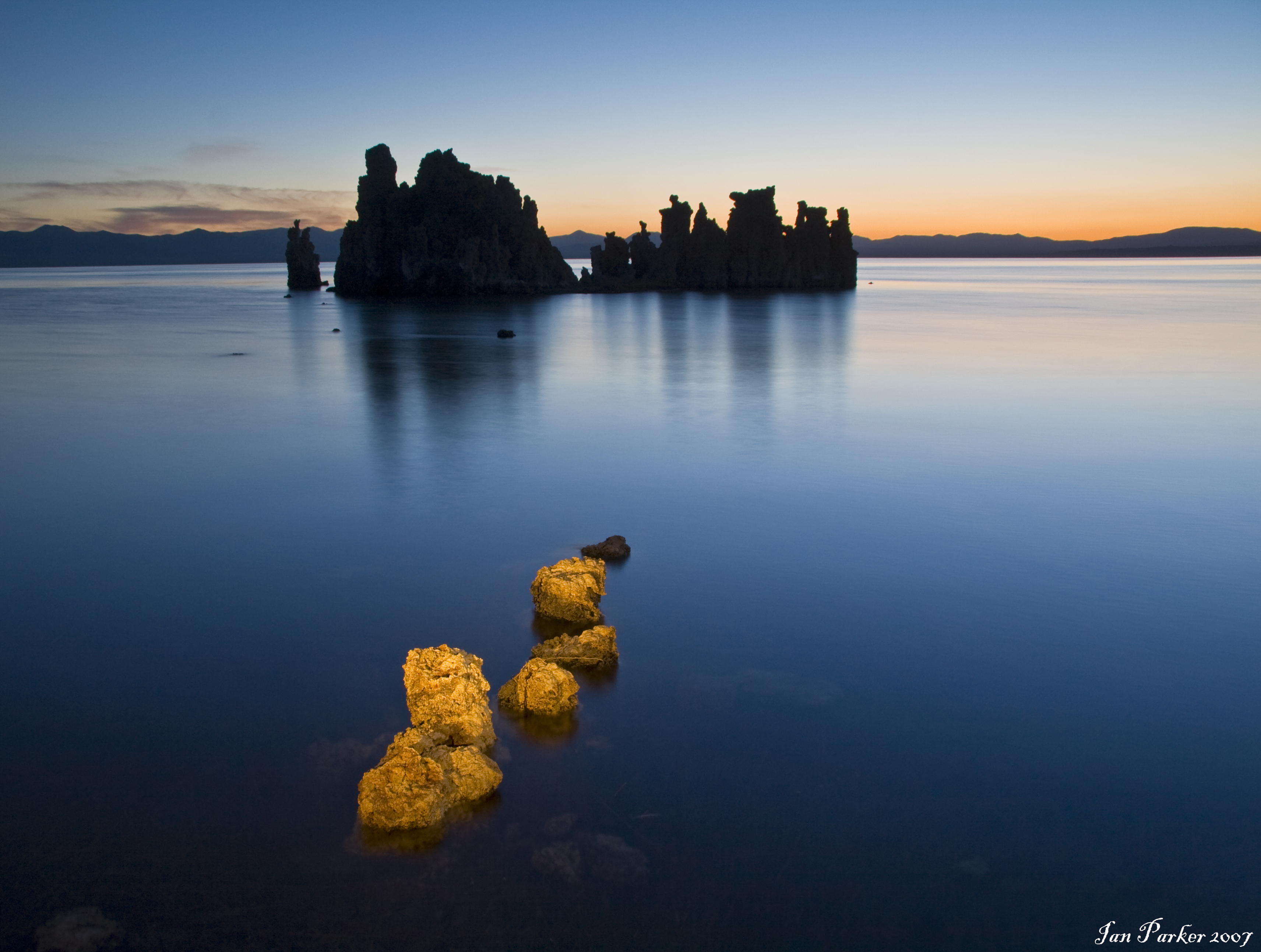
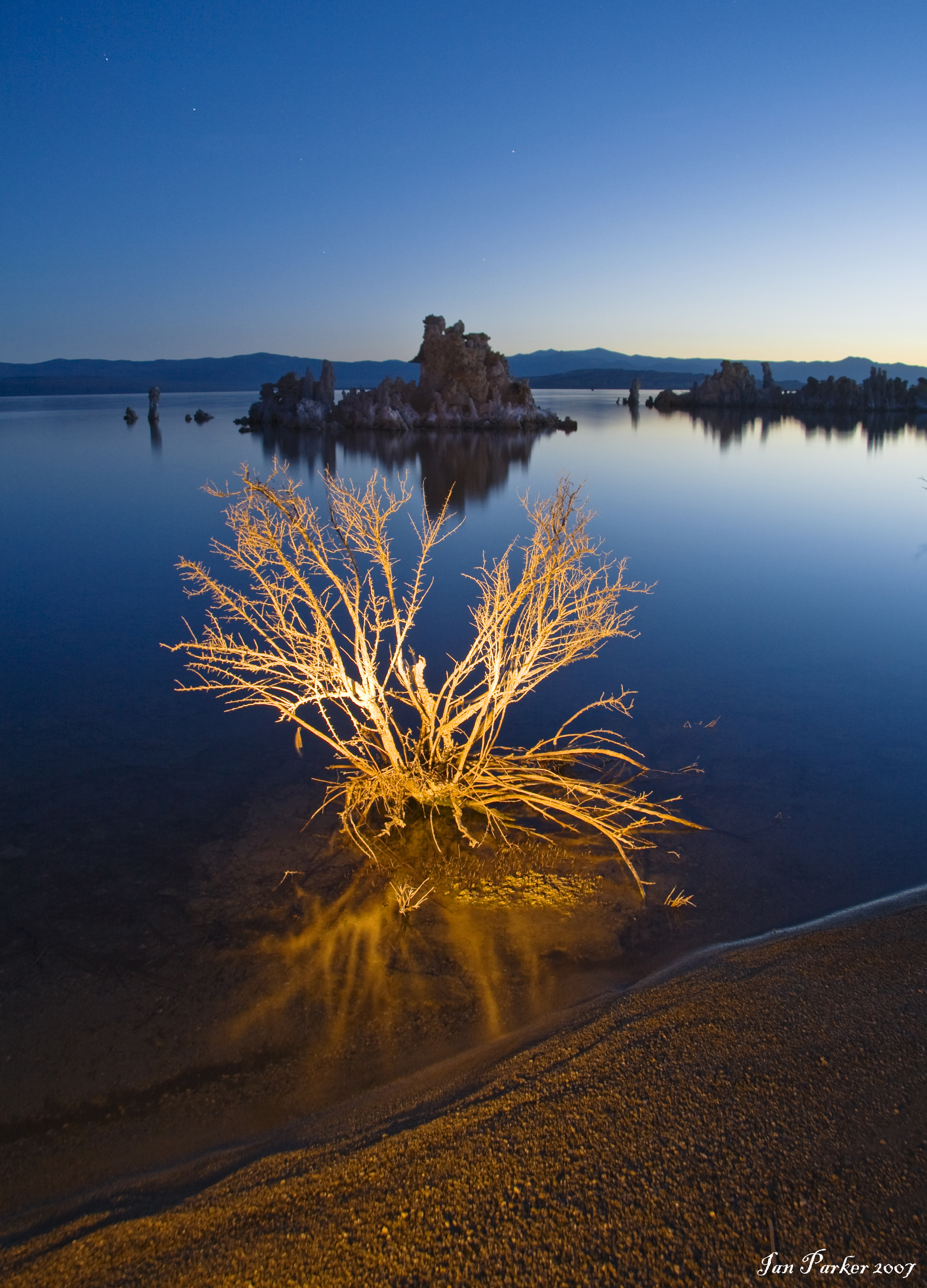
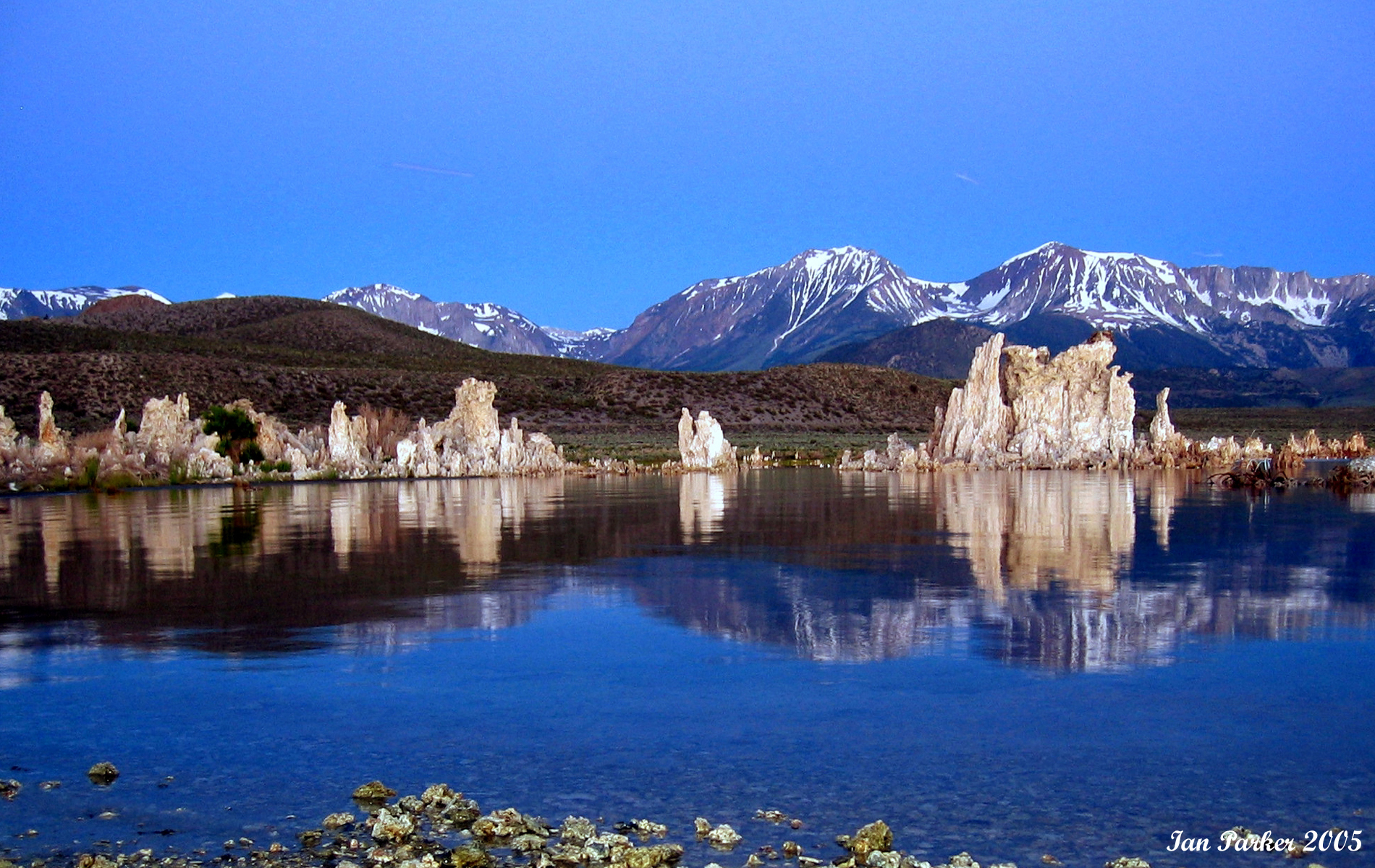
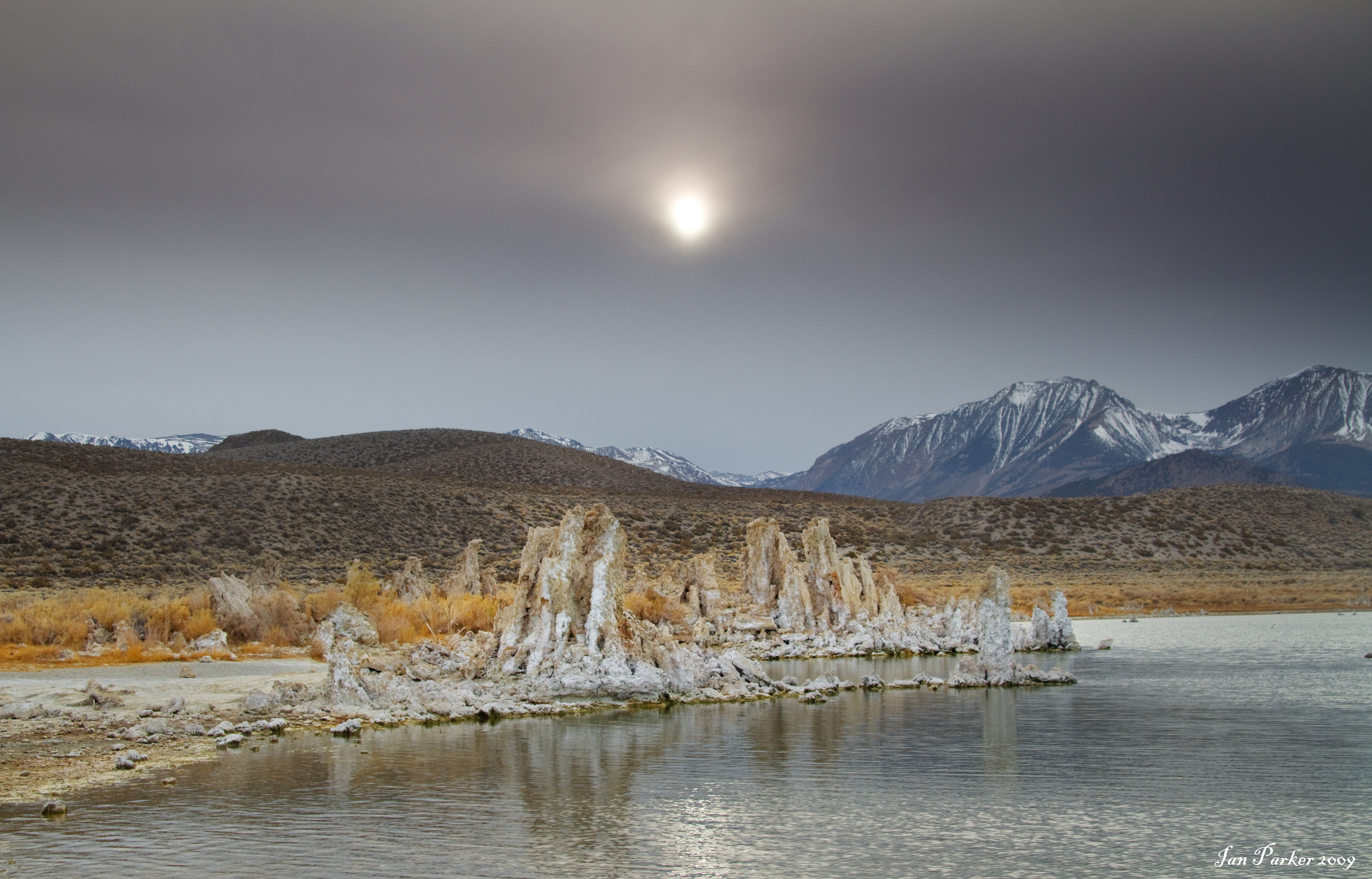
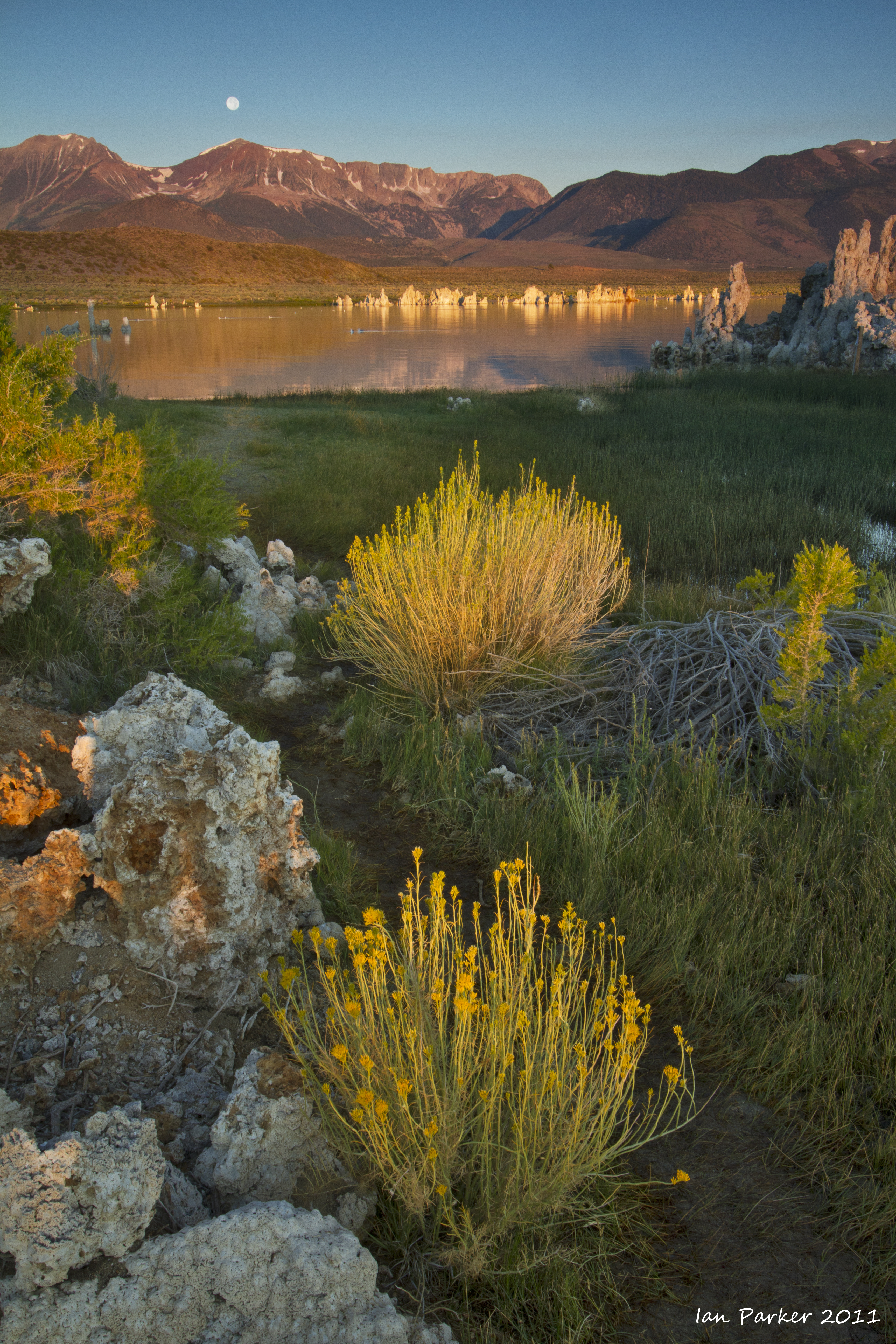
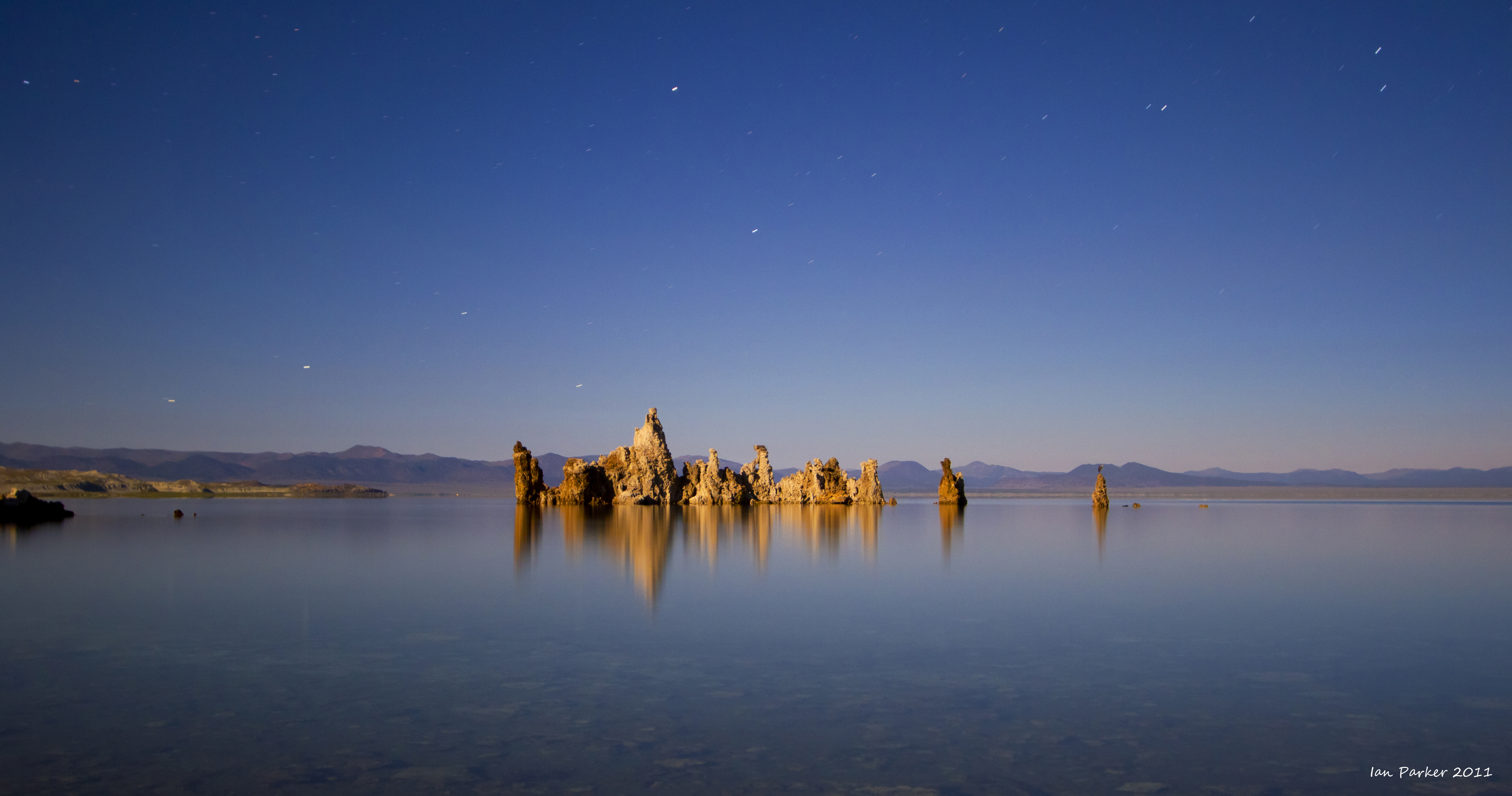
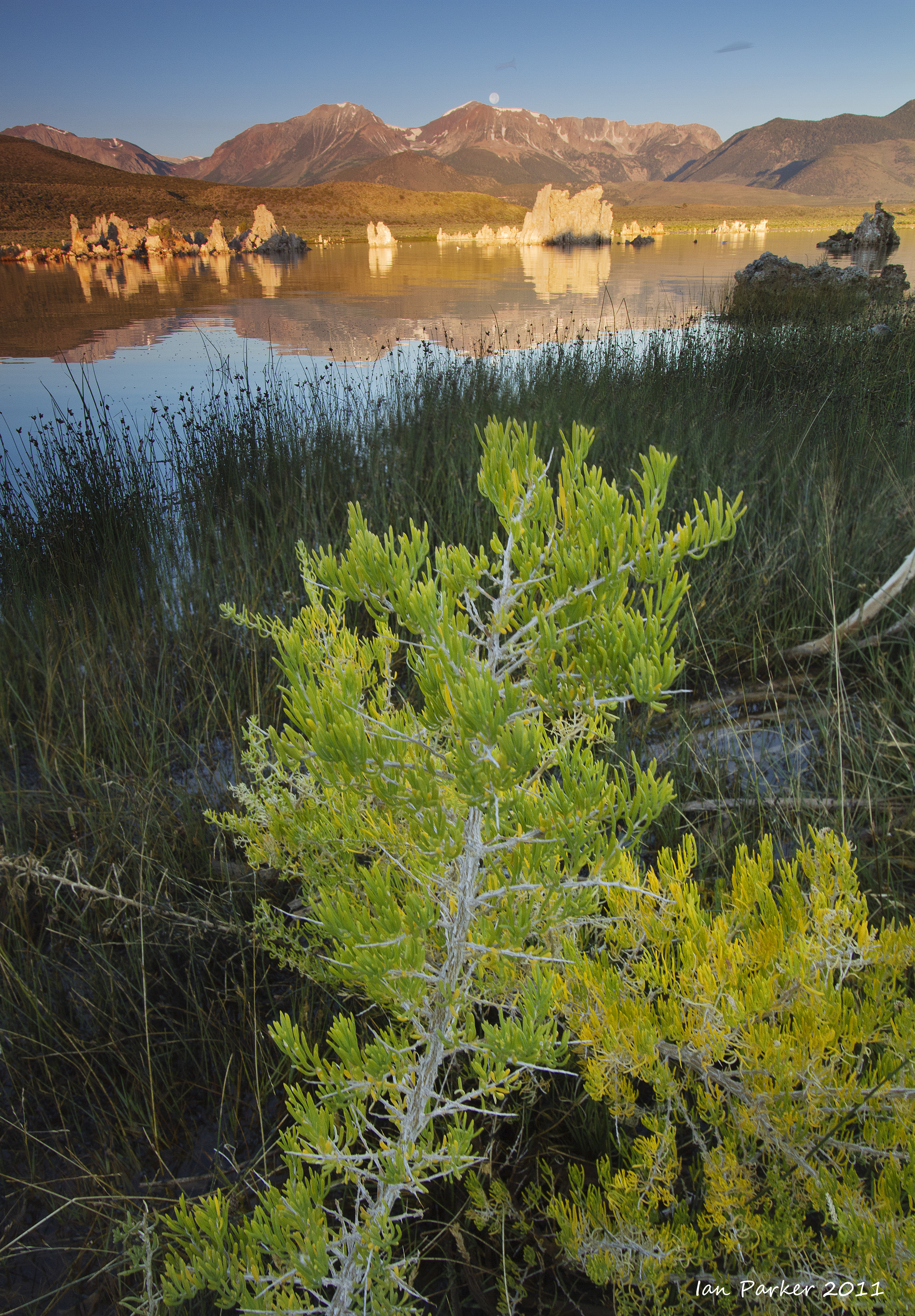
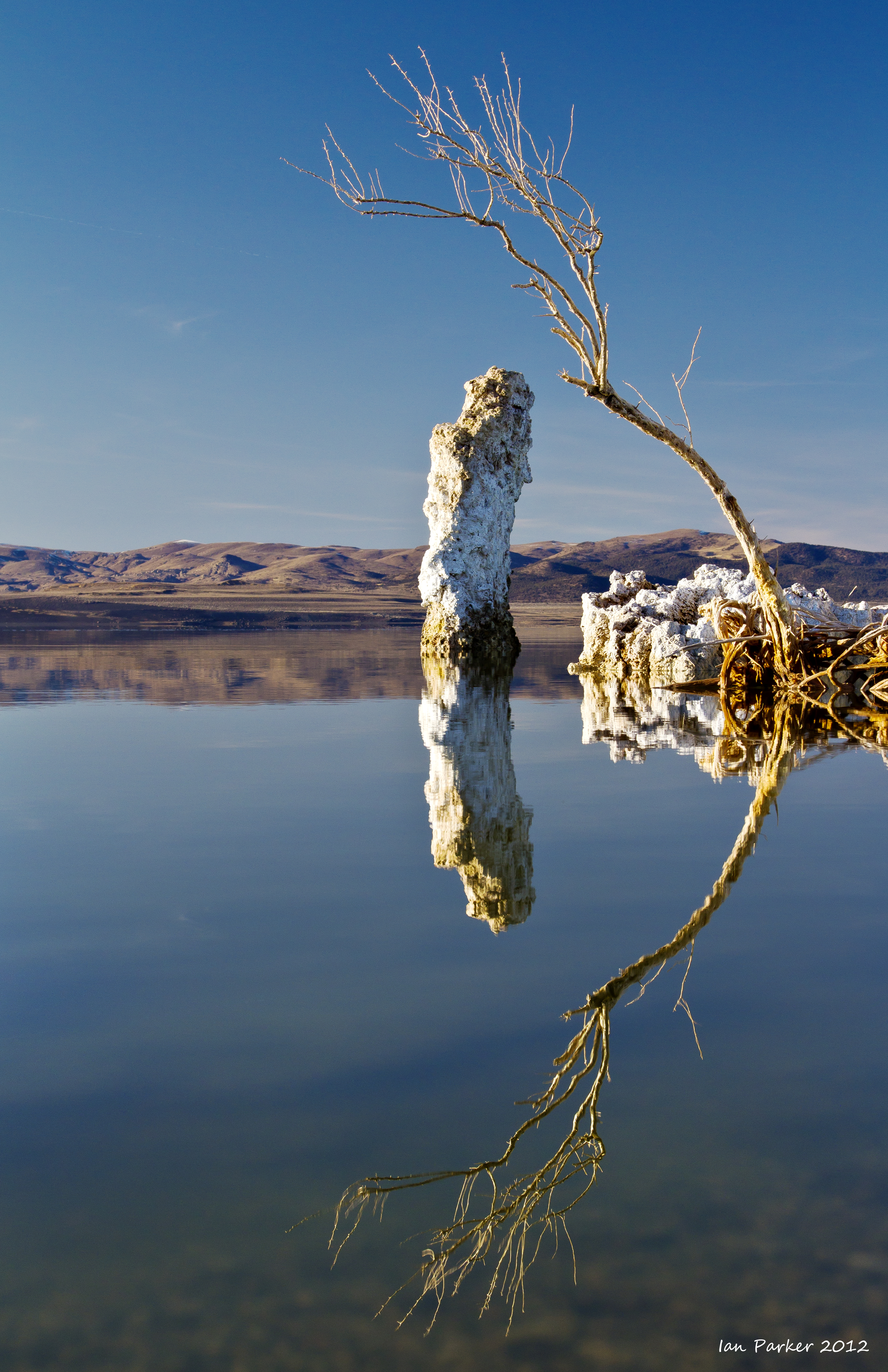
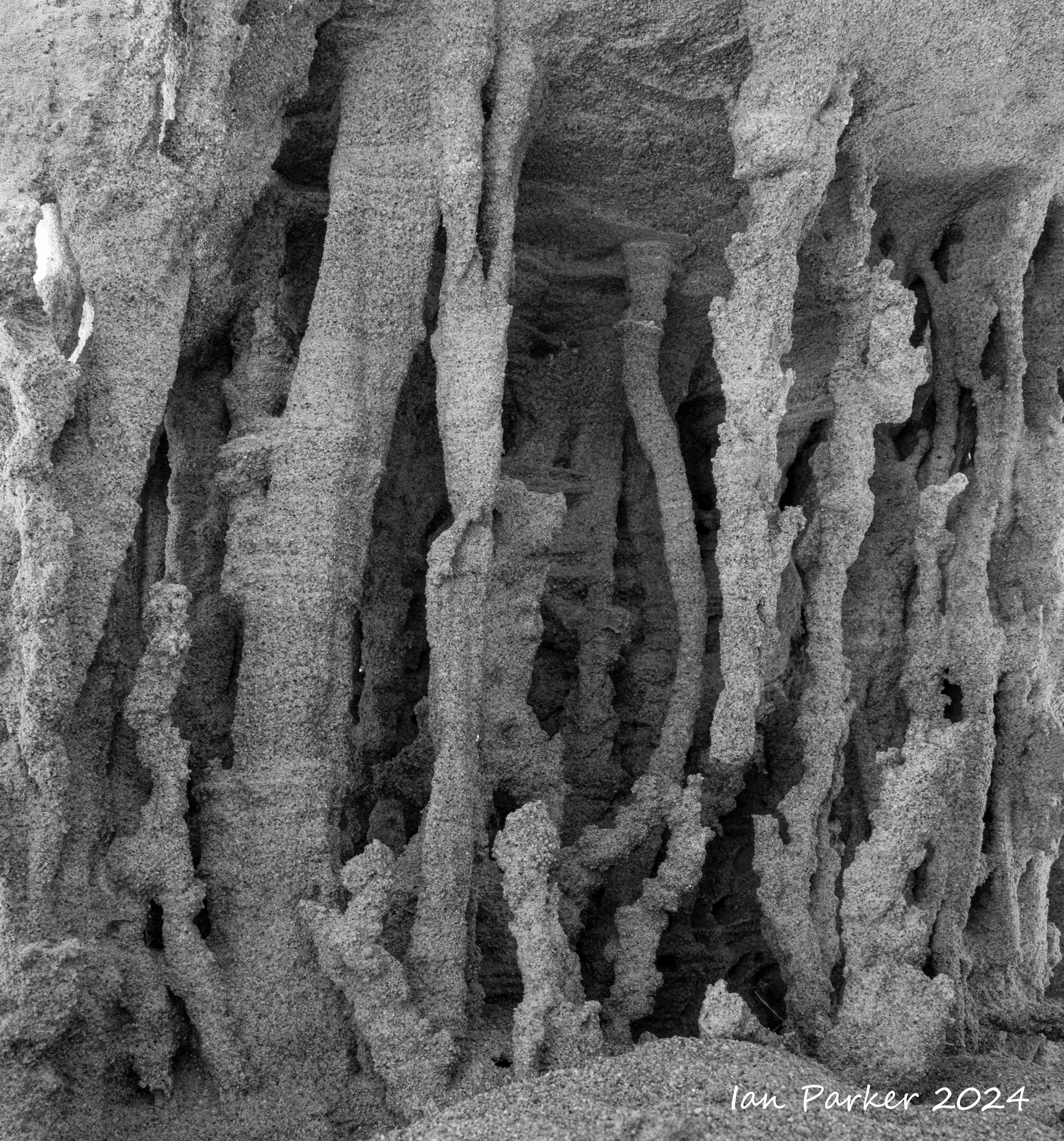
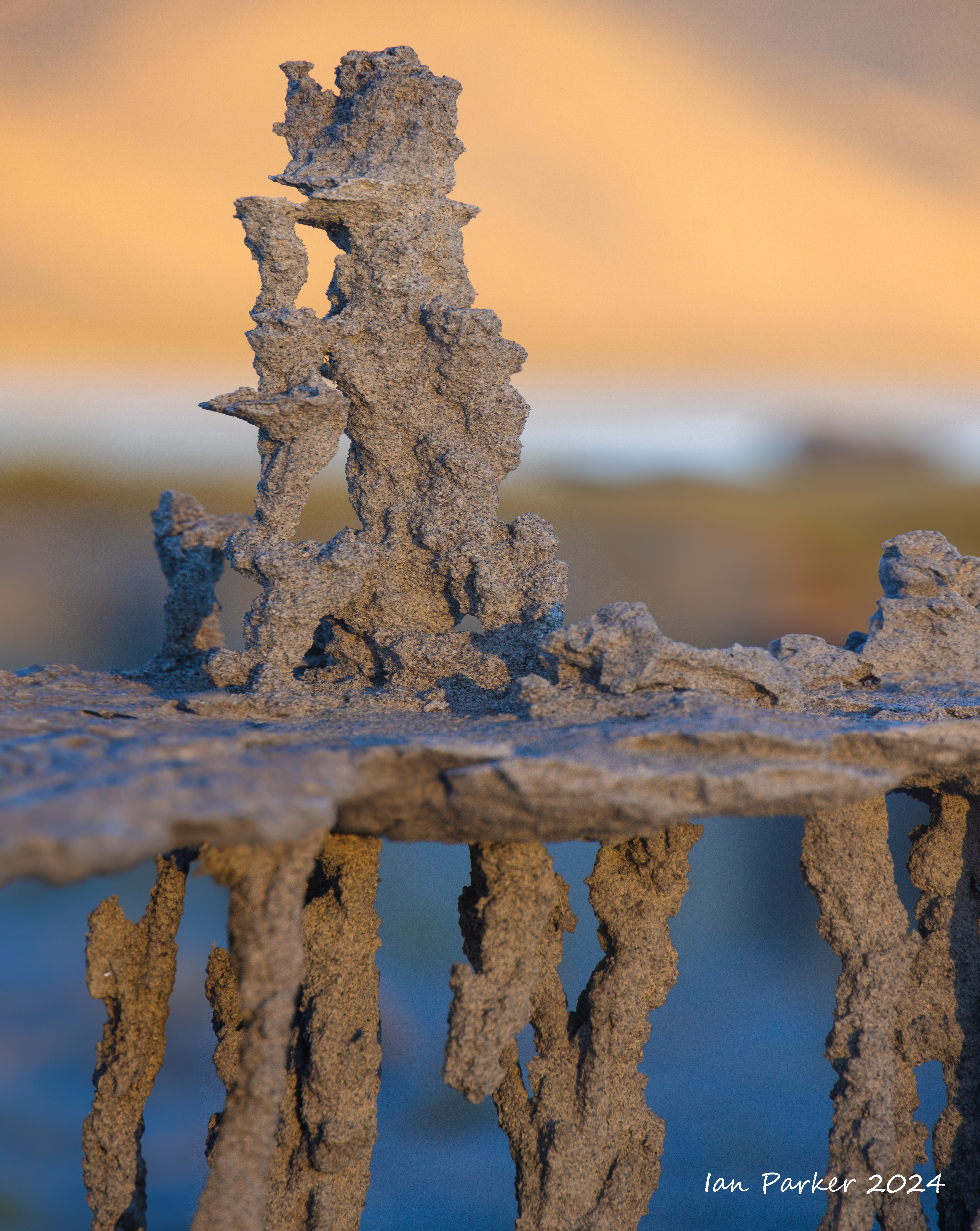
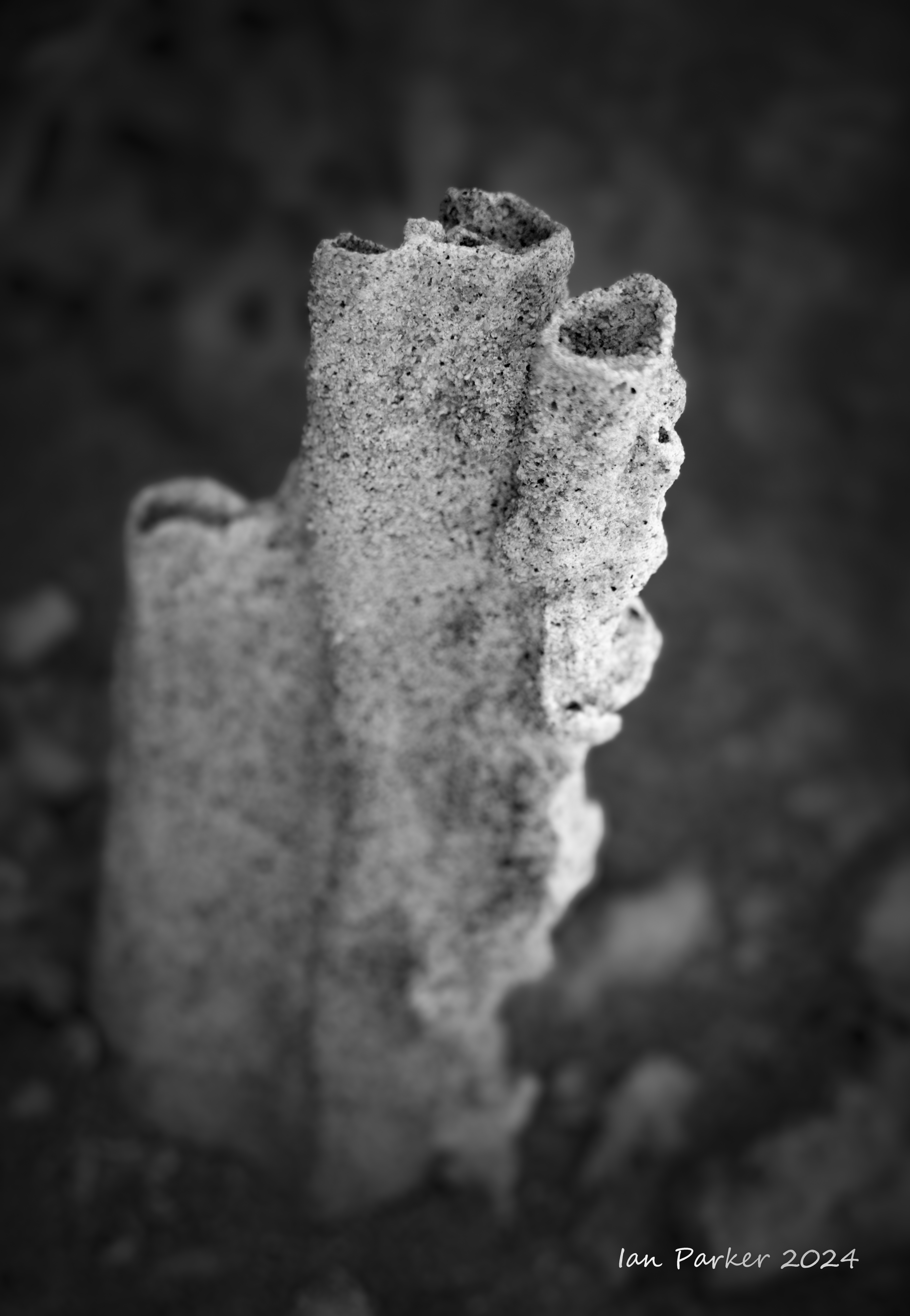

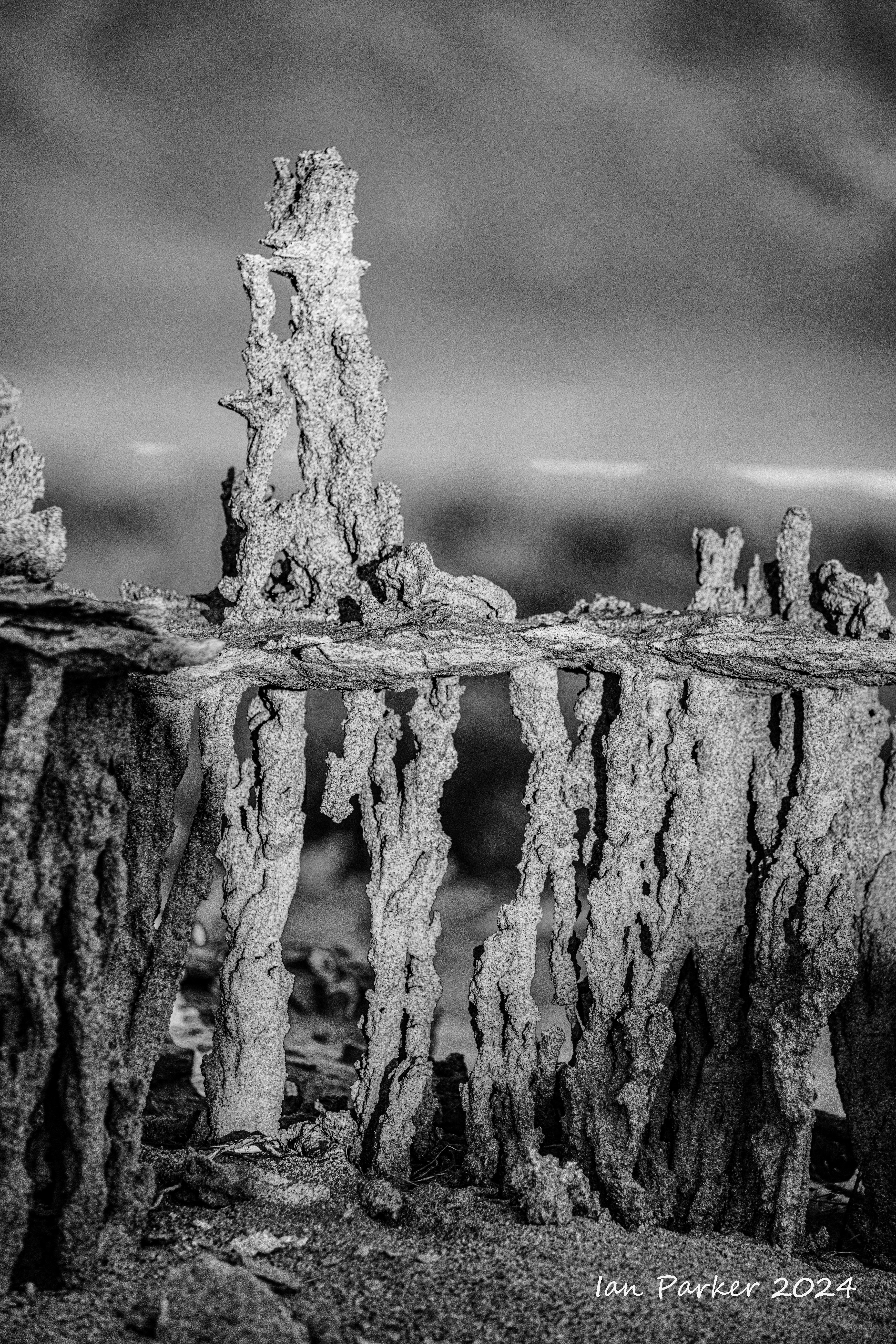
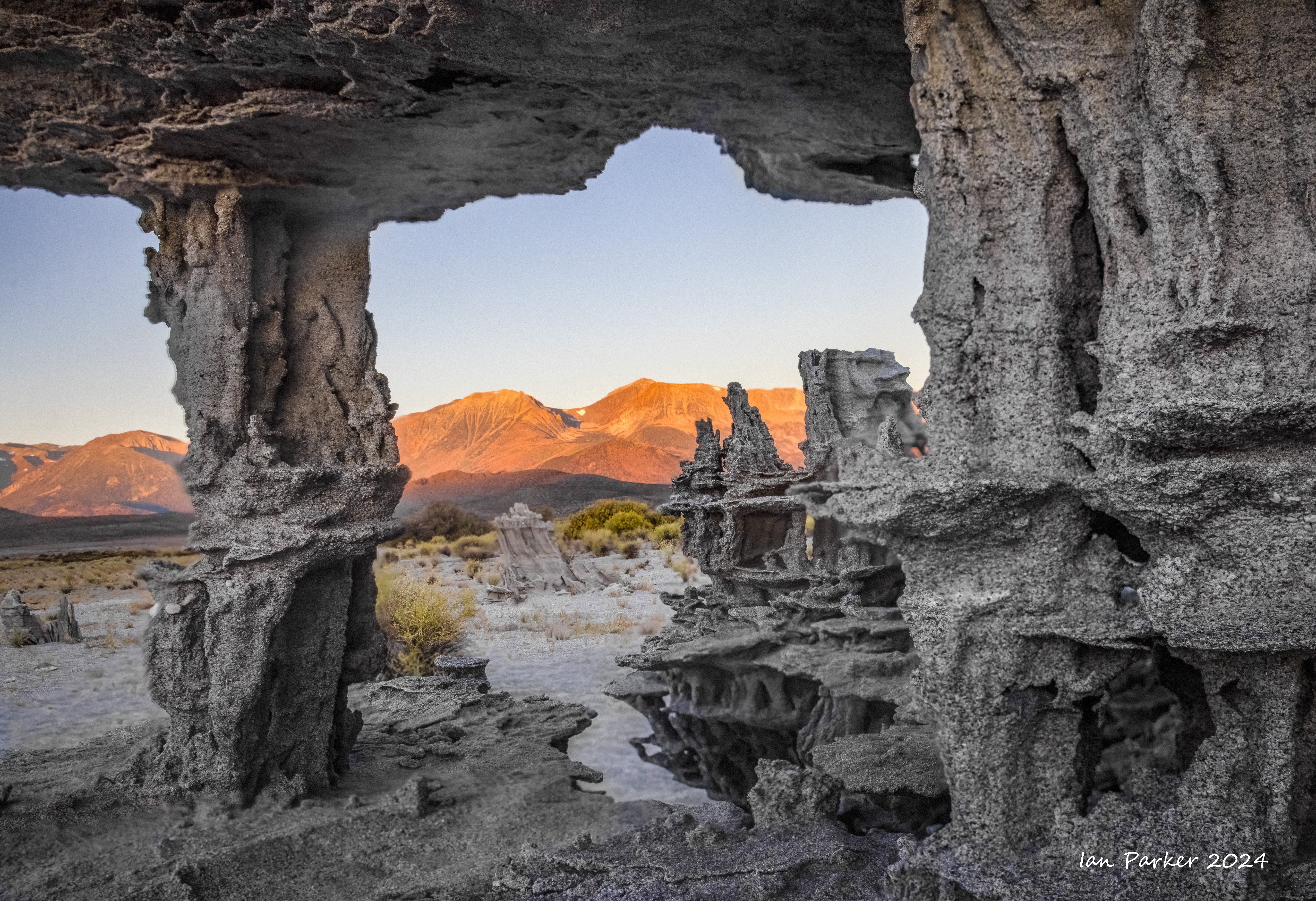
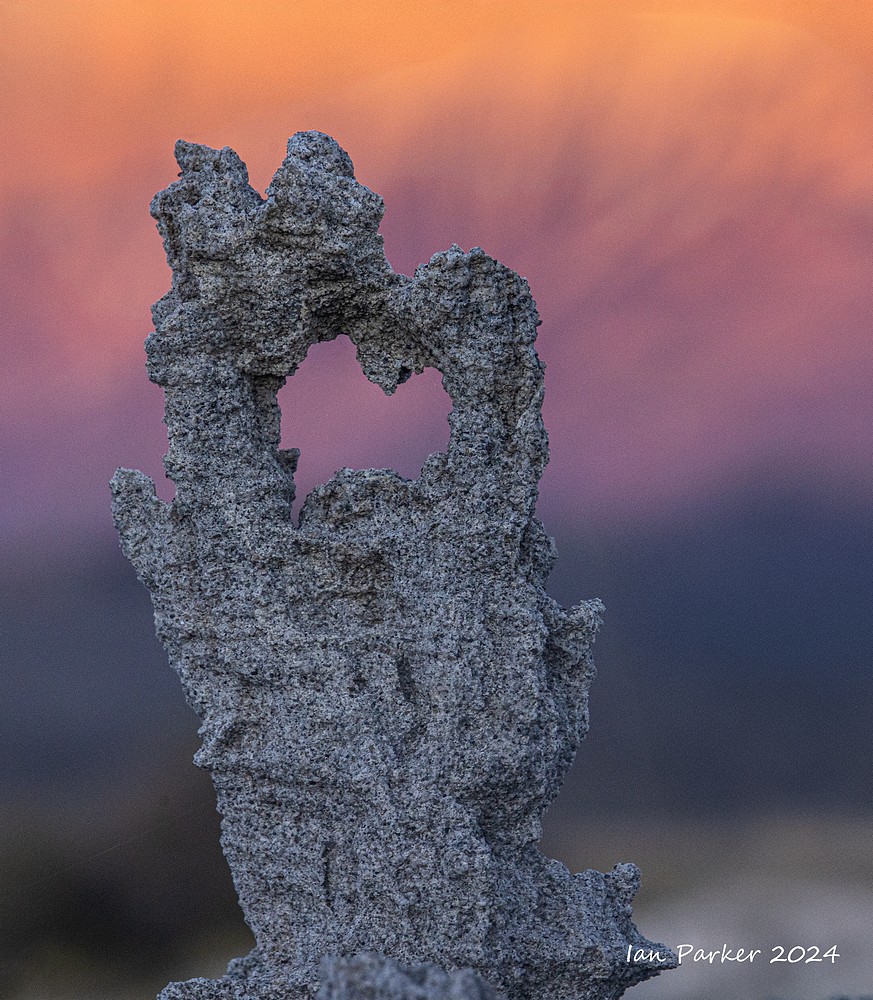
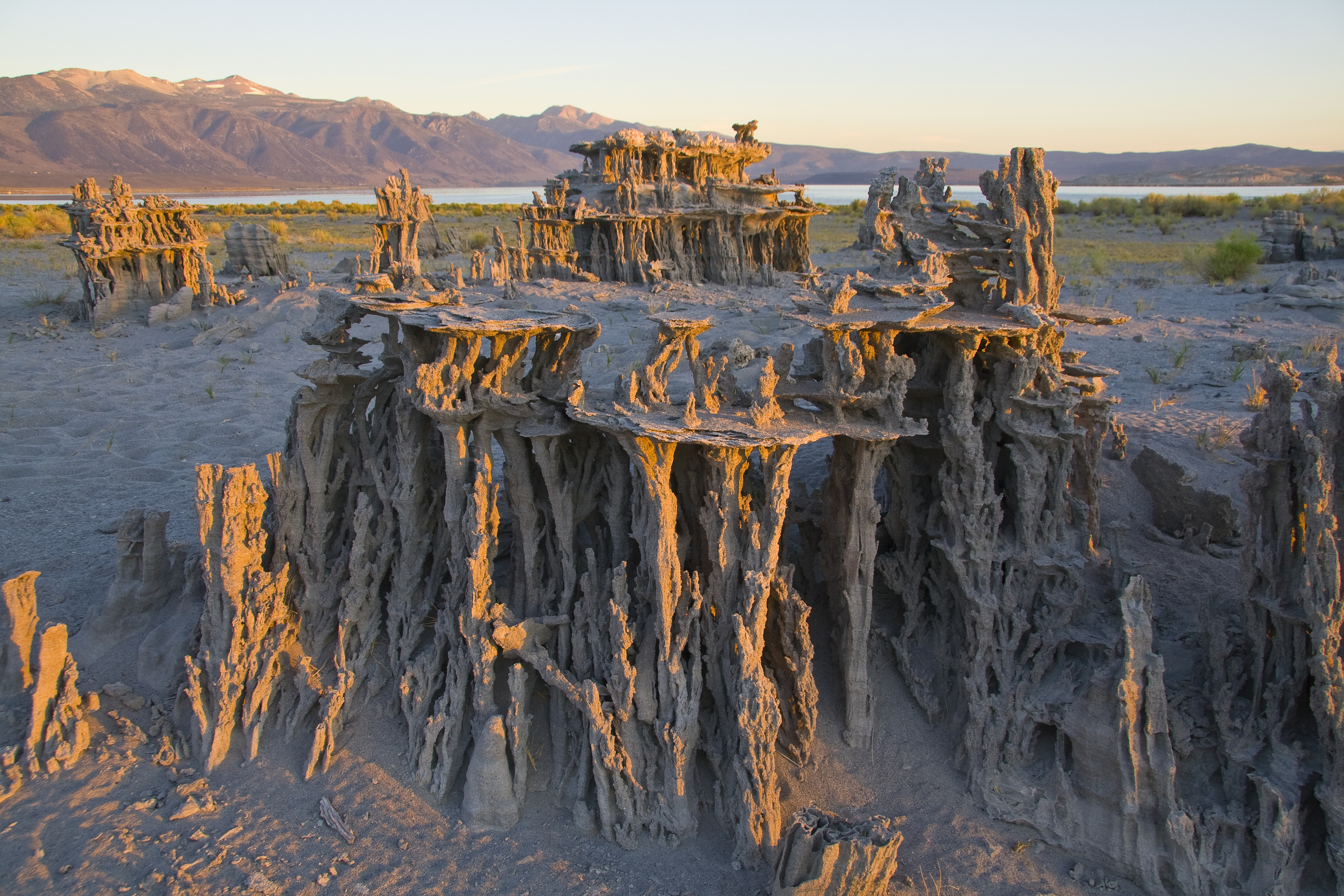
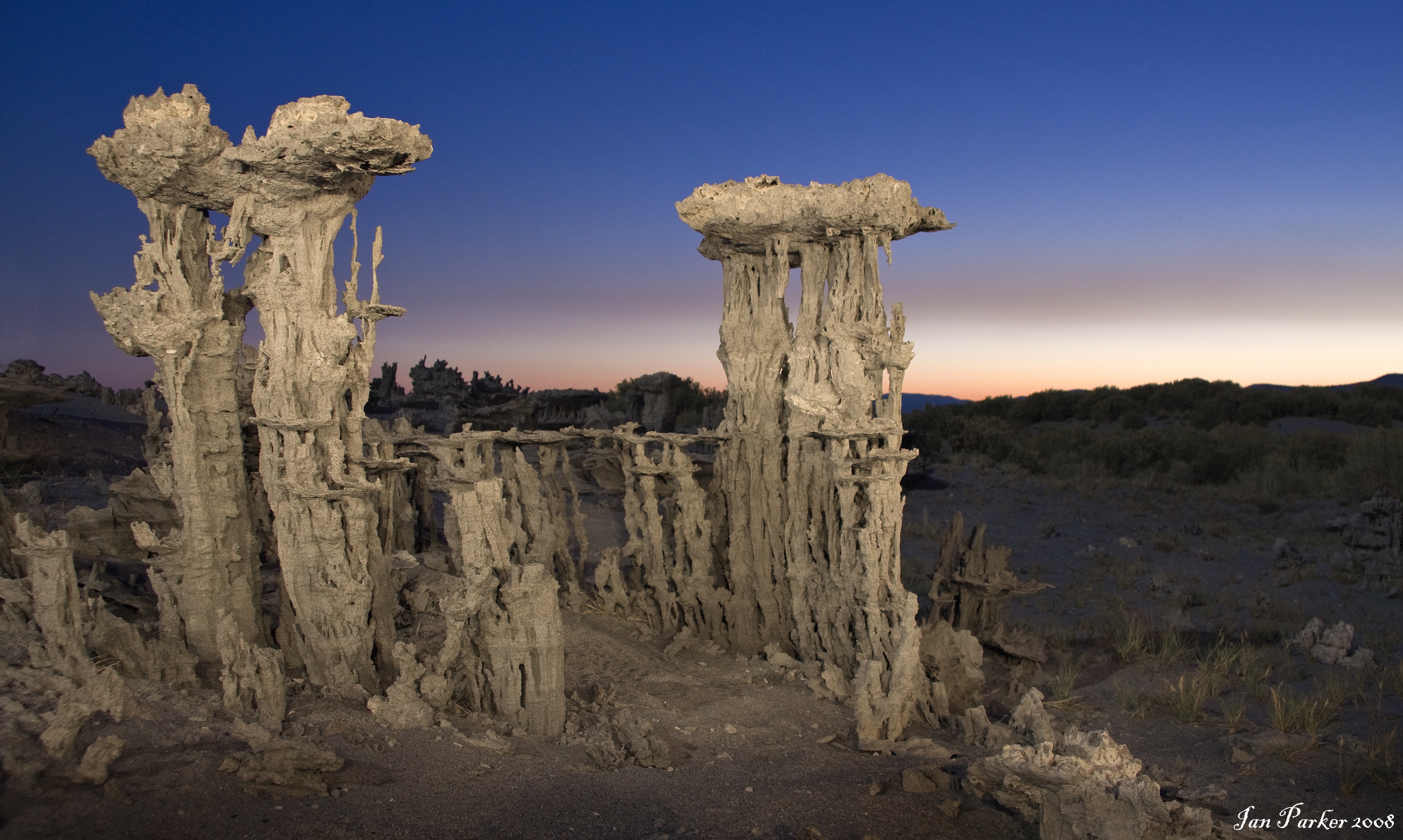
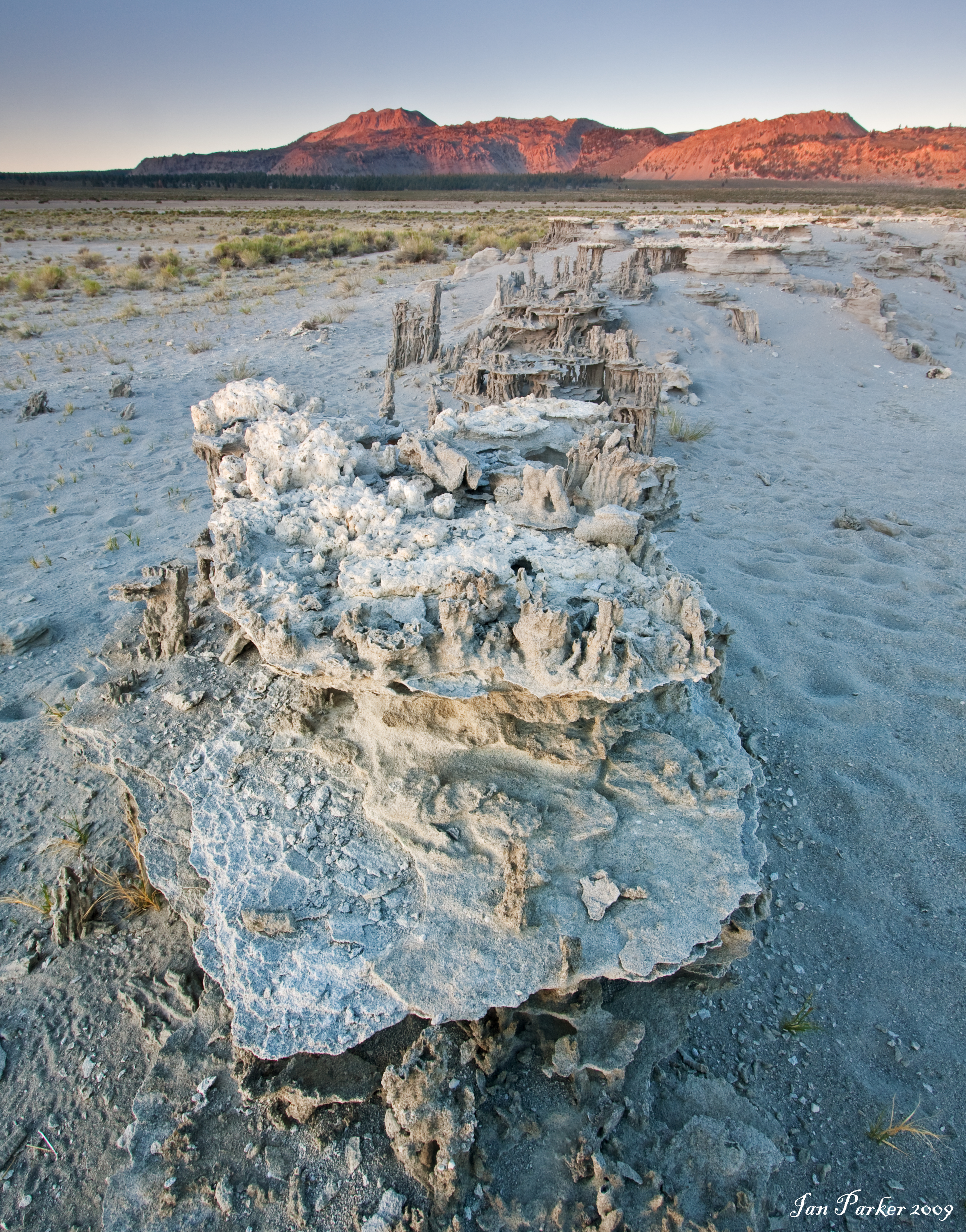
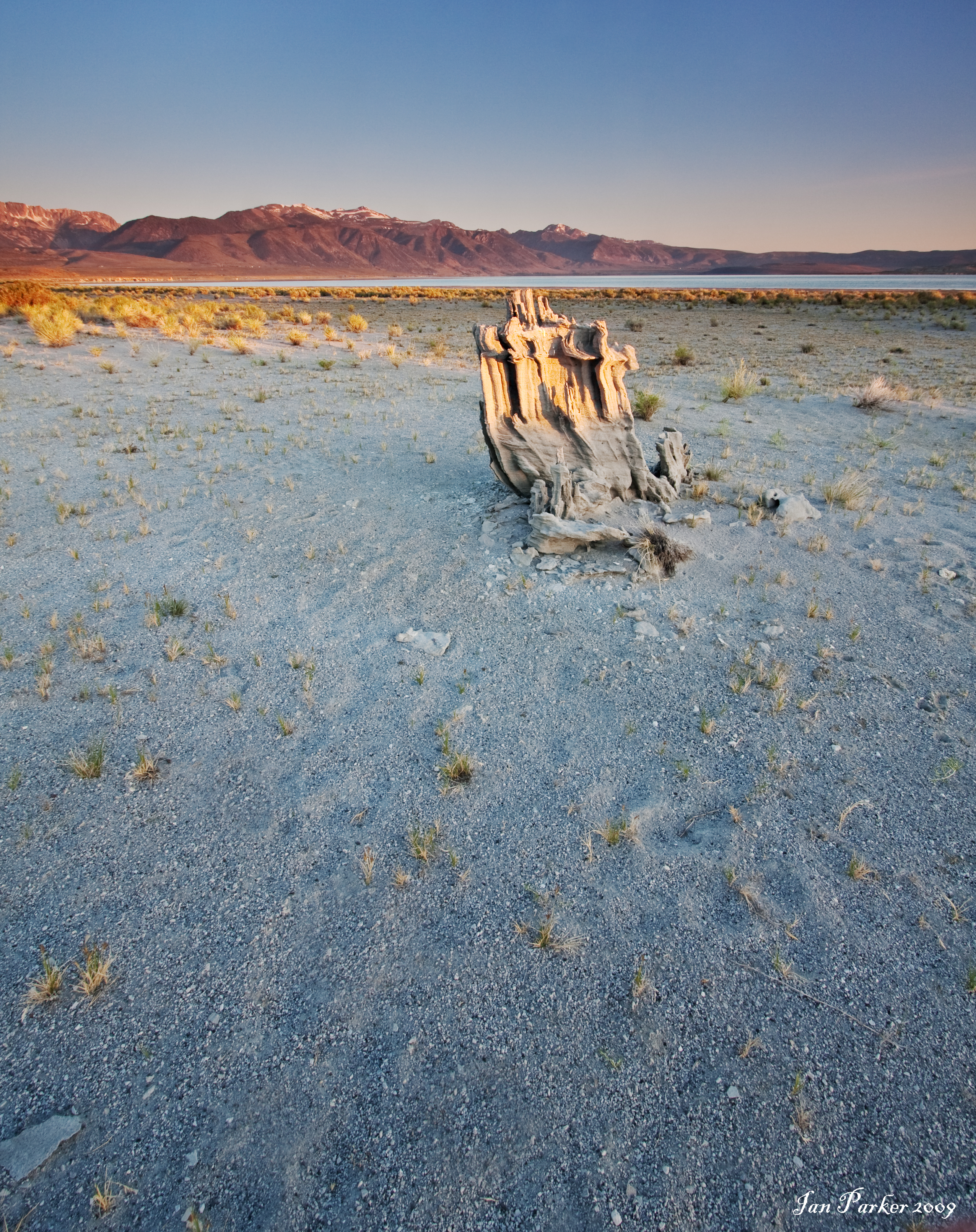
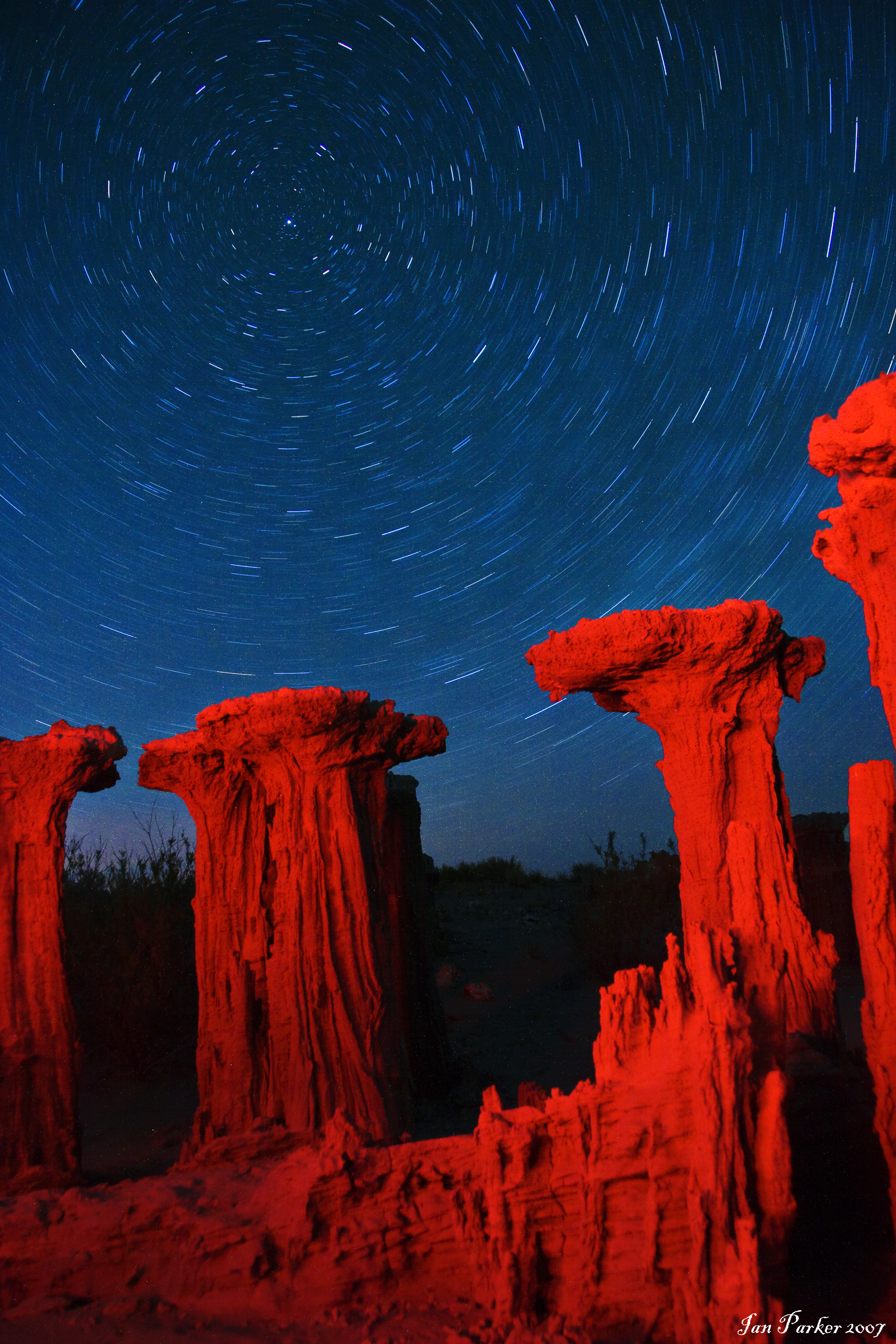
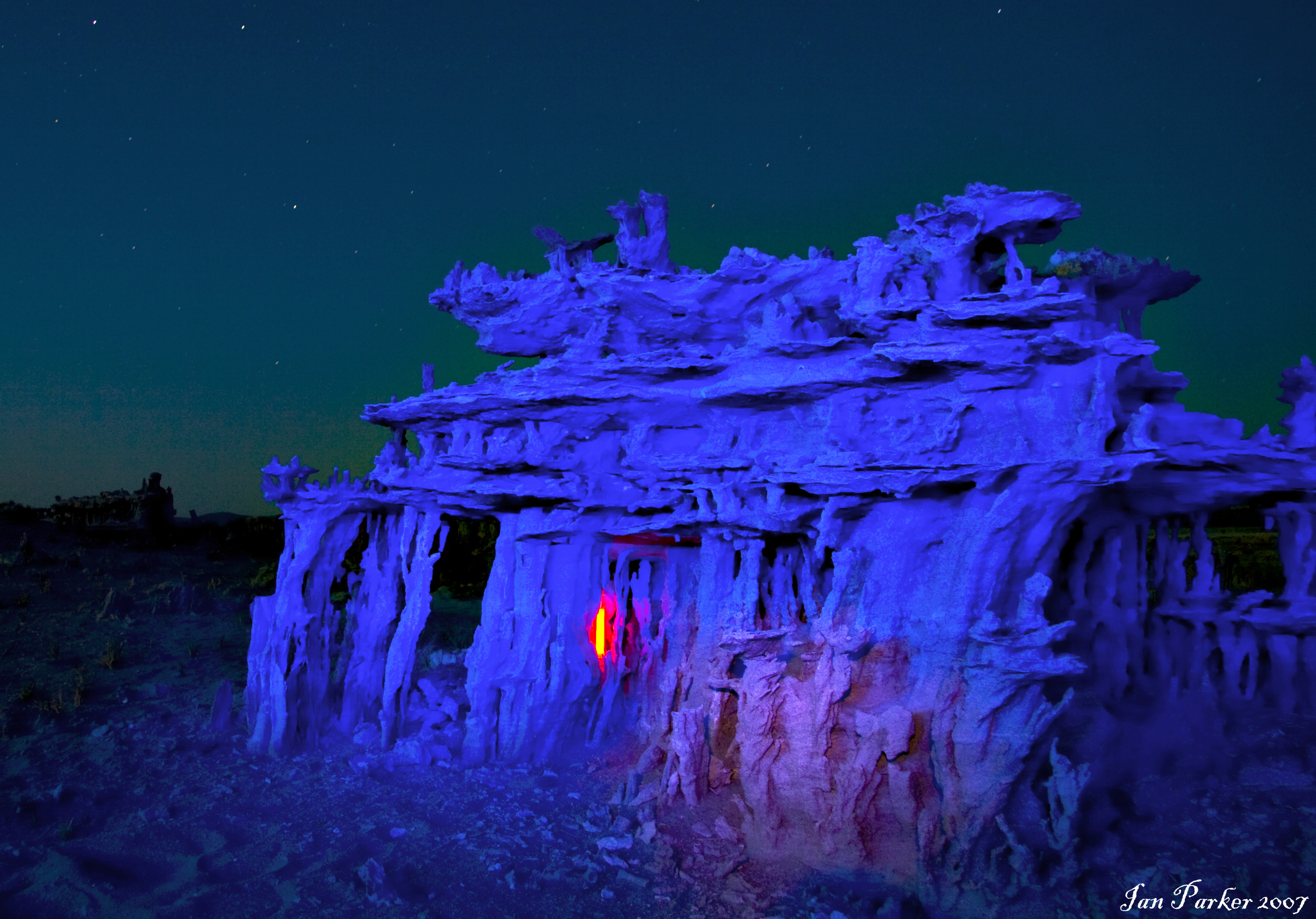
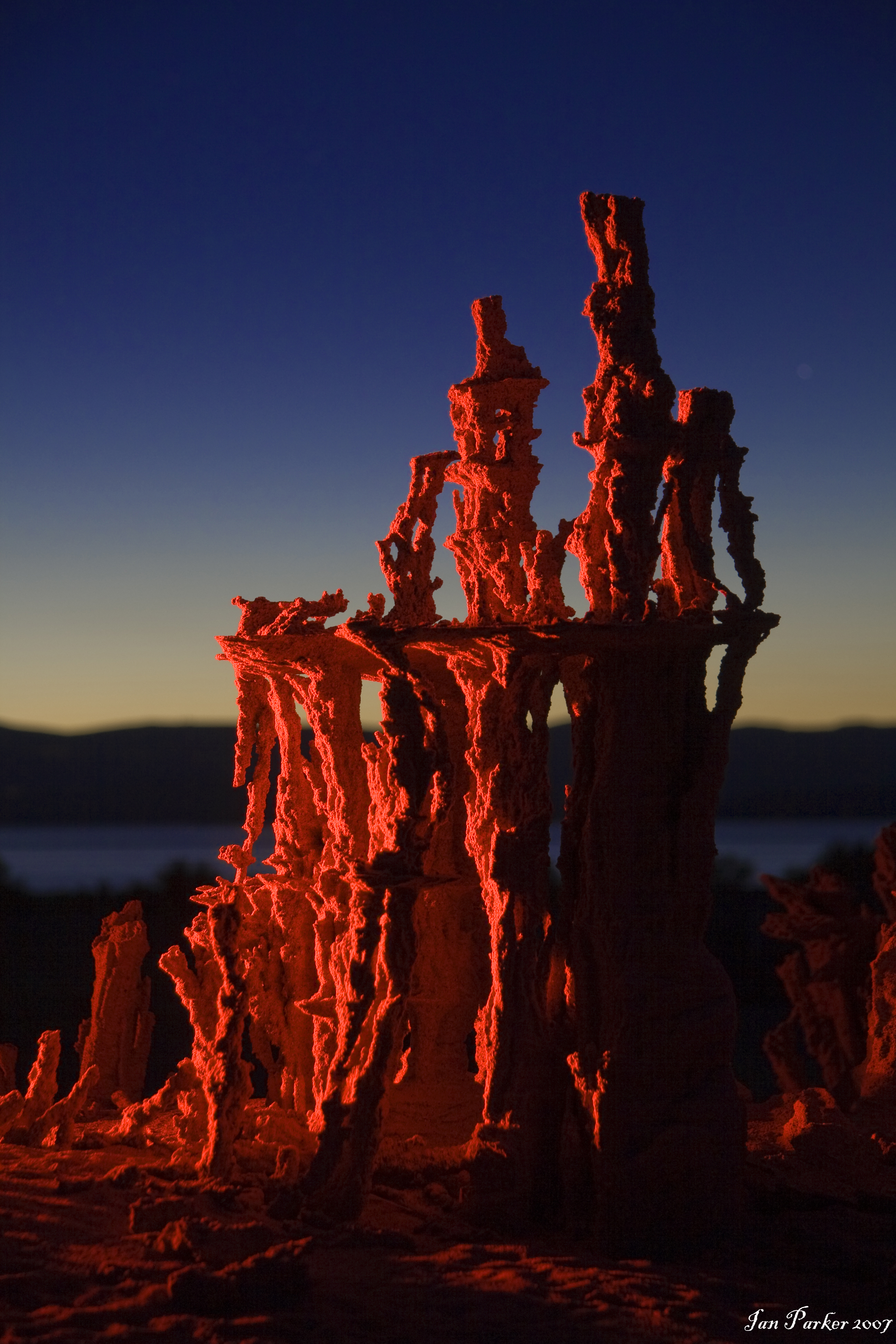
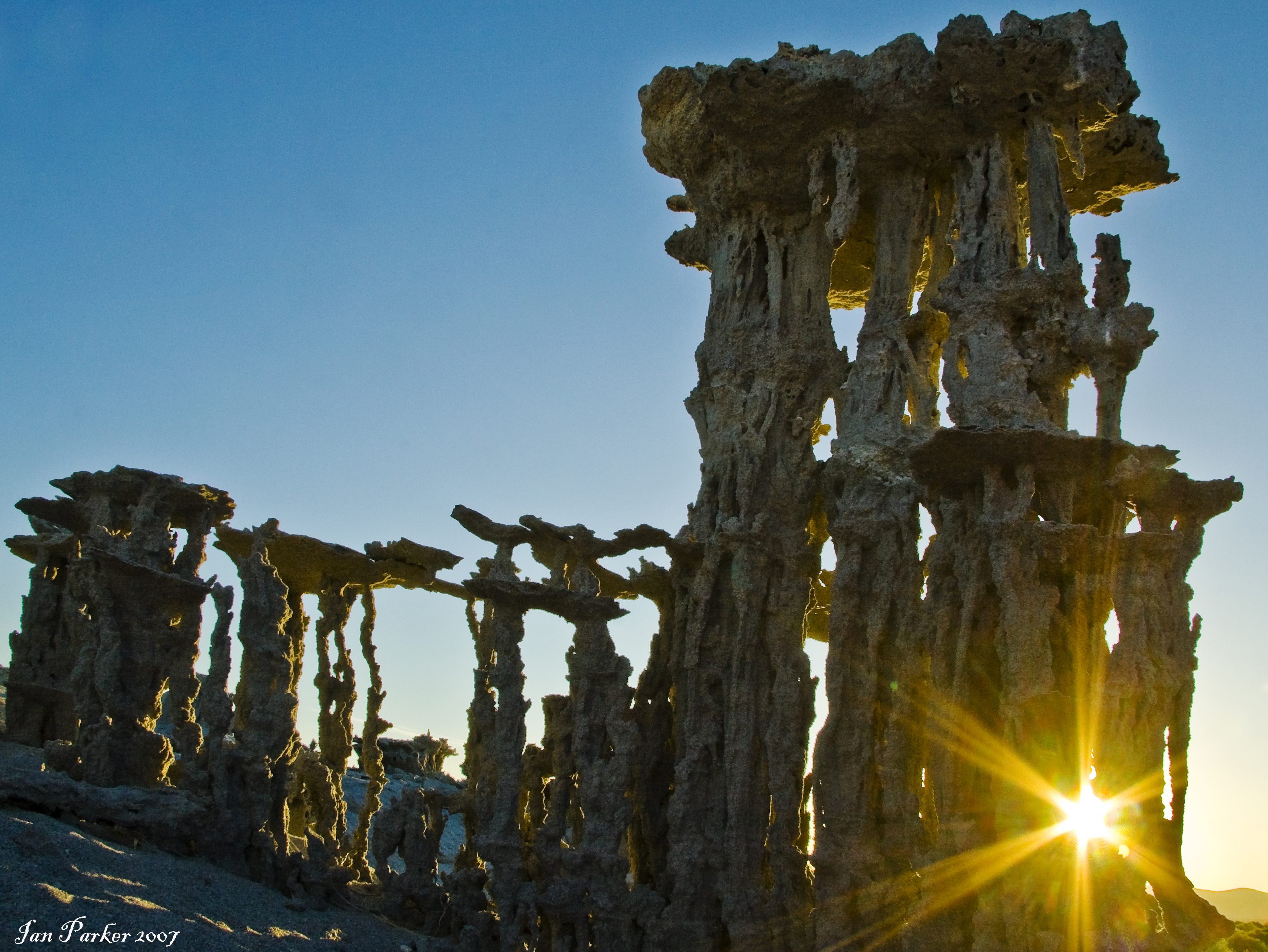
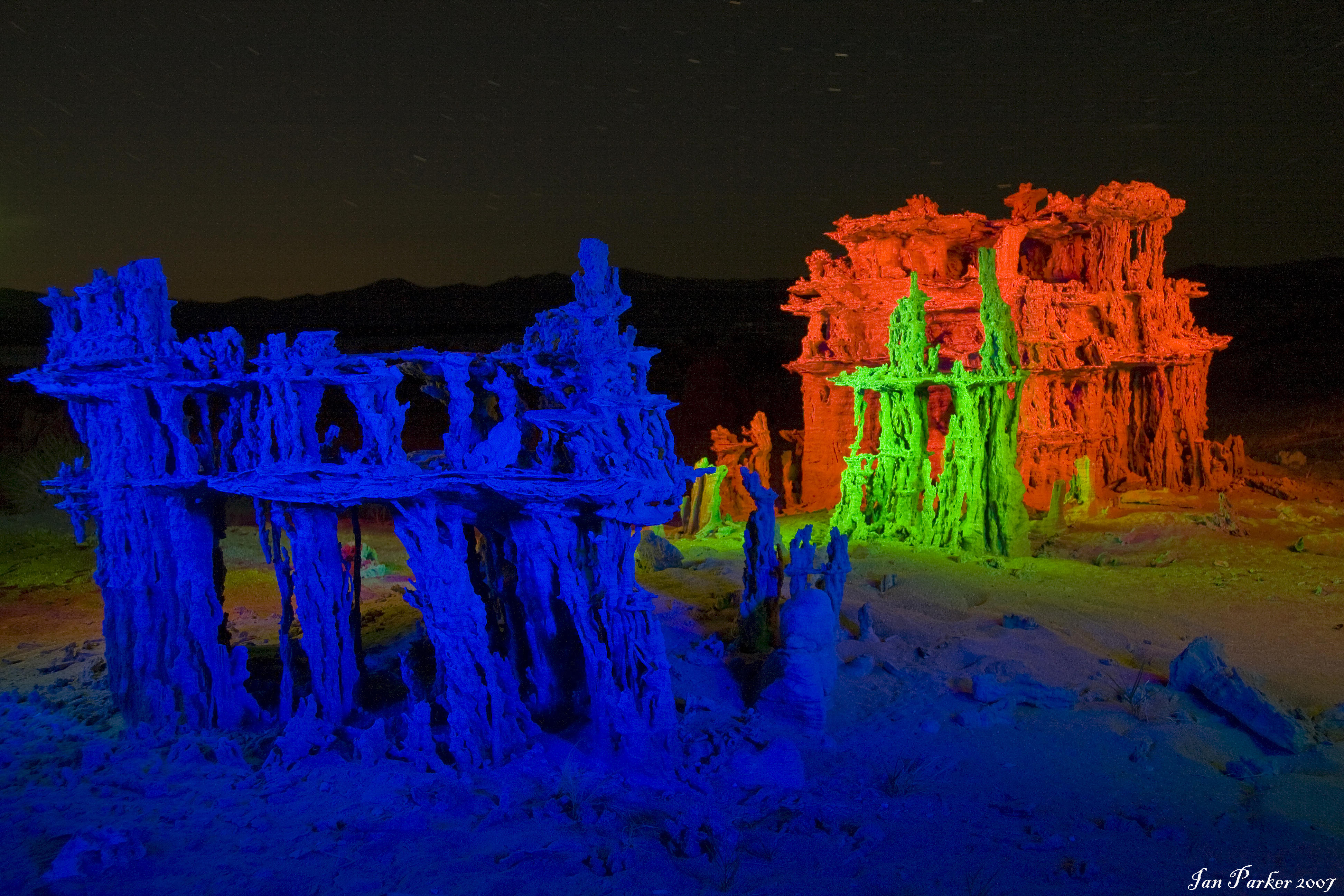
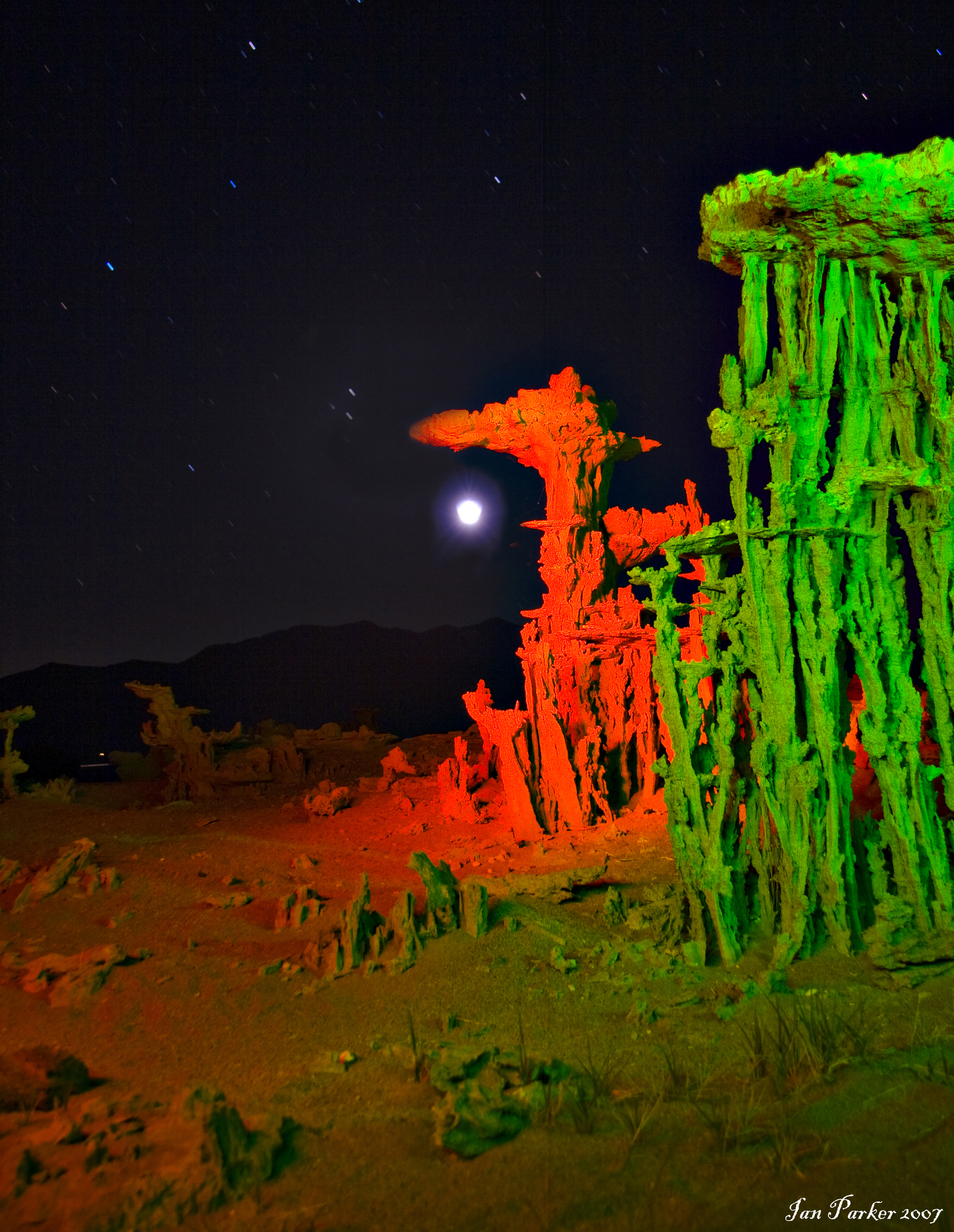
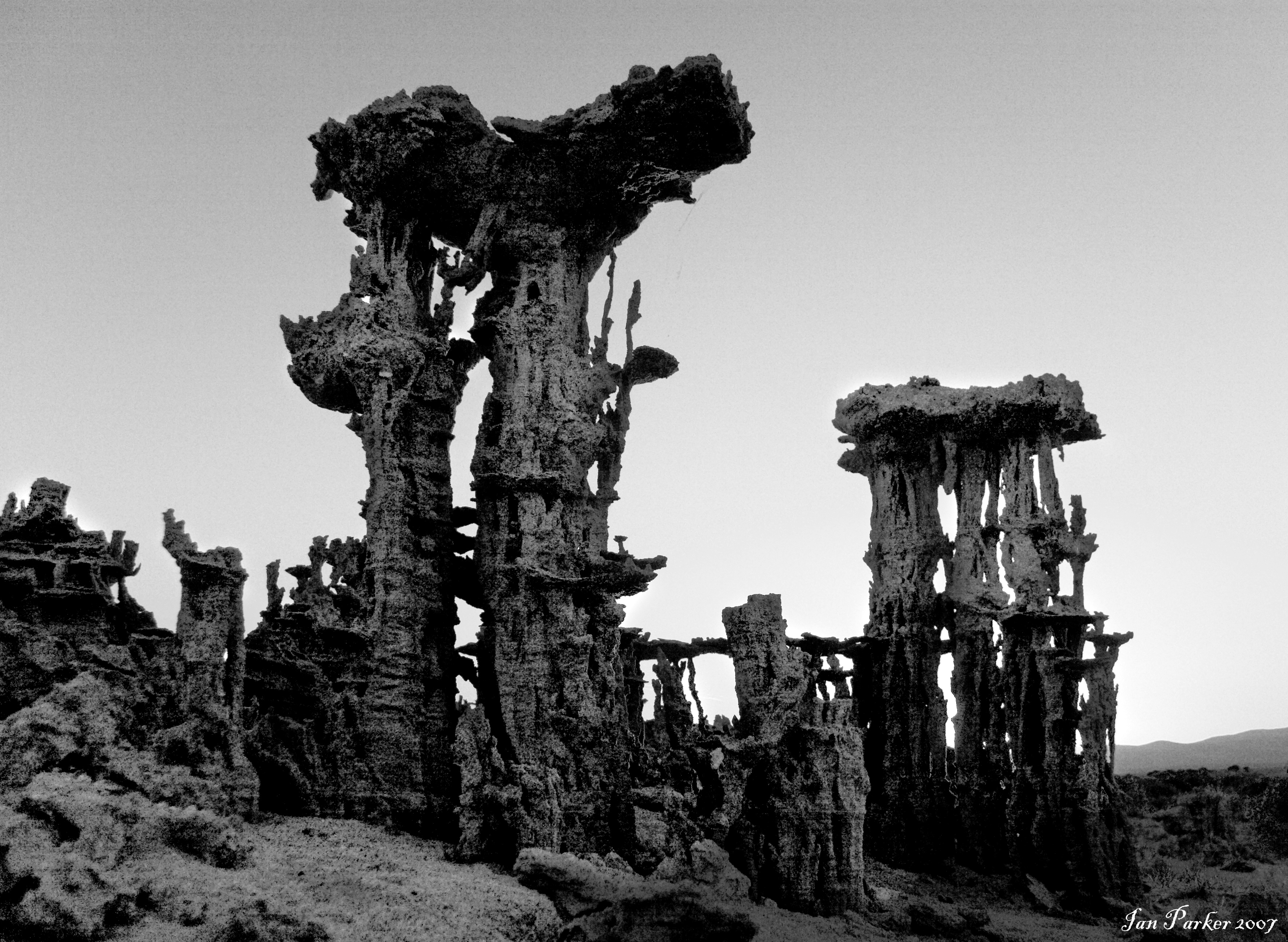
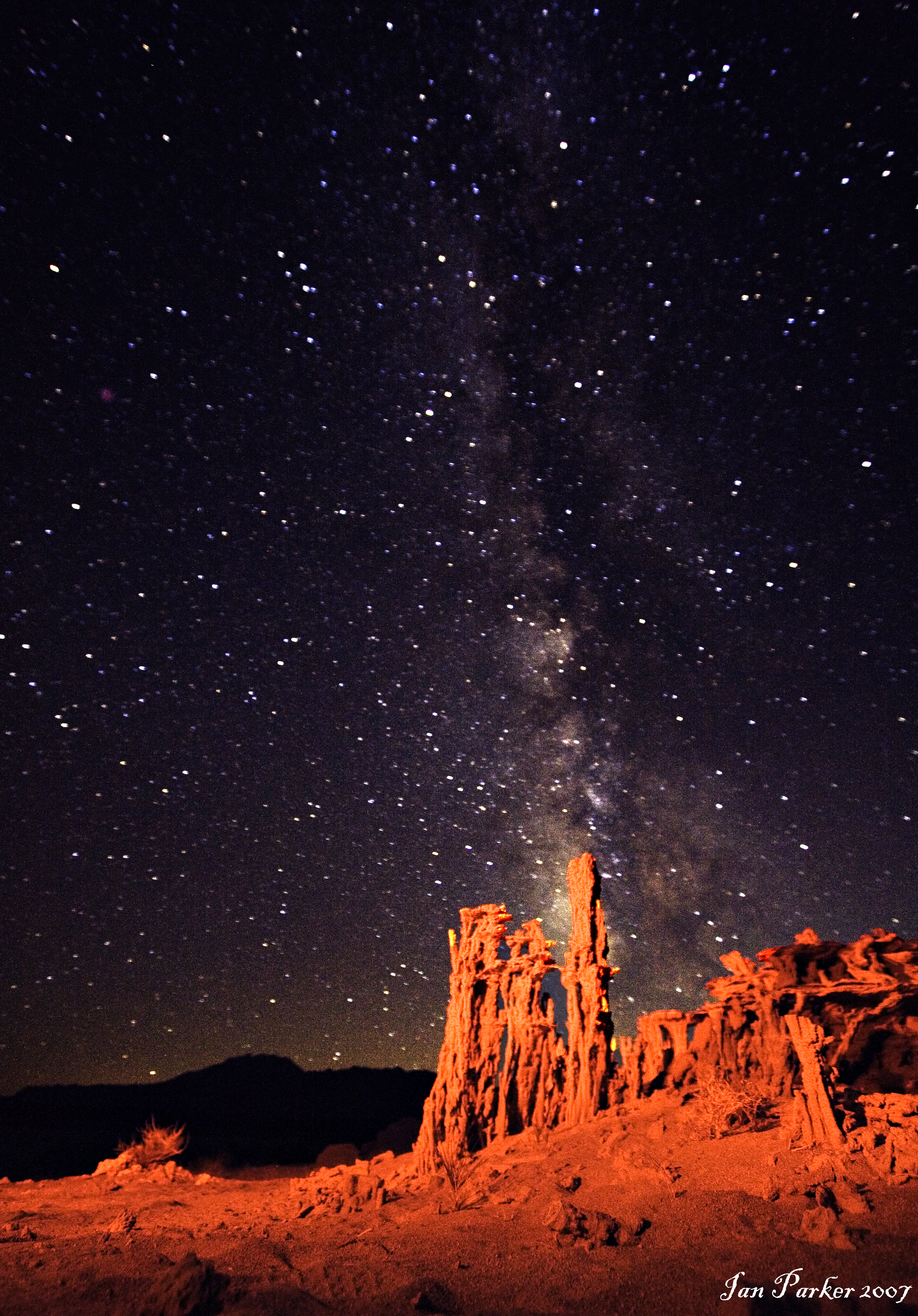
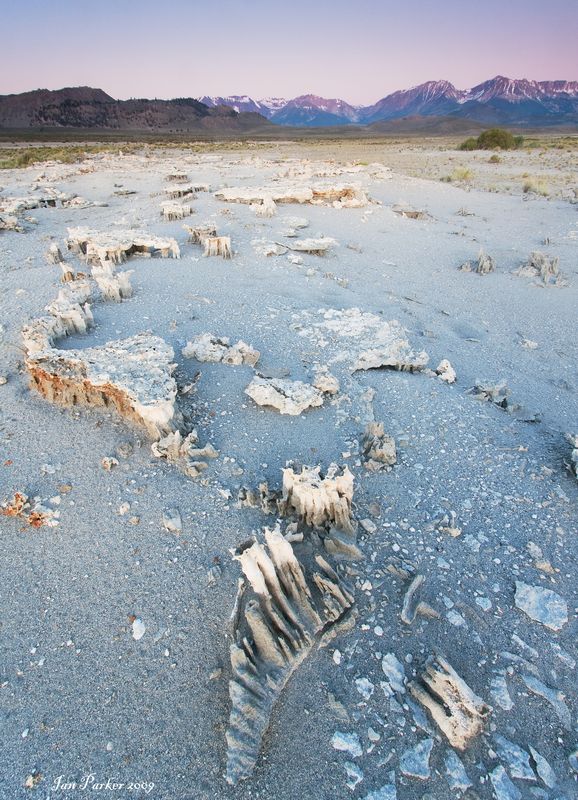
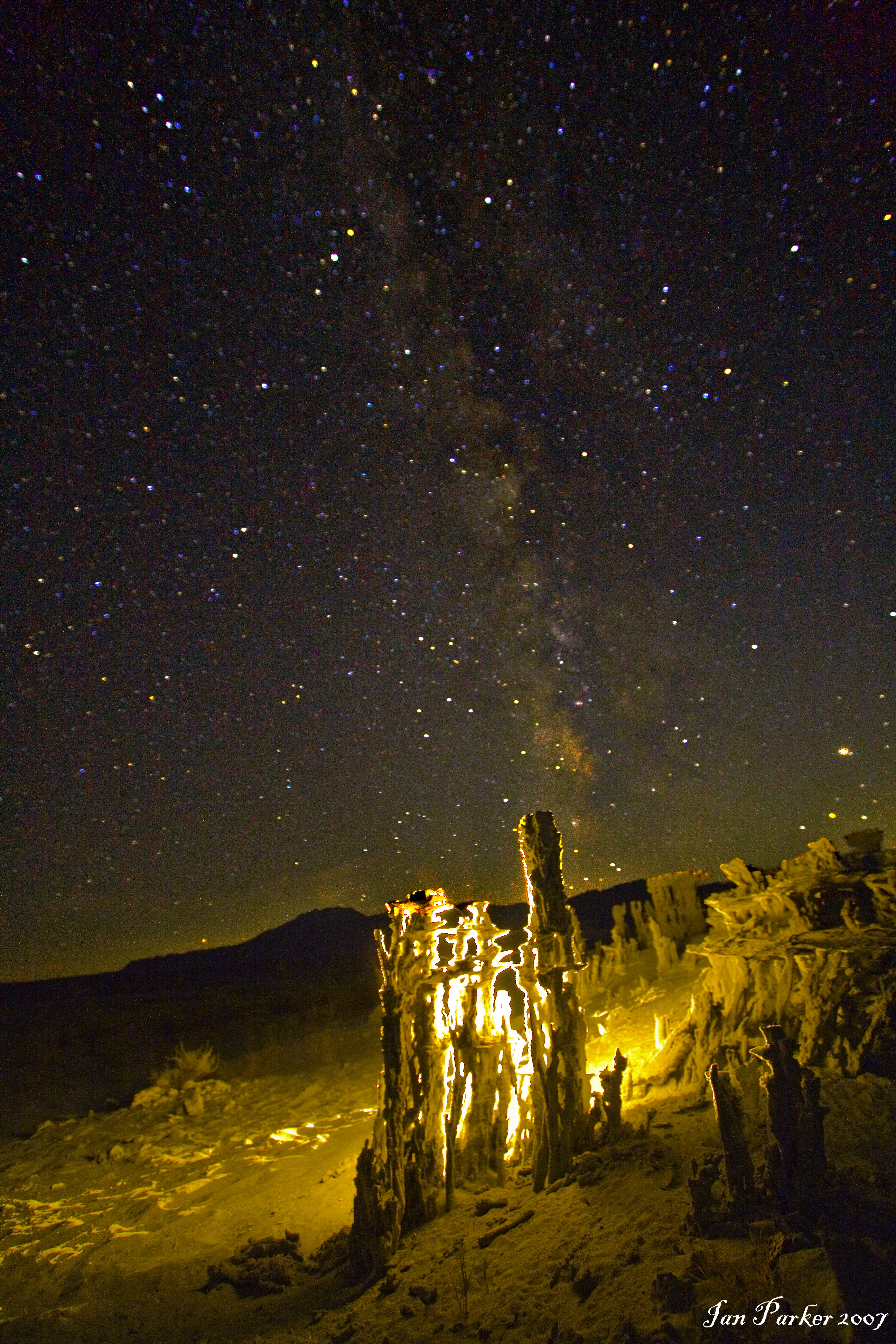
The Mono Lake Tufa State Reserve was established to preserve the spectacular "tufa towers," calcium-carbonate spires and knobs formed by interaction of freshwater springs and alkaline lake water. The most popular area for visitors is "South Tufa". However, by venturing down sandy 4WD trails followed by a little hiking and bushwacking it is possible to find totally secluded and even more beautiful areas. Many of the photos here were taken at a more easterly section of the lake, where both the large 'carbonate' tufa and the fantastically delicate and intricate sand tufa can be found.
The water level in Mono Lake reached its lowest level for 20 years in 2015 (6379 ft above sea level), only 7 ft higher than its historic low before the legal settlements curtailed diversion of inflows by LA DWP.
With the miniscule snowpack and continuing drought the water will likely drop further, but an additional fall of only 2 ft will trigger a clause requiring DWP to suspend diversion of all waters flowing into the lake. [See here for a recent discussion.] The low water level made the South Tufa area look rather scruffy, with a wide 'bathtub' ring of wet mud and broken fragments of tufa, but the level is now rising..
The low lake level is most apparent looking across to the tufa 'island'
off the tip of the Sout Tufa area. Compare today's photo with one from five years ago.
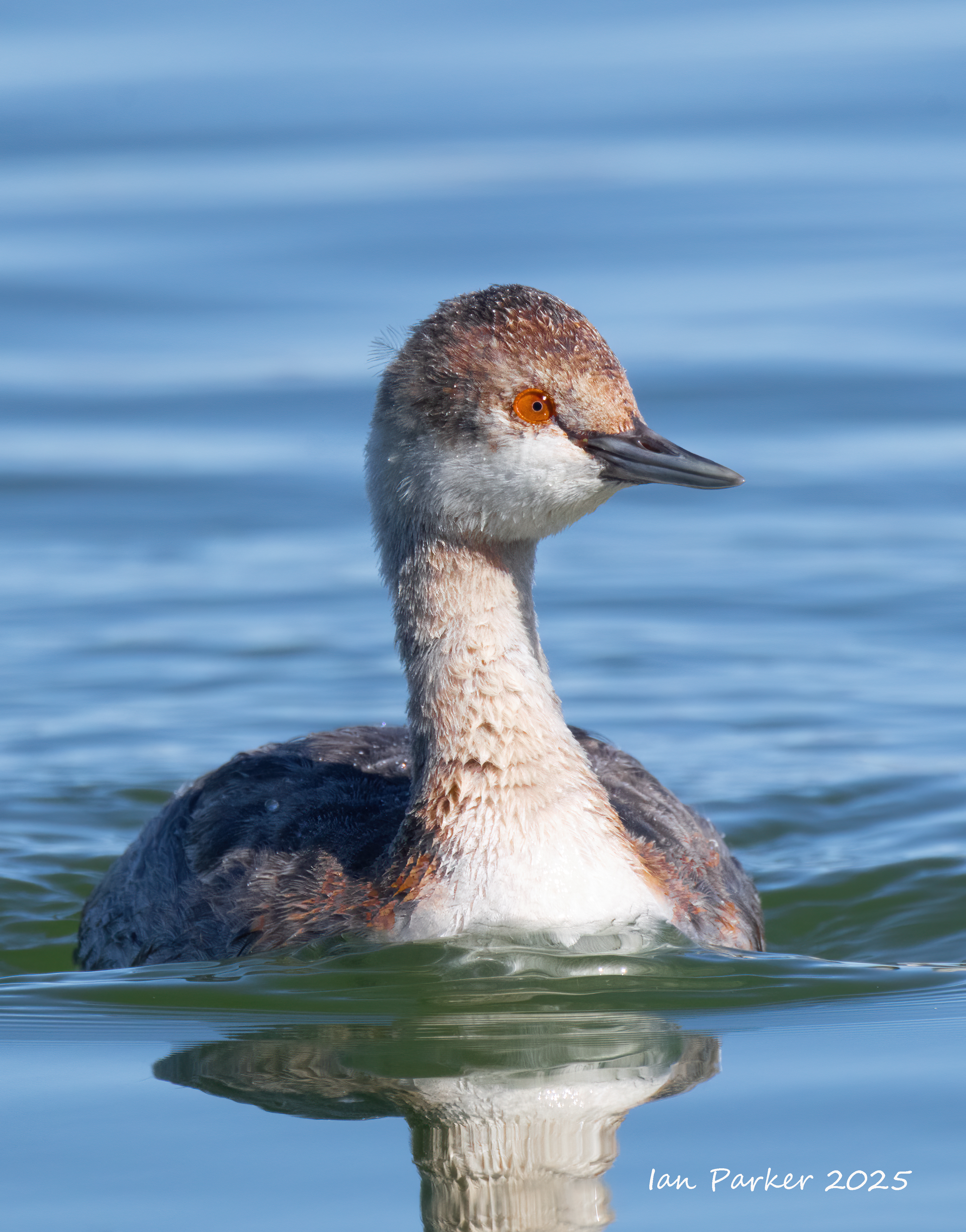
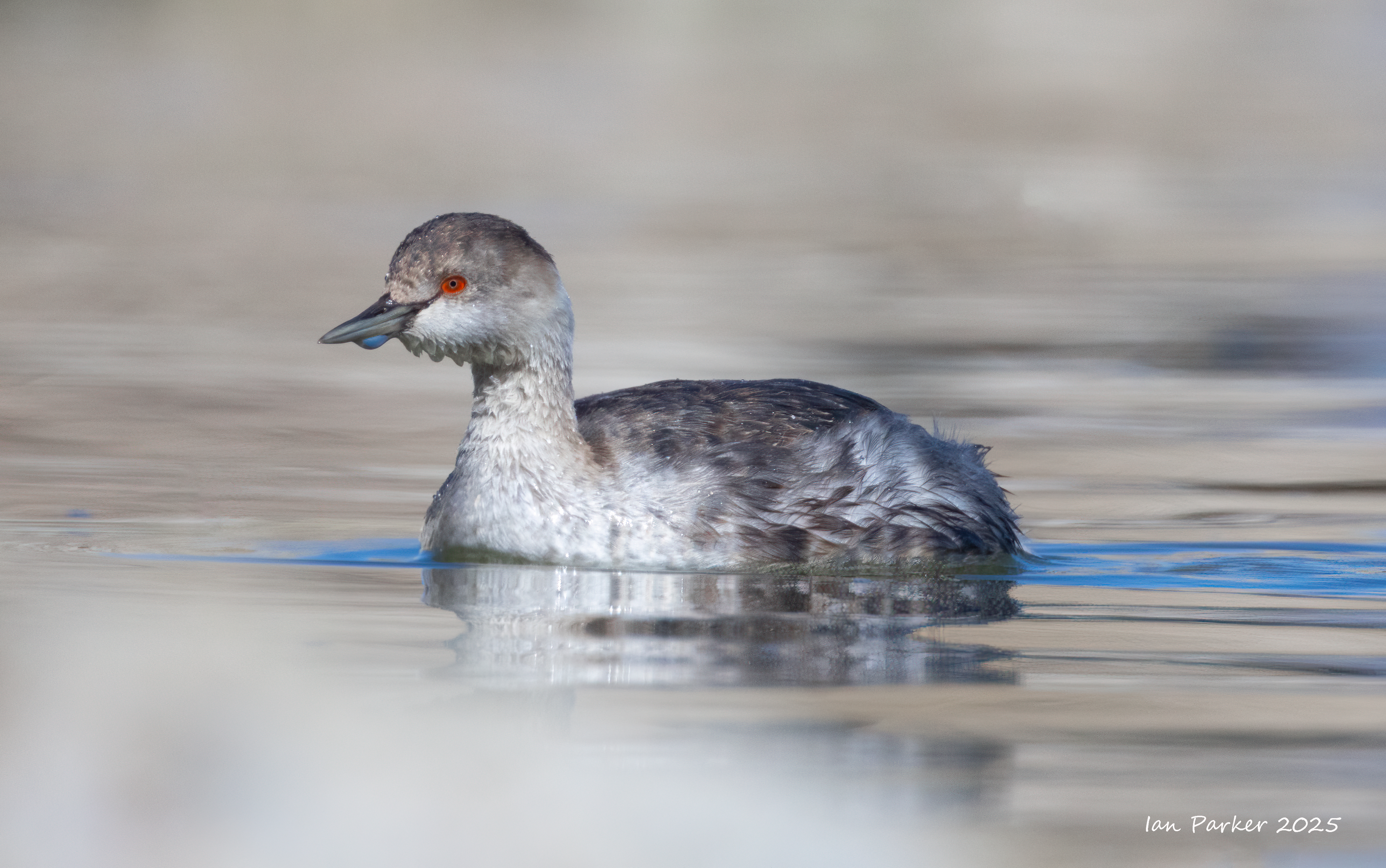
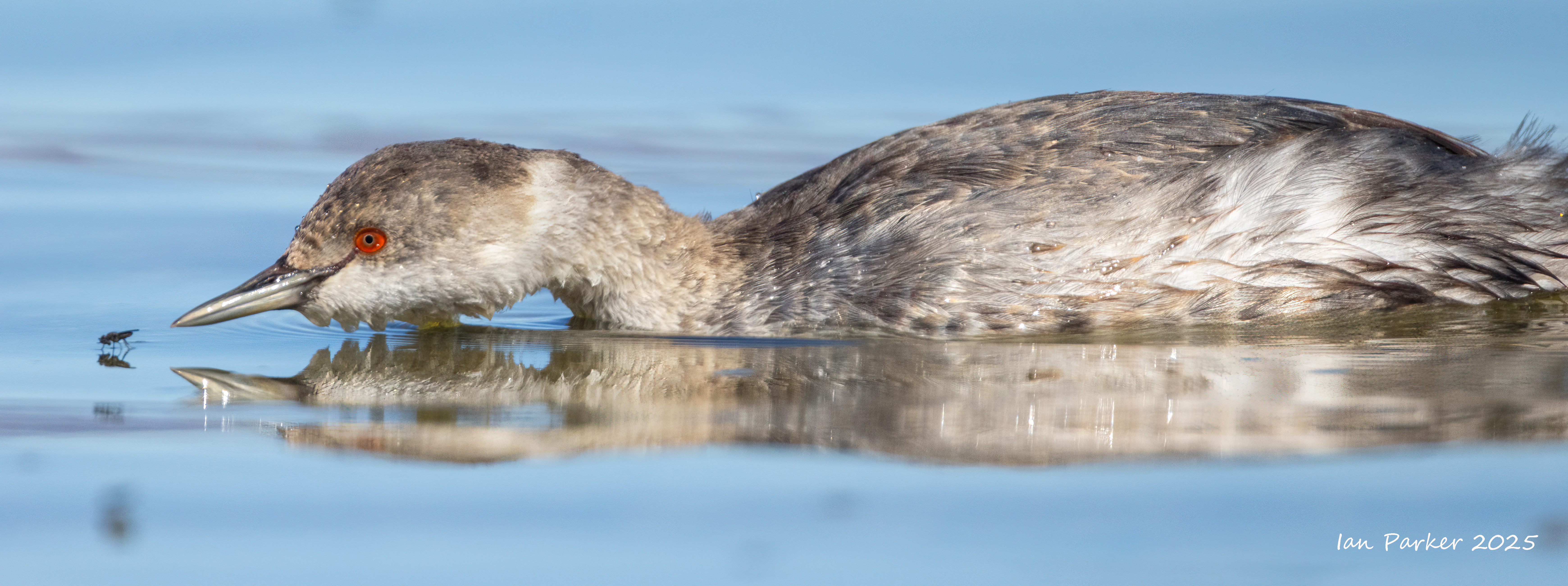
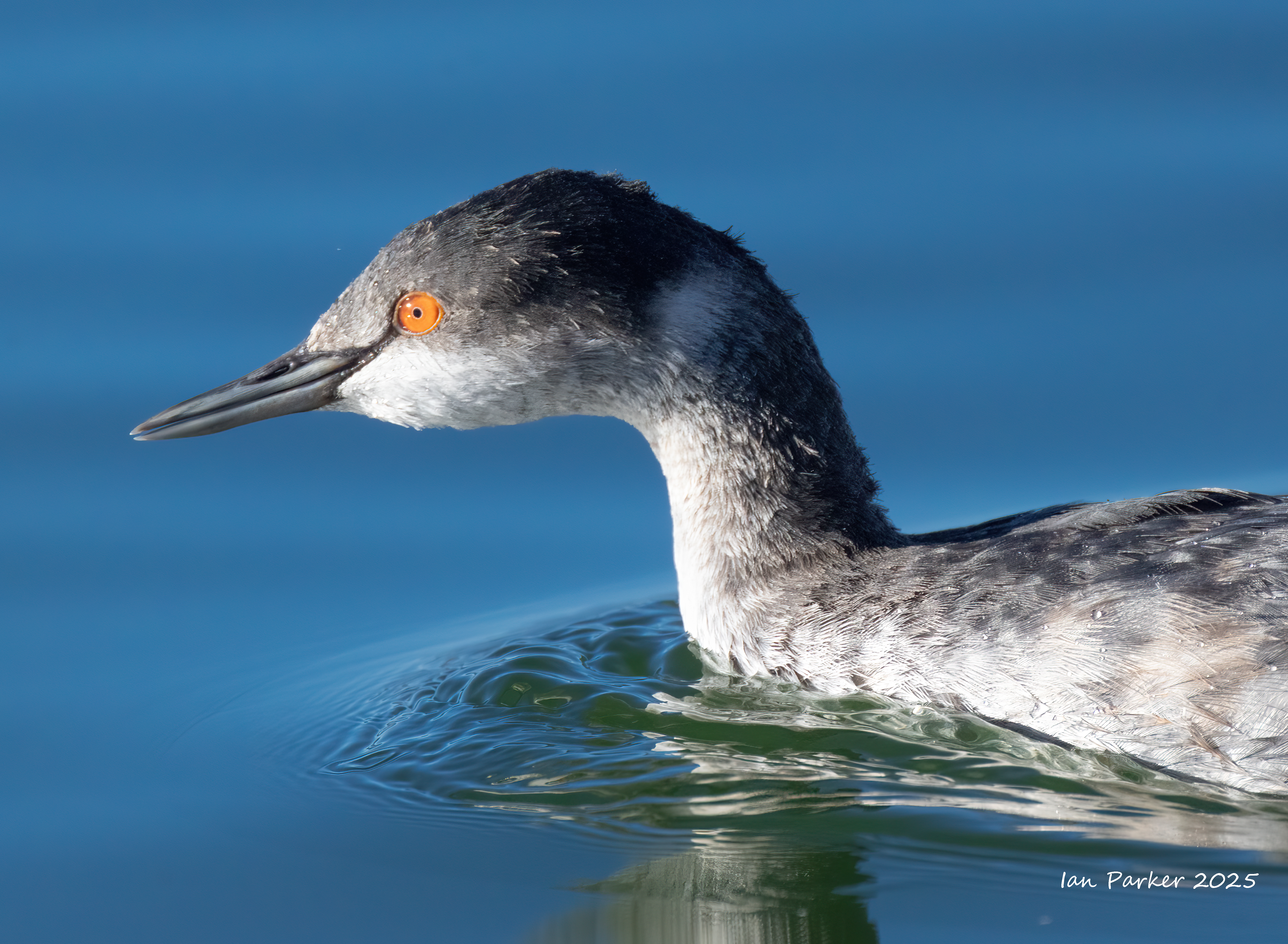
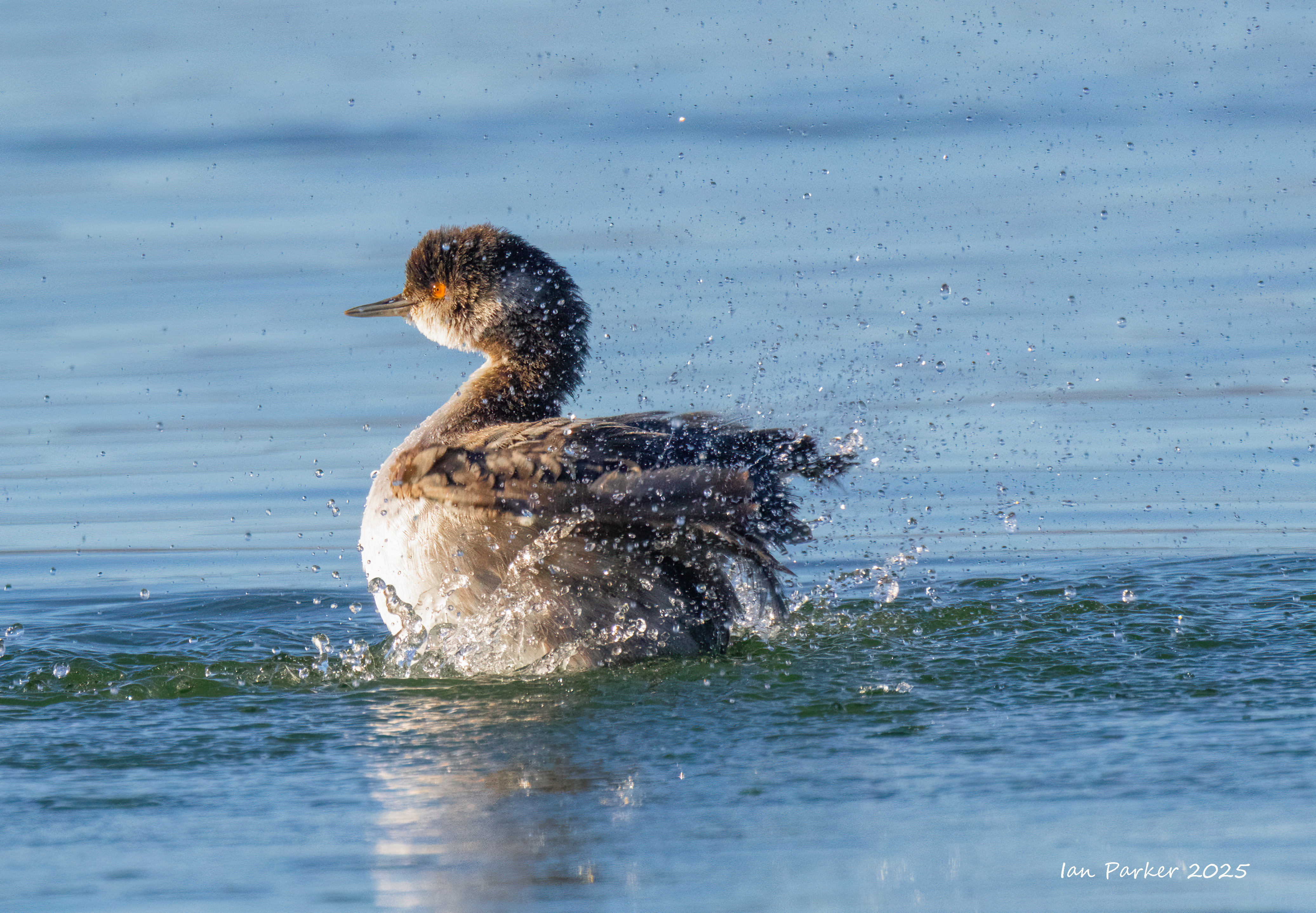
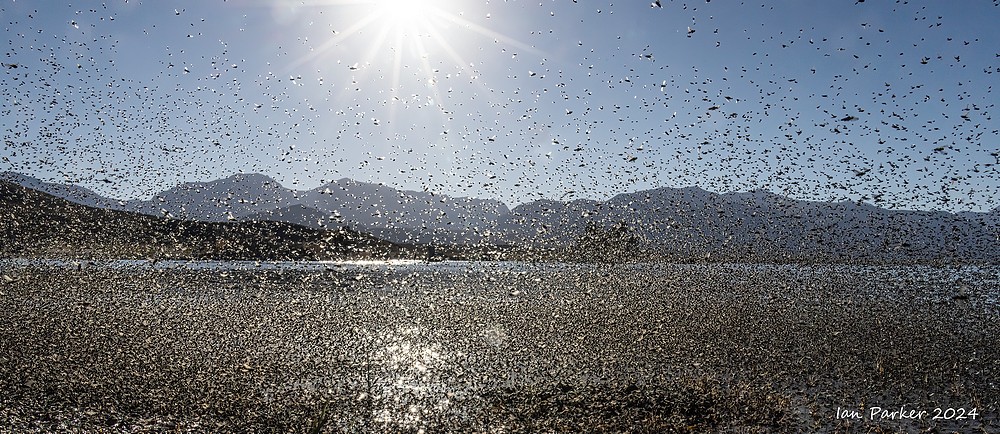
Mono Lake is a crucial fall staging ground for vast numbers of Eared Grebes, They gather by the hundreds of thousands (sometimes millions) to fattun up on brine shrimp and alkali flies from late summer through fall (July-November) before heading south to breeding grounds. Here they more than double their weight, and the sizes of their muscles and organs change. The pectoral (chest) muscles shrink to the point of flightlessness and the digestive organs grow significantly. Before departure for the wintering grounds, the process reverses; the digestive organs shrink back to about one-fourth their peak size, and the heart and pectoral muscles grow quickly to allow for flight.
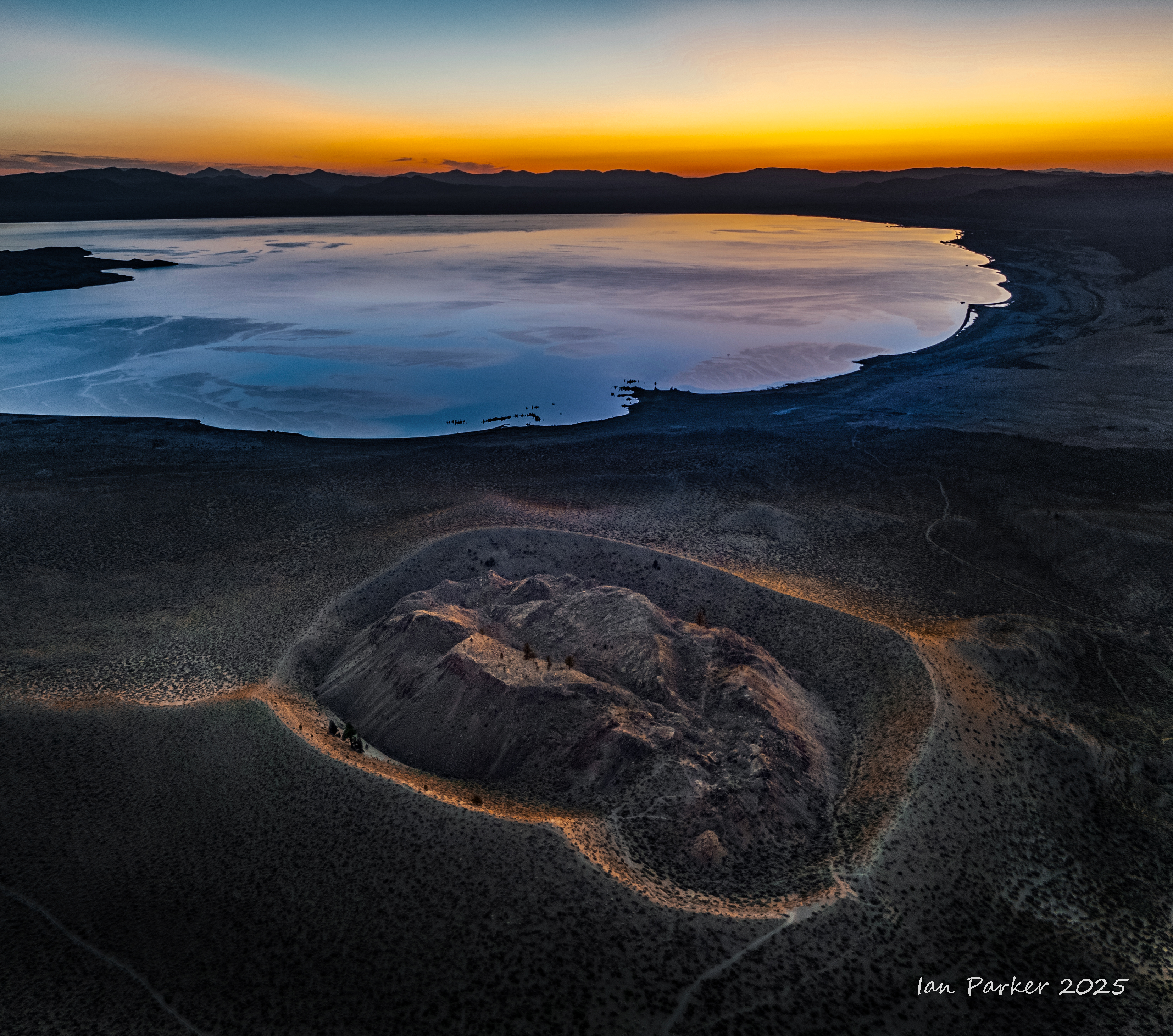
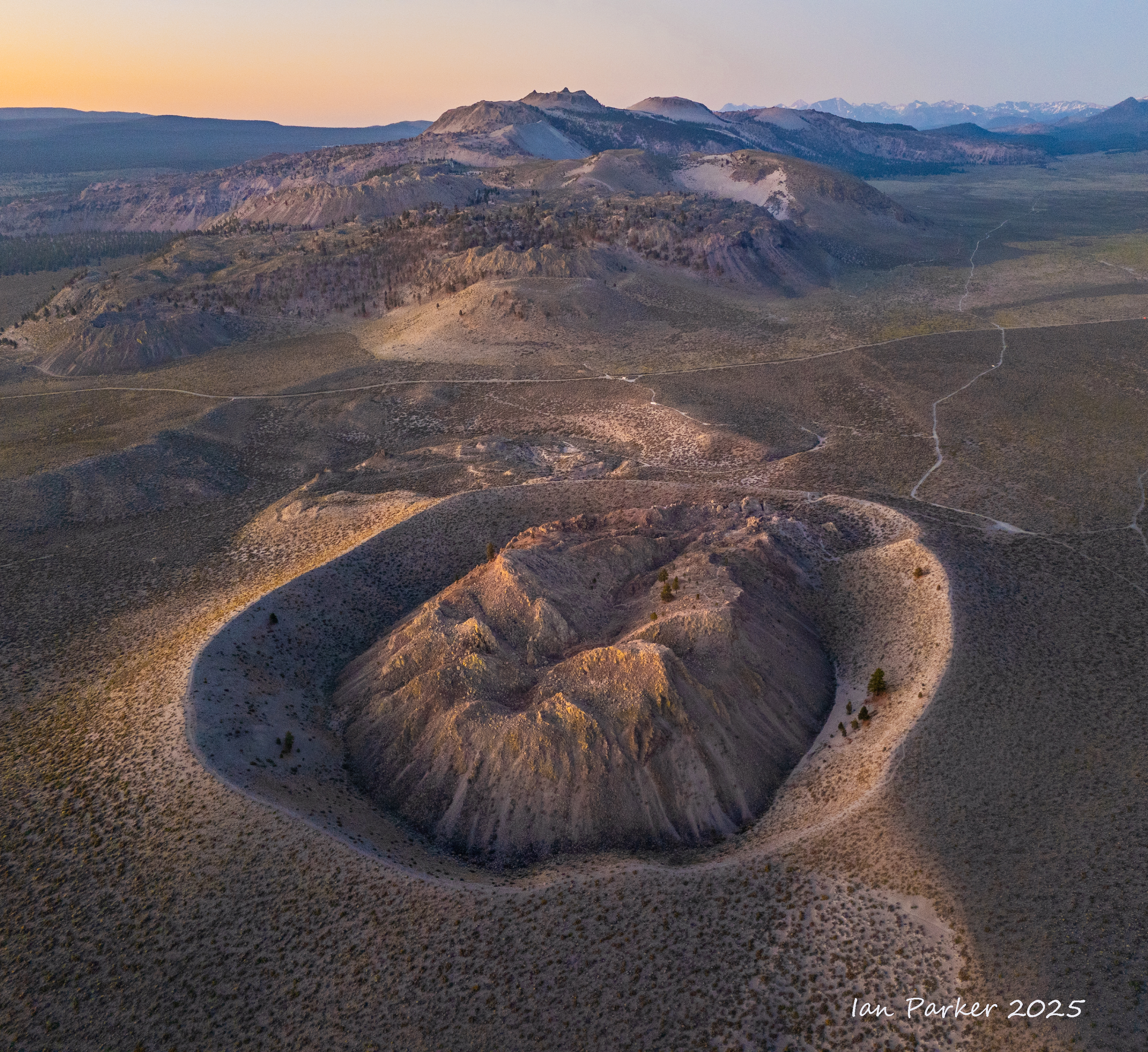
After taking this photo I estimated it would be about a half hour before sunrise, too long to keep the drone in the air without depleting the battery, so I brought it back home, changed to a fresh battery and waited to take off again until a few minutes before sunrise. This time I flew the drone over to the north side of Panum Crater, capturing the photo below while the light was still diffuse just before sunrise, looking across to the chain of the much larger Mono Craters.
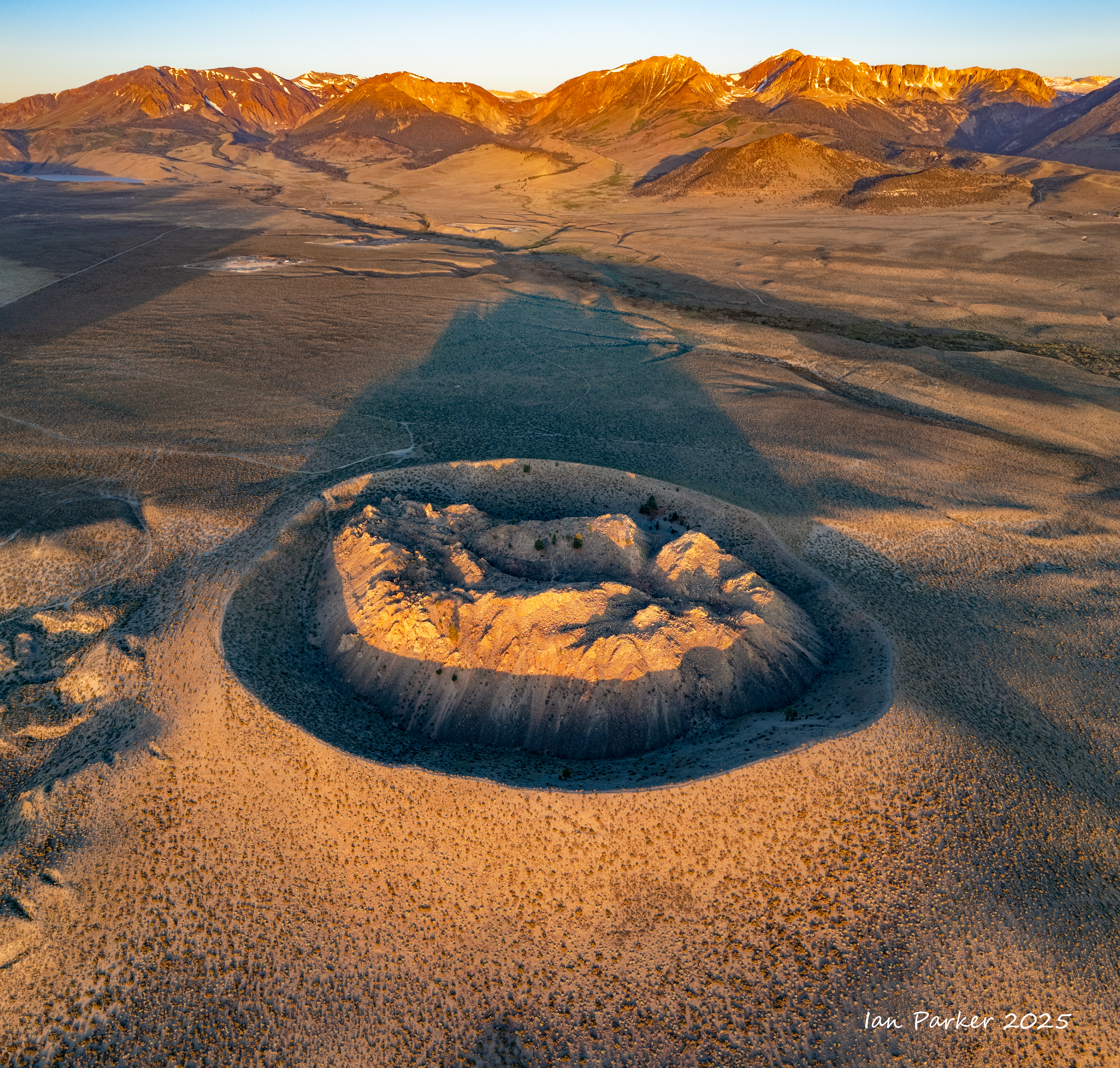
Finally, as the sun’s rays first illuminated the crater, I swung the drone around to the east, to align it with the shadow cast toward the Sierra Nevada mountains.
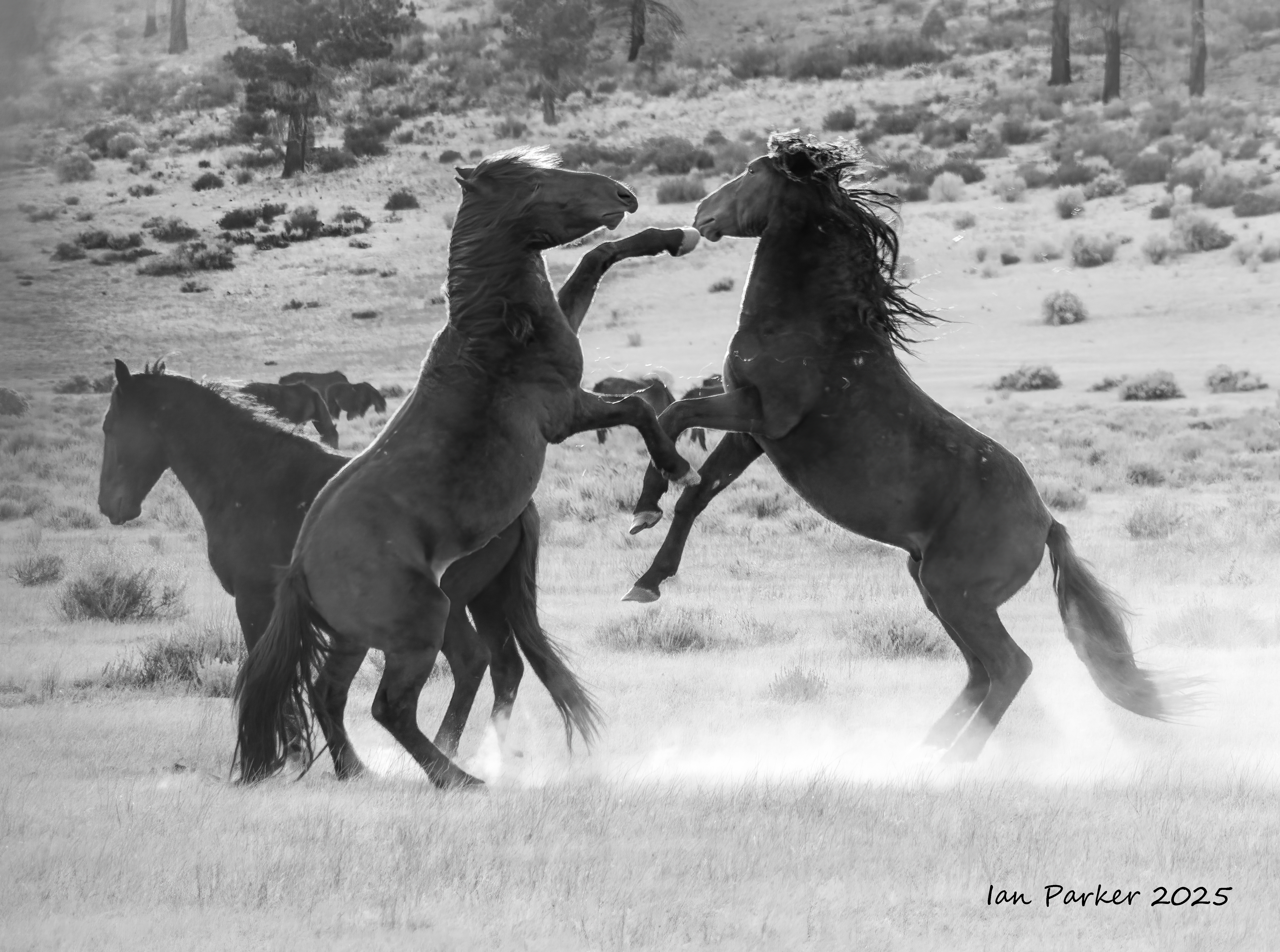
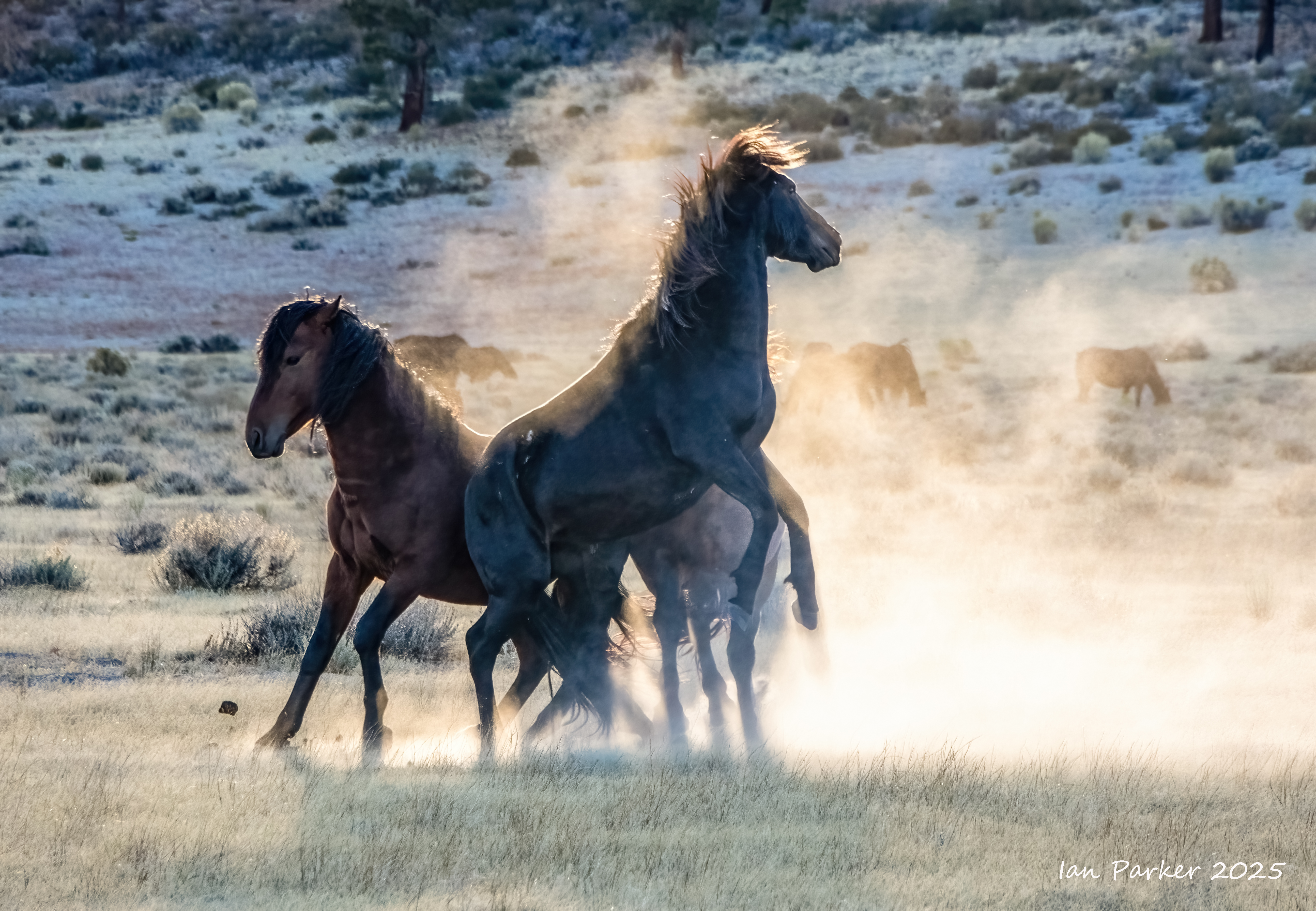
Wild horses, previously seen rarely and only in remote parts of the Mono Basin, have experienced rapid population growth in the past five years—so much that they have expanded far beyond their home territory near the Nevada state line and now routinely reach South Tufa and the shoreline and wetlands at Mono Lake
.





















































.jpg)